Electrical & Utility Workwear Emerging as a Key Growth Area with Increasing Arc-Flash and Grid Safety Standards
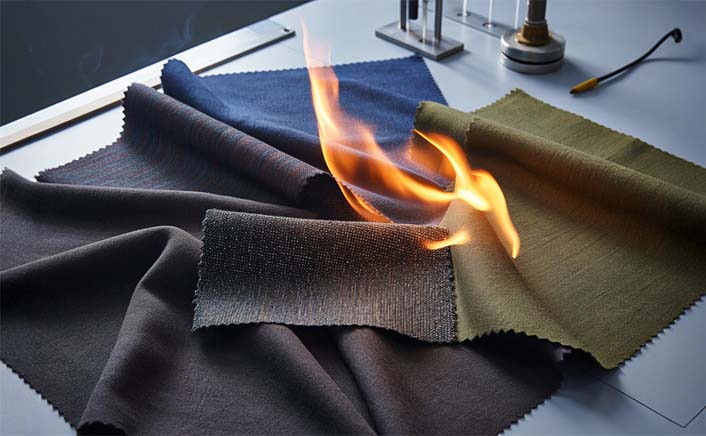
The Global Market for fire-Resistant (FR) fabrics highlights the significant role that occupational safety, regulatory compliance, and high-risk industrial environments play in shaping demand. Industrial protective clothing holds the largest market share at 39.23%, primarily due to its widespread application in sectors such as manufacturing, construction, chemicals, mining, and heavy engineering. In these environments, workers face hazards like flash fires, molten metal splashes, heat, and electrical threats. The increasing enforcement of workplace safety regulations in both developed and emerging economies has made FR garments a mandatory requirement, rather than merely an optional safety upgrade. Employers are focusing on enhancing durability and comfort to promote compliance during long shifts, leading to a rise in the adoption of lightweight inherent FR fabrics and blended materials.
The oil and gas protective wear segment captures a notable 20.11% share, underscoring the high-risk conditions and stringent safety standards of the sector. Workers in upstream, midstream, and downstream operations consistently contend with flash fires, hydrocarbons, and explosive atmospheres, making flame-resistant apparel an essential line of defense. Regulatory frameworks and corporate safety policies in regions such as North America, the Middle East, and Asia-Pacific are encouraging oil and gas operators to adopt higher-performance inherent FR fabrics, particularly blends based on aramid and modacrylic. Furthermore, the cyclical recovery of energy investments along with the expansion of LNG, refining, and petrochemical capacities is expected to sustain long-term demand for advanced FR workwear.
Electrical and utility workwear, representing 10.19% of the market, is driven by a growing awareness of arc flash hazards within power generation, transmission, and maintenance activities. Utilities and contractors are increasingly seeking garments that comply with arc thermal performance value (ATPV) standards while also being breathable and flexible. This has prompted innovation in multi-functional FR fabrics that combine flame resistance with anti-static features and moisture management capabilities. The growth of renewable energy projects, grid modernization, and electrification initiatives worldwide further emphasizes the need for specialized FR apparel within this sector.
The firefighting apparel segment, which accounts for 7.09%, is characterized by its high value but lower volume due to the specialized performance requirements needed by firefighters. This segment demands extreme thermal protection, durability, and mobility, thus enhancing the demand for premium inherent FR materials such as aramids and PBI blends. While the replacement cycles are longer and procurement volumes are typically lower, this segment plays a vital role in driving innovation and influencing pricing trends across the broader market for FR fabrics.
Military and defense uniforms, holding a 6.09% share, are shaped by modernization initiatives, geopolitical dynamics, and evolving safety requirements on the battlefield. Armed forces are increasingly integrating FR fabrics into standard-issue combat uniforms to provide flame resistance alongside camouflage compatibility, lightweight construction, and durability in harsh conditions. This integration fosters a steady growth in demand.
Applications in welding and metal processing, which represent 6.11% of the market, are particularly influenced by exposure to sparks, molten metal, and radiant heat. In this segment, FR fabrics emphasize abrasion resistance and thermal shielding, often favoring treated cotton and blended materials for cost-effectiveness. Transportation applications, accounting for 4.09%, span aerospace, rail, and automotive industries, where FR fabrics are crucial for seat covers, insulation, and interior components to meet stringent fire safety regulations, especially in passenger environments.
Finally, the home furnishings segment for contract and public spaces, also holding a 7.09% share, reflects a growing diversification within the market. Sectors such as hotels, hospitals, theaters, and public buildings are increasingly requiring FR curtains, upholstery, and wall coverings to comply with fire codes. This segment capitalizes on rising urbanization, infrastructure development, and greater public safety awareness, expanding the use of FR fabrics beyond traditional industrial applications. Overall, the landscape of applications within the FR fabrics market is firmly rooted in industrial safety while also revealing new growth opportunities in transportation and public spaces.