China’s accelerating push to reduce dependence on lithium and other critical minerals, combined with rapid expansion in energy storage infrastructure and battery manufacturing capacity, is reinforcing the country’s position as the global hub for sodium-ion battery development and commercialization.
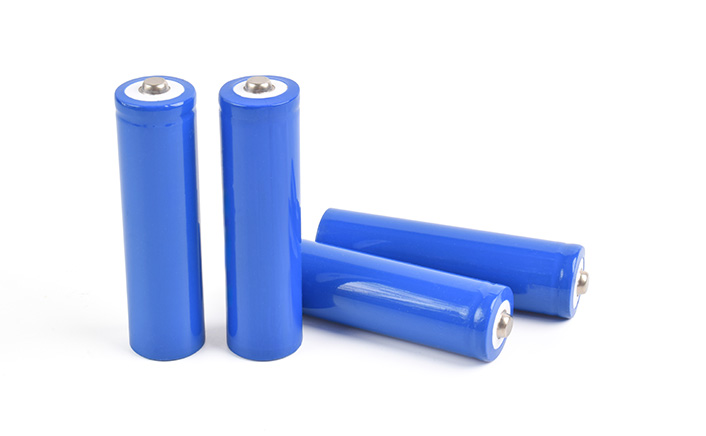
The China Sodium-Ion Battery Market reached USD 1.55 billion in 2025 and is projected to grow to USD 9.25 billion by 2033, registering a CAGR of ~22.0% from 2026 to 2033. Market expansion is being driven by large-scale capacity additions, increasing deployment of grid-scale energy storage systems, and strong industrial backing from leading battery manufacturers such as CATL and BYD. Industry data indicates that global sodium-ion battery shipments reached approximately 9 GWh in 2025, with China accounting for the majority of this volume, highlighting its dominant position in early commercialization.
China’s strategic shift toward sodium-ion batteries is closely linked to resource security and cost optimization. Sodium is significantly more abundant than lithium, enabling a more stable and cost-effective supply chain. This has prompted strong support from government and industry, with major players investing in large-scale production facilities, including projects with capacities exceeding 20 GWh. The country’s integrated battery ecosystem, spanning materials to system integration, has enabled rapid scaling of sodium-ion technologies compared to other regions.
Energy storage systems remain the primary demand driver, supported by China’s rapid expansion of renewable energy capacity. Sodium-ion batteries are increasingly being deployed for grid balancing, peak load management, and renewable integration, where cost efficiency is prioritized over energy density. Industry insights indicate that sodium-ion batteries have already been used in stationary storage applications since 2019, with adoption accelerating as utilities and grid operators seek alternatives to lithium-ion solutions.
Mobility applications are emerging as a secondary growth area, particularly in two-wheelers and low-speed electric vehicles, where affordability is a key consideration. Adoption in passenger electric vehicles is at an early stage but is gaining momentum, supported by technological advancements. Recent developments, including CATL’s sodium-ion battery capable of ultra-fast charging and BAIC’s prototype vehicles, signal the beginning of commercialization in the EV segment. However, sodium-ion is currently being positioned as a complementary technology, often integrated with lithium-ion in hybrid battery systems.
On the supply side, China’s manufacturing scale is expanding rapidly. Industry reports indicate that sodium-ion battery production in China reached approximately 10 GWh in 2025, with a substantial pipeline of future capacity expected to come online over the next decade. This rapid scale-up is expected to drive cost reductions and improve competitiveness against lithium iron phosphate (LFP) batteries, with long-term cost advantages estimated at 20–30%.
Regionally, East China, particularly Jiangsu and Zhejiang provinces, leads the market due to its strong manufacturing base and concentration of battery producers. South China, led by Guangdong, is emerging as a key hub for EV integration and battery innovation, while North China is seeing an increase in energy storage project deployments driven by policy support. Central and Western regions are gaining importance as deployment centers, particularly for large-scale renewable energy projects requiring grid storage solutions.
Cost dynamics remain a critical factor shaping the market. While sodium-ion batteries currently have higher costs than mature lithium-ion technologies due to limited scale, ongoing investments and technological improvements are expected to reduce costs significantly. The use of abundant raw materials and simplified supply chains provides a clear pathway for long-term cost competitiveness.
The competitive landscape is led by established battery manufacturers such as CATL and BYD, with emerging players like HiNa Battery and Zhongke Haina driving early adoption in energy storage and mobility applications. Mid-tier players, including EVE Energy, SVOLT, and Gotion High-Tech, are also expanding into sodium-ion technologies, contributing to increasing competition and innovation within the market.
China’s strong industrial policy support, combined with rapid advances in battery technology and the expansion of renewable energy infrastructure, is expected to sustain long-term growth in the sodium-ion battery market. As the market transitions from early commercialization to scaled deployment, sodium-ion batteries are poised to play a critical role in China’s broader energy transition strategy, particularly in cost-sensitive and large-scale storage applications.