China Exoskeleton Market Outlook: Lower Body, Upper Body, and Full Body Segments Driving Adoption
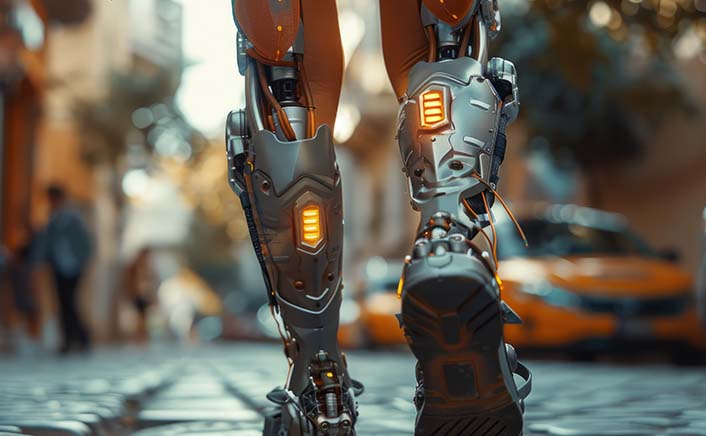
The China exoskeleton market is experiencing rapid growth, fueled by advancements in technology, increasing healthcare needs, and heightened industrial automation across the nation. A significant driver of this market expansion is the healthcare and rehabilitation segment, which holds a dominant share. The aging population in China, coupled with the rising incidence of strokes, spinal cord injuries, and various neurological disorders, has resulted in a substantial demand for advanced rehabilitation solutions. Strokes affect over 17.8 million adults, with around 3.4 million new cases reported each year, creating a critical requirement for mobility-assistive devices that can help restore patient independence. Additionally, spinal cord injuries present a significant challenge, with over 759,000 individuals living with traumatic spinal cord injuries and approximately 66,000 new cases emerging annually, underscoring the need for effective rehabilitation technologies.
Hospitals and rehabilitation centers are increasingly adopting robotic exoskeleton systems due to their ability to provide consistent, repeatable therapy sessions, alleviate the physical burden on physiotherapists, and improve patient outcomes. These devices facilitate assisted walking, repetitive motion exercises, and gait training, which are vital for rebuilding muscle strength and enhancing neural recovery. The integration of AI-based control systems, advanced sensors, and lightweight materials has further boosted the efficacy and attractiveness of exoskeleton solutions, establishing them as indispensable tools in contemporary rehabilitation practices.
In addition to healthcare, industrial applications are playing a crucial role in the growth of the China exoskeleton market. The country's robust manufacturing, construction, and logistics sectors are increasingly utilizing exoskeleton technology to improve worker productivity, reduce fatigue, and lower the incidence of occupational injuries. Industrial exoskeletons, particularly lower and upper body models, enable workers to lift heavy loads, maintain optimal posture, and perform repetitive tasks more efficiently. Companies in China are investing in wearable robotic devices as part of their workplace ergonomics initiatives and occupational safety programs, reflecting a transition towards smart manufacturing and Industry 4.0 practices. Lower body exoskeletons dominate the market due to their widespread use in rehabilitation and industrial environments, while full-body exoskeletons are gaining traction for complex industrial operations and defense applications. Although upper body exoskeletons currently hold a moderate market share, their adoption is increasing in warehouses and logistics centers driven by the demand for repetitive upper-limb support and enhanced load handling efficiency.
Military and defense applications are also significant contributors to the China exoskeleton market. The Chinese defense sector is exploring powered exoskeletons to enhance soldier endurance, mobility, and load-carrying capabilities. Military-grade exoskeletons enable personnel to carry heavier loads over longer distances and improve agility in demanding terrains, thus enhancing operational efficiency and safety. Government-backed research initiatives and defense contracts are facilitating the development and testing of advanced wearable robotics, positively impacting growth in this segment. As defense requirements continue to evolve, the integration of robotics and human augmentation technology is expected to expand further, driving innovation and commercialization within the market.
From a pricing perspective, the China exoskeleton market has shown a steady increase in average unit prices over the forecast period. Prices are projected to rise from approximately USD 1,200 per unit in 2024 to USD 2,300 by 2033, reflecting advancements in technology, functionality, and performance. Incorporating AI-assisted motion control, advanced sensors, high-capacity batteries, and lightweight materials has increased production costs while substantially adding value to the devices. Analysts predict that total revenue generated from exoskeleton sales will grow from USD 24.4 million in 2024 to USD 243.1 million in 2033, representing a compound annual growth rate (CAGR) of 25.5% from 2027 to 2033. Unit shipments are also expected to rise significantly, from 20,370 units in 2024 to 105,676 units in 2033, indicating strong adoption across healthcare, industrial, military, and emerging consumer mobility segments.
The market structure by body part shows that lower body exoskeletons account for 42% of the market, highlighting their extensive use in both rehabilitation and industrial settings. Full body exoskeletons make up nearly 29.5% and are increasingly adopted for complex industrial processes and defense operations, while upper body exoskeletons hold around 28.5% of the market, with steady growth in logistics and occupational support applications. This distribution emphasizes the diversified nature of the market and the necessity for customized solutions based on specific end-use requirements.