China’s rapid expansion of hyperscale data centers, aggressive AI infrastructure deployment, and strong government-backed digital initiatives are reinforcing the country’s position as one of the most strategically critical and high-growth markets for data center cooling solutions globally.
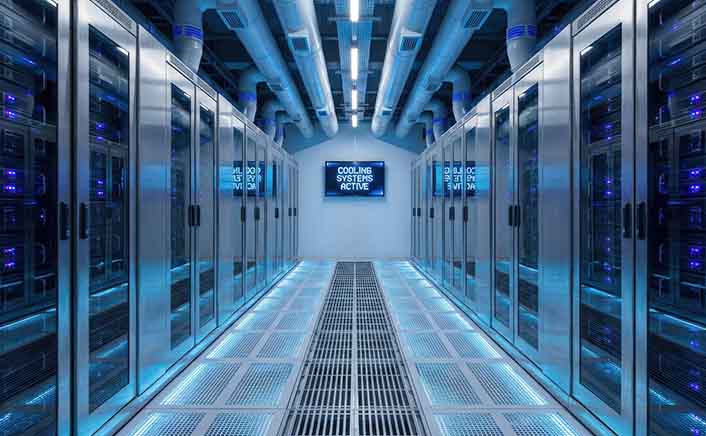
The China Data Center Cooling Market continues to expand through large-scale infrastructure investments, the increasing deployment of high-density computing environments, and the accelerating adoption of advanced cooling technologies. The market reached USD 1.72 billion in 2025 and is projected to grow to USD 4.19 billion by 2033, registering a CAGR of 11.8% from 2026 to 2033. Growth is primarily driven by the rapid scaling of artificial intelligence (AI) workloads, the expansion of cloud service providers, and the increasing focus on energy-efficient data center operations. As computing intensity rises, cooling systems are becoming a critical component of overall data center performance and cost optimization.
China’s data center ecosystem is fundamentally shaped by strong policy support and a rapidly evolving digital economy. Government initiatives such as the “Eastern Data, Western Computing” program are driving the redistribution of data center infrastructure toward regions with lower energy costs and improved cooling efficiency. This shift is enabling large-scale deployment of new facilities designed with advanced cooling systems from the outset. At the same time, domestic technology leaders such as Alibaba, Tencent, and Huawei are expanding hyperscale infrastructure, further strengthening demand for high-performance cooling solutions.
AI-driven computing is emerging as the most significant structural factor influencing the cooling market. High-performance workloads associated with AI training and inference are pushing data center thermal limits beyond what traditional air-based systems can efficiently manage. Industry developments indicate that rack power densities in AI data centers can reach several times that of conventional workloads, significantly increasing heat generation. This shift is accelerating the transition toward liquid cooling technologies, which offer superior thermal management and energy efficiency compared to air-based systems.
Liquid cooling is gaining strong momentum across China’s data center industry, particularly in hyperscale and AI-focused facilities. Technologies such as direct-to-chip cooling and immersion cooling are being increasingly adopted to support high-density deployments. Industry insights suggest that liquid cooling can substantially reduce energy consumption and improve cooling efficiency, making it a preferred solution for next-generation data centers. China is emerging as a key market for liquid cooling innovation, supported by both domestic manufacturers and global technology providers.
Air-based cooling systems continue to play a significant role, particularly in legacy and enterprise data centers. However, their limitations in high-density environments are becoming increasingly evident. As a result, hybrid cooling systems that combine air and liquid technologies are gaining traction, allowing operators to balance cost and performance as they transition to more advanced solutions. Free cooling and economizer-based systems are also being integrated to enhance energy efficiency, especially in regions with favorable climatic conditions.
Hyperscale data centers remain the dominant demand driver in the China data center coolers market. Cloud service providers are investing heavily in infrastructure to support growing demand for digital services, including e-commerce, streaming, and enterprise cloud applications. Colocation data centers are also expanding, driven by increasing enterprise outsourcing and demand for flexible infrastructure solutions. Meanwhile, enterprise data centers are gradually declining in relative share as organizations migrate to cloud-based environments, although demand for retrofit and upgrades remains significant.
Emerging deployment models are further shaping the market landscape. China is exploring innovative approaches, such as undersea data centers that use natural cooling from surrounding water to improve efficiency and reduce energy consumption. These developments highlight the increasing importance of cooling as a strategic design element in data center infrastructure. At the same time, the expansion of edge data centers is driving demand for compact, efficient cooling systems tailored to distributed computing environments.
Energy efficiency and sustainability considerations are playing a central role in purchasing decisions. Cooling systems account for a substantial portion of total data center energy consumption, prompting operators to prioritize solutions that reduce power usage effectiveness (PUE). Liquid cooling technologies, with their ability to deliver lower PUE levels, are gaining preference among operators seeking to optimize both performance and environmental impact. This aligns with broader regulatory and corporate sustainability goals across China’s technology sector.
Pricing dynamics in the market are evolving as competition intensifies. Air-based systems continue to offer lower upfront costs, making them suitable for smaller or less demanding deployments. However, liquid cooling systems, despite higher initial investment, provide long-term cost advantages through improved energy efficiency and reduced operational expenses. As adoption increases and manufacturing scales up, the cost gap between air and liquid cooling is expected to narrow, supporting wider market penetration.
Competitive Landscape
A mix of global technology providers and strong domestic players characterizes the China data center coolers market. International companies such as Vertiv, Schneider Electric, and STULZ bring advanced cooling technologies and global expertise, while domestic firms, including Huawei and Delta Electronics, are expanding their presence through localized solutions and cost competitiveness.
Chinese manufacturers are increasingly investing in liquid cooling technologies, positioning themselves as key contributors to the market’s evolution. System integrators and engineering contractors play a critical role in deploying cooling systems for integrated data center projects. The competitive landscape is gradually shifting toward end-to-end infrastructure solutions, in which vendors offer integrated cooling, power, and management systems to meet the complex requirements of modern data centers.
China’s continued investment in digital infrastructure, combined with the rapid adoption of AI and high-performance computing, is expected to sustain strong demand for advanced cooling solutions. As thermal management becomes a critical bottleneck in data center performance, the market will increasingly shift toward high-efficiency, scalable cooling technologies. This transformation positions China as one of the most dynamic and strategically important data center cooling markets globally, with significant opportunities for innovation and long-term growth.