China's Autonomous Vehicles Market to Reach USD 146 Billion by 2033, Driven by Rapid Deployment and AI Integration
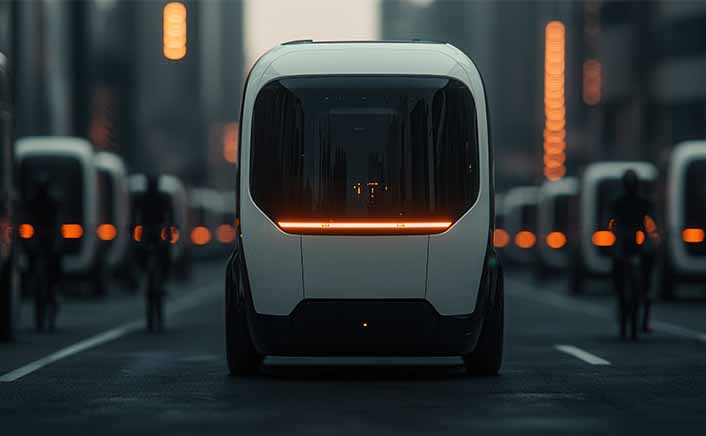
The Chinese Autonomous Vehicles (AVs) Market is undergoing a structural transformation, supported by strong regulatory backing, large-scale real-world deployment, and rapid advancements in artificial intelligence. The market is valued at USD 54 billion in 2025, increasing from USD 46 billion in 2024, and is projected to reach USD 146 billion by 2033, registering a CAGR of 12.8% during the forecast period.
China has emerged as the global leader in autonomous vehicle commercialization, with a distinct approach centered on scalable deployment rather than prolonged testing cycles. The country’s automotive ecosystem, which produces over 26 million vehicles annually, is increasingly integrating intelligent driving systems as a standard feature. More than 50% of new passenger vehicles sold in 2025 are equipped with Level 2 or Level 2+ capabilities, highlighting a shift toward software-defined mobility.
A key milestone in the market’s evolution is the regulatory approval of Level 3 autonomous vehicles in 2025. This development marks the transition from pilot testing to early-stage commercialization, enabling automakers to introduce conditional automation in production vehicles. At the same time, China has operationalized large-scale robotaxi fleets across major cities such as Beijing, Wuhan, and Shenzhen. These fleets, in some cases exceeding 1,000 vehicles, are completing millions of autonomous rides annually, providing real-world validation and continuous data to improve algorithms.
The market is also witnessing a significant shift in value creation, moving from hardware-centric revenue models toward software and service-driven ecosystems. Hardware components, including sensors and compute platforms, account for 59% of the market in 2025, while software contributes 28%, and mobility services, such as robotaxis, represent 13%. This transition is expected to accelerate as subscription-based models and AI-driven upgrades become more prevalent.
Despite strong momentum, the market faces challenges related to regulatory standardization, infrastructure readiness, and cost optimization. Level 3 deployment remains geographically limited, while the high cost of advanced sensors and computing systems continues to restrict mass-market adoption of higher levels of autonomy. Public trust and safety considerations also remain critical factors influencing adoption rates. However, ongoing investments in 5G infrastructure, smart city initiatives, and domestic semiconductor development are expected to address these constraints over time.
From a regional perspective, the market is concentrated in major urban clusters, where policy support and infrastructure readiness enable rapid deployment. Cities such as Beijing, Shanghai, Shenzhen, and Wuhan serve as key hubs for autonomous mobility, hosting pilot zones and large-scale robotaxi operations. Tier-2 cities are emerging as the next growth frontier, supported by government initiatives to expand intelligent transportation systems.
The competitive landscape of the Chinese AV market is moderately fragmented, with strong participation from both technology companies and automotive manufacturers. Baidu Inc. leads in robotaxi operations through its Apollo platform, while Pony.ai Inc. and WeRide Corp. are advancing Level 4 autonomous mobility services. Automotive players such as BYD Company Limited, SAIC Motor Corporation Limited, and Geely Automobile Holdings Limited are integrating advanced driver assistance and autonomous capabilities into their vehicle portfolios, leveraging high production volumes to scale adoption. Huawei Technologies Co., Ltd. plays a critical role as a technology enabler, providing AI chips and autonomous driving platforms to OEMs. Meanwhile, emerging electric vehicle manufacturers such as XPeng Inc. and NIO Inc. are focusing on software-driven differentiation and premium user experiences. Strategic partnerships, vertical integration, and continuous investment in AI and semiconductor technologies are shaping competition, with companies aiming to establish end-to-end control over the autonomous driving value chain.
Overall, the Chinese autonomous vehicles market is positioned for sustained growth, driven by policy alignment, technological innovation, and increasing integration of autonomous systems into mainstream mobility. The transition from assisted driving to higher levels of autonomy is expected to progress steadily, supported by expanding deployment, improving cost structures, and evolving regulatory frameworks.