China Automotive E-Compressor Market Expands on EV Scale, Thermal Efficiency Demands, and Supply Chain Strength
China’s automotive E-Compressor Market is entering a structurally robust growth phase, supported by the country’s dominant position in electric vehicle (EV) production and a growing focus on energy-efficient thermal management systems. The market stood at USD 4.7 billion in 2025 and is projected to reach USD 9.3 billion by 2033, reflecting a CAGR of 8.9% over the forecast period. This growth trajectory closely aligns with China’s expanding EV ecosystem, where component-level efficiency is becoming as critical as vehicle-level innovation.
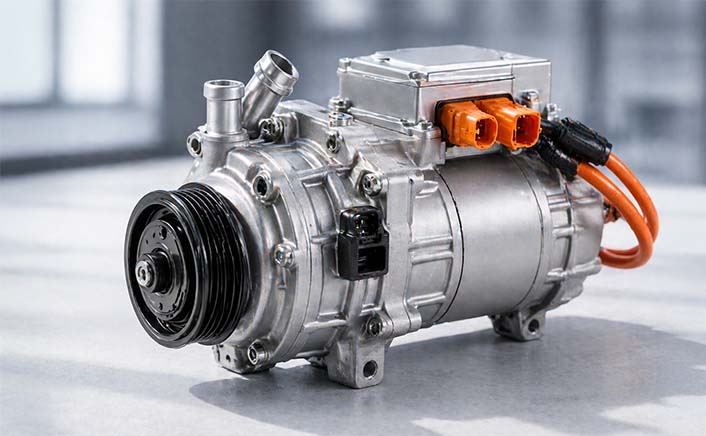
Automotive e-compressors are electrically driven systems used for cabin air conditioning and, more importantly, for thermal management of batteries and power electronics. Unlike conventional belt-driven compressors, these systems operate independently of the engine, making them essential for electric and hybrid vehicles. In China, where EV production has surpassed 8 million units annually, demand for e-compressors is directly tied to vehicle output and platform design. Each battery electric vehicle integrates an e-compressor as a core component, creating a direct link between EV growth and compressor adoption.
One of the defining trends shaping the market is the growing adoption of integrated thermal management systems. Modern EV architectures are moving toward centralized systems that manage cabin cooling, battery temperature, and electronic components. This shift is elevating the importance of e-compressors, whose efficiency directly affects vehicle range and energy consumption. Industry data indicates that inefficient thermal systems can reduce EV range by up to 20% in extreme climates, reinforcing the need for high-performance compressor solutions. As a result, automakers are prioritizing advanced compressor technologies, including variable-speed systems and compatibility with heat pump architectures.
The adoption of heat pump systems is especially significant in China’s northern regions, where cold weather affects EV performance. Heat pumps improve winter efficiency by optimizing energy use, and their performance depends heavily on compressor performance. Leading OEMs operating in China, including domestic manufacturers and global players with local production bases, are increasingly incorporating heat pump systems into mid-range and premium EV models. This trend is expanding the value contribution of e-compressors beyond basic HVAC functionality.
From a supply chain perspective, China offers a highly localized, cost-efficient manufacturing ecosystem. Domestic suppliers have developed large-scale production capabilities, supported by regional clusters in Guangdong, Zhejiang, and Jiangsu. This localization delivers 15–20% cost advantages over international suppliers, intensifying competition and driving price optimization across the market. At the same time, global Tier 1 companies have established manufacturing operations in China to remain competitive and maintain proximity to OEM clients.
The market is also benefiting from the rapid expansion of electric commercial vehicles. Electric buses and last-mile delivery fleets are gaining traction amid urban emissions regulations and lower operating costs. These vehicles require robust, continuous thermal management systems, driving additional demand for high-capacity e-compressors. In parallel, the rise of ride-hailing platforms and shared mobility services is increasing vehicle utilization rates, further reinforcing the need for durable, efficient thermal systems.
Despite strong growth fundamentals, the market faces challenges. Pricing pressure remains a key concern because multiple domestic manufacturers limit margin expansion. Additionally, the transition to high-voltage EV platforms, including 800V architectures, requires advanced compressor designs that meet stricter efficiency and safety standards. This increases development costs and pressures suppliers to innovate while maintaining cost competitiveness.
Looking ahead, the Chinese automotive e-compressor market is expected to shift from a volume-driven segment to a value-driven component market. As EV adoption continues to expand and thermal management systems become more sophisticated, compressors will play a central role in determining vehicle performance and efficiency. Companies that can combine cost-effective manufacturing with advanced technological capabilities are likely to strengthen their position in this competitive landscape.
With strong policy support, a robust manufacturing base, and continuous innovation in EV technology, China is set to remain the most influential market for automotive e-compressors worldwide.