Australia Mining Robots Market to Reach USD 934 Million by 2033, Driven by Large-Scale Automation in Iron Ore Operations
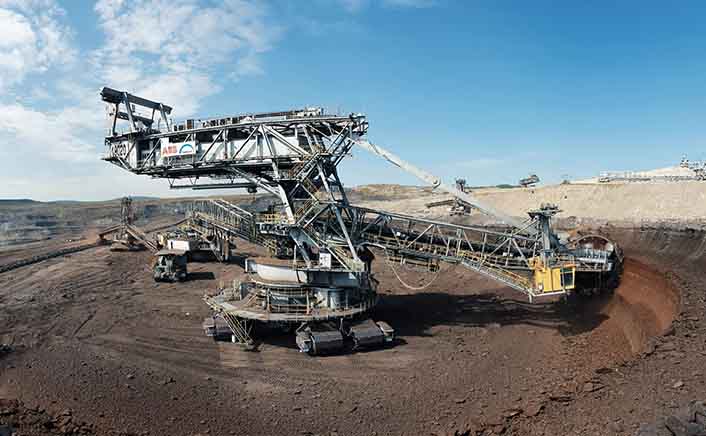
The Australian Mining Robots Market is valued at USD 400 million in 2025 and is projected to reach USD 934 million by 2033, expanding at a CAGR of 11.2%. The market is being shaped by the country’s unique mining economics, where high labor costs, large-scale operations, and stringent safety requirements are accelerating the adoption of autonomous and robotic systems across both surface and underground mines.
Mining robots in Australia primarily include autonomous haulage systems (AHS), robotic drilling rigs, and AI-enabled automation platforms. Unlike emerging markets, where automation is still in pilot stages, Australia represents one of the most mature deployment environments globally. In Western Australia’s Pilbara region, operators such as Rio Tinto and BHP have deployed hundreds of autonomous haul trucks, enabling continuous 24/7 operations and significantly improving fleet utilization rates.
A key driver of market expansion is the structural cost advantage that automation delivers. Mining companies in Australia operate under a high-cost labor model, often relying on fly-in-fly-out (FIFO) workforces. Autonomous systems reduce workforce dependency while improving operational consistency. Real-world performance data indicate that autonomous haulage systems can improve productivity by 15–20% and reduce operating costs per tonne through optimized routing, reduced idle time, and lower fuel variability.
Material handling remains the largest application segment, accounting for the majority of robotic deployments. Haulage operations account for a significant share of total mining expenditure, making them the primary focus of automation investment. Autonomous trucks, typically priced between USD 3 million and USD 4 million per unit, are increasingly being integrated with centralized fleet management systems, enabling real-time optimization across multiple sites. Remote operations centers based in cities such as Perth allow operators to manage entire mining fleets without being physically present at mine sites, further reducing costs and improving safety outcomes.
Technology evolution is shifting the market from hardware-centric automation to integrated, software-driven mining ecosystems. Companies are increasingly investing in AI-based predictive maintenance, digital twins, and advanced analytics to enhance equipment performance and reduce unplanned downtime. This transition is creating new revenue streams for technology providers, particularly in software and data services layered on top of existing robotic infrastructure.
Despite strong growth momentum, the market faces constraints related to capital intensity and integration complexity. Full-scale automation requires not only equipment investment but also supporting infrastructure, including communication networks and control systems. Legacy mining operations, particularly in coal-heavy regions such as New South Wales, face challenges in adopting advanced robotics due to outdated equipment and fragmented digital systems. Additionally, mining investment cycles remain closely tied to commodity prices, which can delay automation projects during periods of price volatility.
Opportunities are emerging in underground mining, where safety risks and operational constraints make robotics particularly valuable. Gold mining operations are increasingly adopting robotic drilling and autonomous loaders to improve efficiency in confined environments. The convergence of electrification and automation is also gaining traction, with mining companies exploring battery-electric autonomous vehicles to reduce emissions while maintaining productivity.
Regionally, Western Australia dominates the market due to its large-scale iron ore operations and early adoption of automation technologies. Queensland follows, with growing adoption in coal mining, while other regions are gradually integrating robotics as new mining projects are developed with automation capabilities built in from the outset.
A concentrated group of global equipment manufacturers and technology providers characterizes the competitive landscape. Companies such as Caterpillar and Komatsu lead in autonomous haulage systems, while Epiroc and Sandvik focus on drilling and underground automation. Technology firms, including Hexagon AB and ABB, are expanding their presence through software, analytics, and electrification solutions.
As mining companies continue to prioritize efficiency, safety, and cost optimization, robotics is becoming a core component of operational strategy rather than a discretionary investment. The Australian mining robots market is therefore positioned for sustained growth, supported by ongoing technological innovation and the country’s leadership in large-scale automated mining operations.