Enterprise Shift Toward Virtualized Infrastructure Boosting APAC Software Defined Data Center Adoption
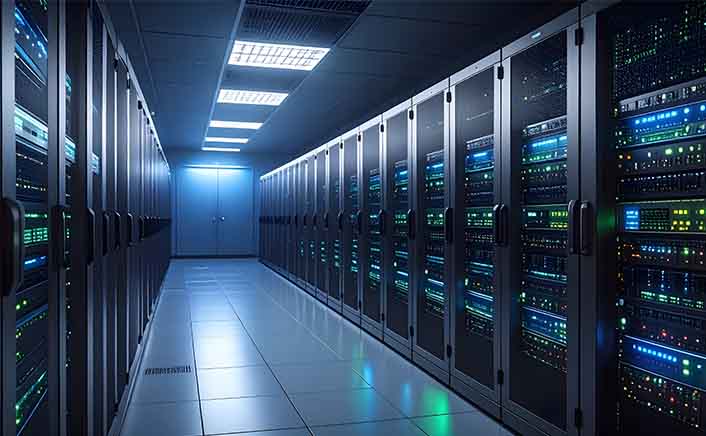
"The Asia-Pacific software-defined data center (SDDC) market is witnessing significant growth, fueled by the ongoing digital transformation, increased cloud adoption, and a rising demand for scalable IT infrastructure across various industries. Enterprises in countries like China, India, Japan, South Korea, and Australia are progressively integrating software-defined technologies to enhance their operational efficiency, flexibility, and cost-effectiveness.
The growth of hyperscale data centers and the rapid expansion of cloud service providers are driving the shift from traditional hardware-based systems to virtualized and automated data center environments. Technologies such as software-defined networking (SDN), software-defined storage (SDS), and network function virtualization (NFV) are empowering organizations to manage their data center resources through centralized software platforms, thereby reducing reliance on physical hardware and boosting scalability.
Additionally, the uptake of emerging technologies, including artificial intelligence, big data analytics, and the Internet of Things, is producing enormous data volumes, which necessitates advanced data center architectures. Government initiatives that promote digital economies and investments in 5G infrastructure are also enhancing the market outlook in the region.
However, there are challenges such as cybersecurity risks, integration issues with legacy systems, and the high initial costs associated with deployment that may hinder adoption in some developing economies. Overall, the APAC SDDC market is anticipated to continue its growth as enterprises focus on adopting agile, automated, and cloud-ready infrastructures to align with the evolving digital business landscape."
The Asia Pacific Software Defined Data Center market was valued at USD 13.53 Billion in 2025 and is projected to reach USD 59.37 Billion by 2033, with a compound annual growth rate (CAGR) of 17.20% from 2027 to 2033.
In China and India, government-supported digitalization efforts, such as "Digital India" and "Made in China 2025," are driving the demand for SDDC solutions that offer scalable, cost-effective, and flexible data management. Additionally, Japan and South Korea, both advanced technology markets, are also contributing to SDDC adoption by emphasizing cloud-based services and edge computing to support 5G networks and IoT devices.
Furthermore, businesses in the APAC region are increasingly adopting hybrid and multi-cloud environments. SDDC solutions are instrumental in streamlining data management and reducing costs, solidifying the region's position as a global leader in SDDC growth.
Rapid digitization across industries like finance, telecom, and healthcare is fueling demand for scalable SDDC solutions in APAC.
Digital transformation is rapidly advancing across the Asia-Pacific (APAC) region. Organizations in various sectors, including finance, telecommunications, e-commerce, and healthcare, are increasingly seeking modern IT solutions. The widespread adoption of technologies such as cloud computing, the Internet of Things (IoT), and big data analytics is driving a growing demand for flexible and scalable data management infrastructure.
Software-Defined Data Centers (SDDCs), which provide automation, resource pooling, and agility, enable organizations to streamline their operations, improve efficiency, and reduce costs. As businesses strive to enhance their digital capabilities, SDDCs are becoming essential for driving their growth.
National digitalization programs and smart city projects in countries like China and India are driving SDDC adoption.
Governments in the Asia-Pacific (APAC) region are actively promoting digitalization through various national initiatives, including India’s Digital India and China’s Digital Silk Road. These initiatives aim to improve public service delivery, stimulate economic growth, and enhance data management. Concurrently, smart city projects in countries such as Singapore, China, and South Korea are advancing the development of sophisticated IT infrastructure to handle the vast amounts of data generated by connected devices, sensors, and citizens. Software-Defined Data Centers (SDDCs) play a crucial role in these efforts by providing the agility, scalability, and centralized control needed to manage data effectively in these smart environments.
The expansion of 5G networks and edge computing in APAC requires flexible, low-latency SDDC infrastructure to manage increased data volumes.
The rapid deployment of 5G networks in nations such as South Korea, Japan, and China has increased demand for high-speed, low-latency data processing. A strong infrastructure that can manage enormous data volumes is necessary for 5G's potential to link millions of devices, particularly at the network's edge. Edge computing, which processes data closer to the source, may be smoothly included into the network as a whole thanks to SDDC solutions, which make it possible to handle this distributed data across several locations with great performance and reliability. For real-time applications in sectors like manufacturing, healthcare, and driverless vehicles, this synergy is crucial.
The shift towards hybrid and multi-cloud environments is boosting SDDC demand for unified and scalable data management.
As organizations across the Asia-Pacific (APAC) region migrate to cloud environments, the demand for flexible, scalable, and integrated data management solutions is becoming increasingly evident. A significant factor driving the adoption of Software-Defined Data Centers (SDDC) is the shift towards hybrid and multi-cloud architectures, where companies utilize a combination of private and public cloud environments. SDDCs enable organizations to seamlessly manage workloads and resources across various cloud platforms, ensuring a unified and streamlined experience. This flexibility allows organizations to scale quickly while managing costs and resources more effectively. Additionally, the growth of cloud-native applications further accelerates the need for these advanced data center solutions.
Organizations seek operational efficiency through SDDC’s automation capabilities, addressing budget constraints and skill shortages.
Automation has become a major area of attention for companies looking to reduce expenses and increase productivity. IT departments can reduce manual involvement and increase operational efficiency by utilizing Software-Defined Data Centers (SDDCs), which offer centralized control and automated resource management. Automation is essential for making complicated IT processes like provisioning, setup, and resource management in data centers simpler in nations like China and India where there is a lack of qualified IT workers. Furthermore, by facilitating a more agile infrastructure, SDDCs help businesses react faster to shifting consumer demands and market situations.
Competitive Landscape
Some of the major companies operating within the Software Defined Data Center market are: Hitachi Vantara LLC, Cisco Systems, Inc., Nutanix, NetApp, GreenPages, Inc. , Dell Technologies, VMware, Inc., Fujitsu , Hewlett Packard Enterprise Development LP, IBM Corporation and Others.