Rapid Mining Expansion and Smart Technologies Drive Mining Robotics Growth Across Asia Pacific.
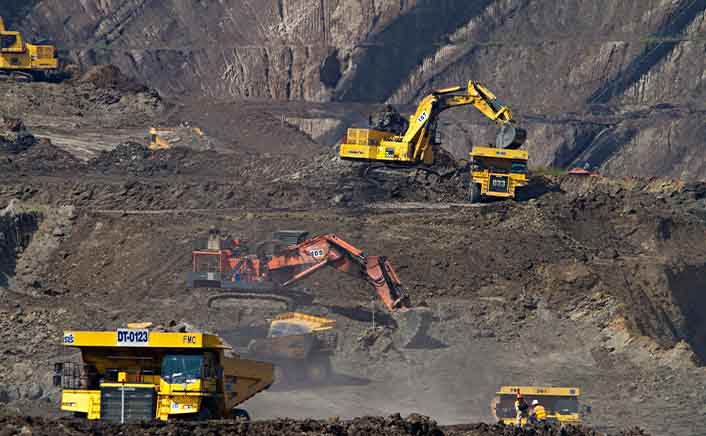
The Asia-Pacific Mining Robotics Market was valued at USD 0.33 Billion in 2025 and is projected to reach USD 0.95 Billion by 2033, with growth of 19.30% from 2027 to 2033.
Asia Pacific is becoming the fastest-growing region in the Global Mining Robotics Market due to the rapid expansion of mining activities and increasing adoption of automation technologies across major economies such as China, Australia, and India. Mining companies in the region are increasingly using autonomous trucks, robotic drilling machines, drones, and AI-based monitoring systems to improve productivity, reduce downtime, and enhance worker safety in hazardous mining environments.
Australia is leading the adoption of autonomous mining equipment, while China is heavily investing in smart mining projects supported by government-backed digital transformation initiatives. In India, growing coal and metal mining operations are creating strong demand for advanced robotic solutions. The region’s rich availability of minerals such as coal, iron ore, lithium, and rare earth elements is also supporting market expansion.
Additionally, rising labor shortages, stricter workplace safety regulations, and the need to reduce operational costs are encouraging mining operators to implement robotic technologies. The presence of cost-effective manufacturing facilities and increasing investments in AI, IoT, and automation infrastructure are expected to further accelerate the growth of the mining robotics market across Asia Pacific in the coming years.
1. Rapid Expansion of Coal, Metal, and Mineral Extraction Projects in Countries Such as China, India, and Australia Is Increasing Demand for Robotic Mining Equipment.
Asia Pacific has become one of the world’s largest mining hubs due to rising demand for minerals, metals, and energy resources. Countries such as China, Australia, and India are significantly increasing coal, iron ore, copper, lithium, and rare earth mineral production to support industrialization, infrastructure development, and renewable energy projects. As mining operations expand into deeper and more challenging environments, companies are increasingly adopting robotic and automated technologies to improve operational efficiency and productivity. Mining robotics help reduce manual labor, improve accuracy, and enable continuous operations in harsh conditions. Autonomous haulage systems, robotic drilling equipment, and AI-powered monitoring tools are being widely deployed to optimize extraction activities and minimize downtime. The growing number of exploration projects and investments in new mining sites across Asia Pacific is further supporting demand for advanced robotic systems. This strong growth in mining activities is expected to remain a major factor driving the expansion of the mining robotics market in the region over the coming years.
2. Mining Companies Are Adopting Robotics and Autonomous Systems to Reduce Accidents and Improve Safety in Hazardous Underground and Surface Mining Operations.
Worker safety has become a critical priority for mining companies across Asia Pacific due to the hazardous nature of mining operations. Underground mines and remote extraction sites expose workers to risks such as toxic gases, cave-ins, explosions, and equipment-related accidents. To reduce these dangers, mining operators are increasingly implementing robotic and autonomous technologies capable of performing high-risk tasks with minimal human involvement. Robotic drilling systems, autonomous haulage vehicles, and inspection drones are helping companies improve workplace safety while maintaining operational efficiency. Governments and regulatory bodies in countries such as Australia and China are also enforcing stricter occupational safety regulations, encouraging mining firms to modernize their operations with automated solutions. Robotics additionally enable real-time monitoring of environmental conditions and equipment performance, helping prevent accidents before they occur. As companies continue prioritizing employee welfare and accident reduction, demand for mining robotics is expected to grow rapidly throughout the Asia Pacific region.
3. Several Asia Pacific Governments Are Promoting Digital Mining and Industrial Automation Through Favorable Policies, Smart Mining Initiatives, and Infrastructure Investments.
Governments across Asia Pacific are actively supporting the development of smart mining technologies to improve productivity, sustainability, and global competitiveness in the mining sector. Countries including China, Australia, Japan, and India are investing in digital transformation initiatives focused on automation, artificial intelligence, and advanced industrial technologies. Several government programs encourage mining companies to adopt robotics, IoT-based monitoring systems, autonomous machinery, and data analytics platforms to modernize mining operations. In China, smart mining projects are receiving strong policy support as part of broader industrial digitalization goals. Australia is also promoting innovation through mining technology research and partnerships between mining companies and technology providers. These initiatives are helping create a favorable environment for the deployment of mining robotics across the region. Financial incentives, infrastructure development, and investments in high-speed communication networks are further supporting automation adoption. Continued government encouragement is expected to accelerate the growth of the Asia Pacific mining robotics market in the future.
4. A Shortage of Skilled Mining Workers and Rising Labor Expenses Are Encouraging Companies to Use Automated and Robotic Mining Solutions for Better Efficiency.
Mining companies across Asia Pacific are facing growing challenges related to labor shortages and rising workforce costs. Many mining operations are located in remote and harsh environments where attracting and retaining skilled workers is difficult. In addition, aging workforces and declining interest in traditional mining jobs are creating long-term labor supply issues in several countries. To overcome these challenges, mining operators are increasingly adopting robotic and automated systems that can perform repetitive, dangerous, and labor-intensive tasks more efficiently. Autonomous haulage trucks, robotic drilling machines, and remote-controlled equipment help reduce dependence on manual labor while improving operational consistency. Automation also lowers training requirements and minimizes human error in complex mining processes. Rising wages and increasing operational expenses are further encouraging mining companies to invest in robotics to achieve long-term cost savings. As workforce challenges continue to impact the mining sector, the demand for advanced robotic solutions is expected to increase significantly across the Asia Pacific region.
5. Growing Integration of Artificial Intelligence (AI), Internet of Things (IoT), Drones, and Autonomous Vehicles Is Accelerating the Modernization of Mining Operations Across the Region.
The rapid adoption of advanced technologies such as Artificial Intelligence (AI), Internet of Things (IoT), machine learning, drones, and autonomous vehicles is transforming mining operations across Asia Pacific. Mining companies are increasingly integrating these technologies with robotic systems to improve productivity, reduce downtime, and optimize resource extraction. AI-powered analytics help mining operators monitor equipment performance, predict maintenance requirements, and improve decision-making processes. IoT-enabled sensors provide real-time data on machinery, environmental conditions, and worker safety, enabling better operational control. Drones are being widely used for mine surveying, inspection, and exploration activities, while autonomous vehicles improve transportation efficiency within mining sites. These advanced technologies allow companies to achieve higher accuracy, lower operational risks, and reduced production costs. The increasing availability of digital infrastructure and strong investment in industrial automation are accelerating technology adoption across the region. This ongoing technological advancement is expected to play a major role in driving the future growth of the Asia Pacific mining robotics market.
Competitive Landscape
Some of the major companies operating within the Global Mining Robotics Market are: Caterpillar Inc., Built Robotics, Hexagon AB, Autonomous Solutions Inc., Epiroc AB, Sandvik AB, Atlas Copco, Komatsu Ltd., Hitachi Construction Machinery Co., Ltd., ABB Ltd and Others.