End-User Dynamics in the Advanced Ceramics Market: Growth Across Semiconductor, Automotive, and Energy Sectors
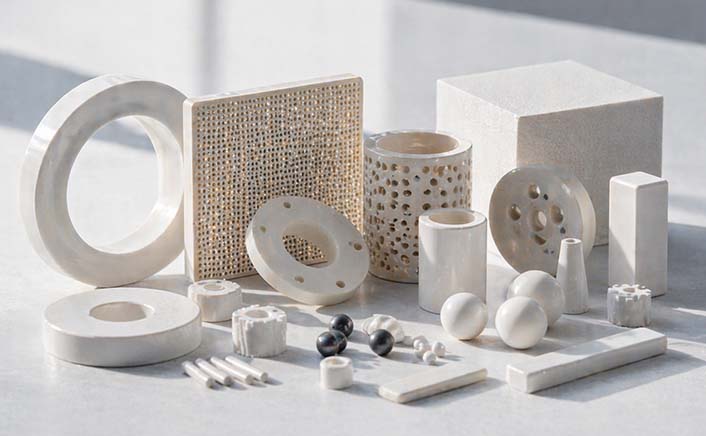
The end-user segmentation of the Advanced Ceramics Market showcases a well-diversified demand structure, with both rapidly growing technology sectors and traditional industrial applications contributing to overall market expansion. The semiconductor industry occupies a leading role, driven by the increasing complexity of electronic devices and the swift advancements in chip manufacturing technologies. Advanced ceramics find extensive use in semiconductor fabrication equipment, substrates, and insulating components due to their excellent thermal stability, electrical insulation, and resistance to harsh processing environments. As global demand for semiconductors continues to rise—spurred by applications such as artificial intelligence, 5G infrastructure, and consumer electronics—the significance of ceramics becomes increasingly pivotal. This positions the semiconductor segment as a cornerstone of the Advanced ceramics market, both in terms of volume and in fostering technological innovation and high-value product development.
Following closely is the automotive industry, which has emerged as a significant growth driver within the Advanced ceramics market. The transition toward electric vehicles (EVs), hybrid systems, and advanced driver assistance systems (ADAS) has markedly increased the utilization of ceramic components in sensors, power electronics, batteries, and engine systems. The superior heat resistance, wear durability, and lightweight properties of ceramics render them ideal for modern automotive applications that prioritize efficiency and reliability. As the global automotive sector moves toward electrification and adheres to stricter emission standards, the demand for advanced ceramics is projected to grow steadily, solidifying the segment’s robust market position.
The energy sector also commands a substantial share of the Advanced ceramics market, propelled by the worldwide shift toward renewable energy and sustainable power generation. Advanced ceramics are integral to applications such as solar panels, wind turbines, and fuel cells, where they enhance performance, efficiency, and durability. In the case of solid oxide fuel cells (SOFCs), for example, ceramics function as crucial components that facilitate efficient energy conversion at elevated temperatures. Similarly, in solar energy systems, ceramic materials contribute to improved thermal stability and longevity. The expanding scale of renewable energy installations globally is likely to sustain robust demand from this segment, making it a vital contributor to long-term market growth.
Healthcare applications represent another significant segment, characterized by high-value, precision-driven demand. Advanced ceramics are prevalent in medical implants, dental restorations, surgical instruments, and diagnostic equipment due to their biocompatibility, corrosion resistance, and mechanical strength. Materials like zirconia and alumina are particularly preferred for their ability to integrate with biological systems while ensuring durability. Although the healthcare sector accounts for a smaller share compared to industrial and automotive applications, it plays a crucial role in revenue generation due to the premium pricing associated with medical-grade ceramics. This segment underscores the value-driven aspect of the Advanced ceramics market, prioritizing performance and reliability over sheer volume.
The industrial manufacturing sector constitutes a notable portion of demand, reflecting the widespread application of ceramics in machinery, tooling, and wear-resistant components. Advanced ceramics are employed in cutting tools, bearings, seals, and high-temperature equipment, enhancing operational efficiency and extending service life. This segment benefits from steady demand across diverse industries, including mining, chemical processing, and heavy manufacturing. While growth in this sector is relatively stable compared to emerging sectors, it provides a solid foundation for the Advanced ceramics market by ensuring consistent baseline demand.
The defense and aerospace sector, though smaller in share, plays an essential role in promoting innovation and high-performance applications within the Advanced ceramics market. Ceramics are utilized in armor systems, thermal protection systems, and advanced optical and electronic components, where their lightweight and high-strength characteristics are critical. These applications necessitate materials capable of withstanding extreme conditions, including high temperatures, pressure, and mechanical stress. Thus, this segment supports the advancement of cutting-edge ceramic technologies and contributes significantly to the premium market segment.
The interplay among these end-user segments highlights the dual nature of the Advanced ceramics market, where both volume-driven and value-driven dynamics exist side by side. High-volume sectors such as automotive, energy, and industrial manufacturing ensure steady demand and scalability, while high-value sectors like semiconductors, healthcare, and aerospace drive innovation and premium pricing. This balanced distribution helps mitigate market risk and enhances resilience, as growth in one sector can offset challenges in another.