U.S. Vertical Farming Market Outlook: Capital, Technology, and the Reinvention of Urban Food Production
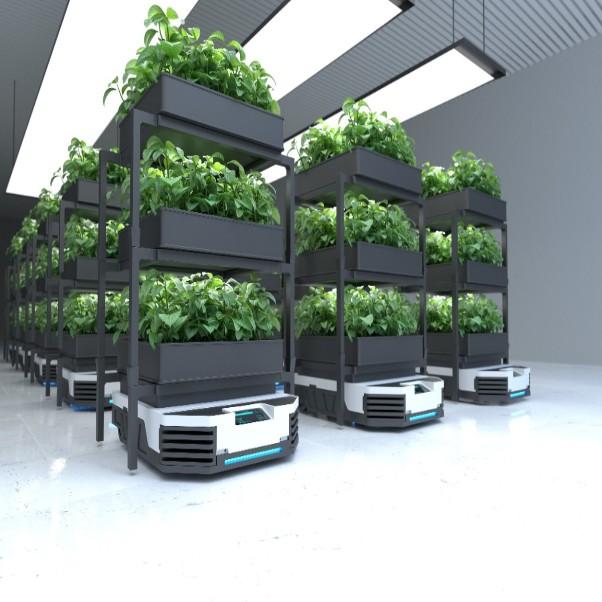
The U.S. Vertical Farming Market, valued at USD 1,004 million in 2024, is projected to expand rapidly to USD 3,997 million by 2030, growing at a robust CAGR of 25.9% over the forecast period. This exceptional growth reflects a structural shift in how food is produced, distributed, and consumed in the U.S., driven by sustainability priorities, urbanization, and advances in controlled-environment agriculture.
Vertical farming is no longer viewed just as an experimental alternative to traditional agriculture. Instead, it is increasingly recognized as a strategic infrastructure investment that supports food security, supply chain resilience, and climate adaptation. Recent disruptions caused by climate change, labor shortages, and logistics bottlenecks have accelerated interest in indoor farming systems, which deliver predictable year-round output independent of external weather conditions.
Corporate Capital and Strategic Investment Momentum
One defining characteristic of the U.S. vertical farming market is the strong inflow of capital from corporations and institutions. Major corporations and investment funds are channeling resources into a scalable vertical farming platform that integrates automation, artificial intelligence, and sustainability metrics. Corporate investors are motivated not only by long-term financial returns but also by alignment with environmental, social, and governance objectives. Vertical farming offers measurable benefits, including reduced water use, minimal land use, and shorter supply chains.
Large retail and technology companies are increasingly backing vertical farming ventures to secure a localized food supply and reduce reliance on long-distance transportation networks. The proximity of vertical farms to urban consumers lowers food miles, improves freshness, and mitigates risks associated with global trade disruptions. For businesses operating in densely populated areas, vertical farming offers a viable path to decentralize food production while supporting emissions-reduction targets.
The pandemic has underscored the vulnerability of conventional food systems, prompting businesses to prioritize resilient, domestically controlled agricultural models. Vertical farming facilities are equipped with precise climate control and automation, enabling continuous production regardless of seasonal fluctuations and positioning them as critical assets for ensuring food availability for urban populations.
Capital Expenditure Reflects Technology-Led Scaling
The U.S. vertical farming market is highly capital-intensive, with total CAPEX exceeding USD 950 million in 2024 and projected to grow at an annual rate of 12–14%. A significant share of this investment goes to infrastructure, which accounts for roughly 25% of total CAPEX. Modern vertical farms rely on modular, space-efficient structures that maximize output per square foot while maintaining strict environmental controls.
Lightning represents another significant investment area, accounting for around 20% of total CAPEX. High-efficiency LED lighting has become central to vertical farming operations, as farms adopt innovative lighting systems with dynamic spectral control to optimize photosynthesis while reducing energy consumption. These systems are increasingly integrated with automation platforms that adjust light intensity based on crop growth stages.
Water-efficient cultivation systems, such as hydroponics and aeroponics, account for nearly 15% of CAPEX, reflecting the industry’s emphasis on resource optimization. Environmental control systems, including HVAC, humidifiers, and dehumidifiers, contribute about 10% toward maintaining consistent temperature and humidity levels, which are essential for year-round production.
Investment in automation, robotics, sensors, and AI-based control platforms is steadily increasing. Although these components represent a smaller share of upfront CAPEX, they are critical for reducing labor dependence, improving yield predictability, and enabling data-driven decision-making. The gradual integration of renewable energy and storage solutions further supports the industry’s long-term sustainability objectives.
Technology Landscape: Efficiency as a Competitive Advantage
From a technological standpoint, hydroponics dominates the U.S. vertical farming market, accounting for nearly two-thirds of total adoption. Its leadership stems from reliability, scalability, and precise nutrient delivery, which enable fast crop cycles and consistent yields. Hydroponic systems are particularly well-suited to leafy greens, herbs, and microgreens, making them the preferred choice for large-scale commercial operations.
Aeroponics is the fastest-growing segment, capturing nearly one-fifth of the market. By misting plant roots with nutrient solutions, aeroponics provides superior oxygenation and higher yield density while reducing water use by up to 90%. Although initial installation costs remain high, efficiency gains and sustainability benefits are improving its commercial viability, especially for premium crops.
Aquaponics occupies a small but strategically important niche, integrating fish farming with plant cultivation to create a closed-loop nutrient system. Although operational complexity and regulatory considerations limit widespread adoption, aquaponics aligns closely with circular-economy principles and is gaining traction among eco-focused producers and research institutions.
Emerging systems, such as fogponics and soil-based hybrids, continue to serve niche applications, underscoring the market’s ongoing experimentation and innovation.
Market Direction and Strategic Implications
The U.S. vertical farming market is moving from pilot-scale projects to commercially scaled, technology-intensive food production systems. The convergence of capital investment, automation, AI-driven management, and sustainability imperatives is reshaping how urban food ecosystems are built. As operational efficiencies improve and costs gradually decline, vertical farming is expected to play a more prominent role in national food strategies.
The market’s rapid growth reflects not only rising demand for fresh, locally grown produce but also a broader rethinking of agriculture’s role in climate resilience, urbanization, and supply chain stability. Vertical farming’s ability to deliver consistent output with reduced environmental impact positions it as a long-term pillar of the U.S. food system rather than a temporary trend.
Company Landscape Snapshot
Key players shaping the U.S. vertical farming ecosystem include AeroFarms, BrightFarms, Freight Farms, Green Sense Farms, American Hydroponics, Illumitex, and Vertical Farm Systems.