Farm-to-Fork Revolution: How Retail Chains and Restaurants Are Embracing Vertical Farming
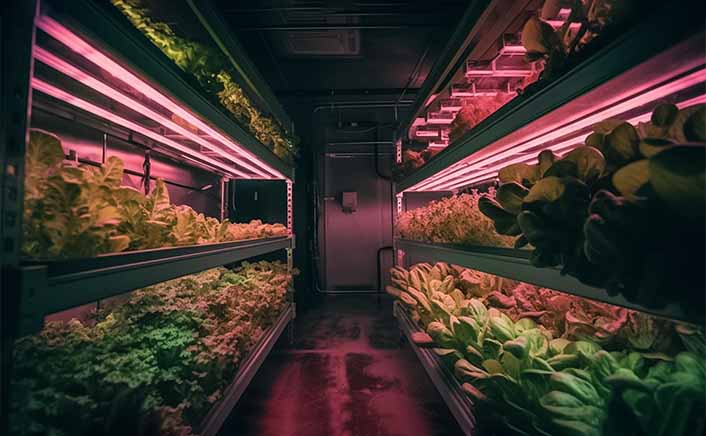
The U.S. vertical farming market showcases a diverse ecosystem shaped by factors such as commercial efficiency, sustainability initiatives, and evolving consumer behavior. Within this landscape, commercial growers lead, holding nearly 58.5% of the total market share. These entities serve as the backbone of the U.S. vertical farming sector, delivering high-quality produce to urban centers where traditional agriculture faces challenges due to land scarcity and logistical issues. Prominent operators, including AeroFarms, BrightFarms, and Green Sense Farms, employ advanced hydroponic and aeroponic systems to ensure consistent year-round yields.
They capitalize on economies of scale, integration with retail chains, and optimized resource management that can reduce water usage by up to 90% compared to conventional farming. Furthermore, their operations align with the growing consumer preference for locally sourced, pesticide-free food, reinforcing the commercial viability of vertical farms in major metropolitan areas such as New York, Chicago, and Los Angeles.
The residential segment represents an emerging yet dynamic portion of the U.S. vertical farming market, contributing approximately 14.2% of the total share. An increasing urban population and heightened awareness of sustainable living are motivating households to adopt compact indoor systems. Modular hydroponic kits and smart garden technologies are making vertical farming accessible to individual consumers who prioritize self-sufficiency and fresh produce. Startups focused on user-friendly, automated systems, including countertop hydroponic units, are rapidly expanding across the U.S.
Their offerings resonate with environmentally-conscious consumers and tech-savvy millennials, who view home farming as an integral part of both lifestyle and wellness trends. The availability of cost-effective LED lighting, efficient nutrient management solutions, and app-based monitoring systems is further driving adoption. Although small-scale, the residential segment serves as a vital driver of awareness, fostering community-level participation and supporting the broader sustainability agenda.
Research organizations account for approximately 11.8% of the U.S. vertical farming market, playing a critical role in innovation and technological advancement. Universities and government-funded research centers are actively exploring climate control models, AI-driven crop management, and alternative substrates. Their research contributes to the commercialization of energy-efficient lighting systems, improved nutrient formulations, and predictive analytics for crop yields.
Renowned institutions, like MIT and Cornell University, are partnering with industry players to test scalable designs and automation technologies aimed at reducing operational costs.
These research-driven insights also influence policy decisions, helping to shape frameworks that promote sustainable agriculture and energy optimization within controlled-environment farming. This segment not only reinforces the technical foundation of the market but also ensures long-term competitiveness by continuously enhancing yield efficiency and operational resilience.
Retail chains and restaurants collectively account for roughly 15.5% of the market share, reflecting the growth of the farm-to-fork model that is reshaping urban food supply systems. Retailers, such as Whole Foods and Walmart, are forming partnerships with vertical farms to offer locally grown, chemical-free produce directly to consumers. Similarly, restaurant chains are investing in on-site or nearby vertical farms to ensure freshness, traceability, and consistent quality. This trend meets the increasing consumer demand for transparency in food sourcing.
Harvesting produce in close proximity to consumption points significantly reduces transportation costs and carbon emissions, thereby reinforcing the environmental advantages of vertical farming. Additionally, premium restaurants utilize on-site vertical systems to grow herbs and specialty crops, enhancing the freshness of their offerings. This collaborative approach among technology firms, farm operators, and retail players is redefining modern supply chains and establishing vertical farming as a key component of sustainable food logistics in the United States.
Collectively, these end-use categories illustrate the evolution of the U.S. vertical farming market into a multi-dimensional industry that amalgamates commercial efficiency, innovation, and sustainability. While commercial growers remain dominant in terms of volume and revenue, the rise in residential adoption promotes consumer awareness and market diversification. Research organizations ensure ongoing advancements in production systems, while integration with retail and restaurant sectors bridges the gap between farms and consumers.
This interconnected structure enhances resilience against external pressures, such as supply chain disruptions, climate change, and urbanization. In the coming years, increased synergies among these end-use segments are anticipated, driven by digitalization, renewable energy integration, and localized production models. The convergence of innovation across these areas is expected to further shape the future of the vertical farming industry.