Navigating the Future: Insights into the Indoor Location Market
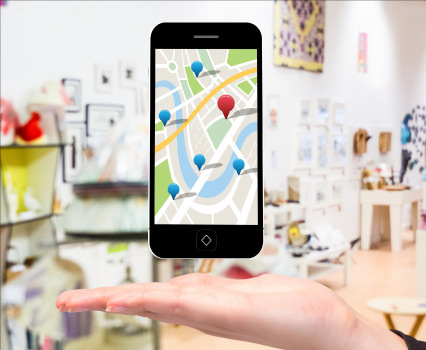
The way we navigate and interact with indoor spaces is evolving rapidly. From shopping malls and airports to hospitals and warehouses, indoor technologies are transforming how businesses track assets, manage spaces, and engage customers. Since GPS isn’t very useful for door operations, Wi-Fi tracking, RFID, and ultra-wideband systems are now filling the gap. Recent research shows that the global indoor location market is set for significant growth, driven by increasing demand for real-time tracking, navigation, and location-based insights. Businesses now recognize that understanding movement and behavior within these facilities can directly enhance operational efficiency, safety, and customer satisfaction.
According to Mark & Spark Solutions, the global indoor market was valued at USD 13.6 billion in 2024 and is projected to surge to USD 69.5 billion by 2032, growing at a CAGR of 23.3%. This substantial growth highlights the increasing importance of indoor positioning for operational efficiency, enhanced safety, and a better customer experience.
Why the Market is Growing
Smart Spaces & IoT Integration
The rise of smart buildings, which are embedded with IoT sensors, Wi-Fi routers, and beacon transmitters, is a significant catalyst. These spaces generate valuable data on movement, occupancy, and environmental conditions, enabling real-time tracking of people, assets, and equipment. This allows the organization to optimize layouts, improve safety, reduce energy consumption, and deliver personalized experiences.
Rising Demand Across Industries
These indoor location systems are finding applications across several sectors:
• Retail: This involves In-store navigation, shopper behavior analytics, and personalized promotions. It follows a focus on sales and marketing optimization, which is the largest and is expected to grow from USD 4.2 billion in 2023 to USD 25.8 billion by 2032.
• Healthcare: Includes tracking medical equipment, monitoring patients, and staff while improving operational efficiency
• Logistics and Warehousing: Real-time asset tracking, inventory management, and efficient supply chain operations. Remote monitoring is expected to rise from USD 1.5 billion to USD 9.8 billion over the forecast period.
• Public Spaces & Large Venues: Wayfinding, crowd management, and visitor flow analytics.
This increasing adoption across both customer-facing and backend operations reflects the versatility and value of these systems.
Technology Mix: What Powers Indoor Location
| Technology | Key Features | Primary Use Cases | Advantages |
| Bluetooth Low Energy (BLE) Beacons | Low-power, cost-effective, proximity-based signals | Retail navigation, notifications, and asset tracking | Easy deployment, low cost, widely adopted |
| Wi-Fi-Based Systems | Uses existing Wi-Fi networks to locate devices | Device tracking, indoor navigation, analytics | Leverages existing infrastructure, scalable |
| Ultra-Wideband (UWB) | High-precision, centimeter-level accuracy | Healthcare equipment tracking, manufacturing, and logistics | Extremely accurate, reliable in dense environments |
| RFID | Radio-frequency identification for tagging and tracking assets | Inventory management, asset tracking, logistics | Precise tracking of tagged items, suitable for extensive inventories |
| Sensor Fusion / Hybrid Systems | Combines multiple technologies (BLE + Wi-Fi + motion sensors, etc.) | Complex indoor environments, high-accuracy positioning | Improved accuracy and reliability, and works in challenging indoor spaces |
Regional Insights
North America and Europe currently dominate the indoor location market due to technological maturity and high IoT adoption. Meanwhile, the Asia-Pacific region is emerging as a significant growth region, driven by urbanization, innovative city initiatives, and the expansion of commercial infrastructure. This regional diversification is expected to further accelerate the global adoption of indoor location systems.
The Road Ahead
Looking ahead, indoor location systems are becoming more intelligent, predictive, and increasingly integrated.
• AI & Analytics Integration: This real-time tracking, combined with machine learning, will enable predictive insights such as foot traffic forecasting, proactive maintenance, and dynamic space management.
• Improved Accuracy and Lower Cost: Advances in hybrid systems, UWB, RFID, and Wi-Fi/BLE functionality will enhance precision and reduce deployment costs.
• Broader Industry Adoption: Beyond retail, industries such as healthcare, logistics, manufacturing, and public infrastructure are also adopting this technology.
These indoor location technologies are now becoming essential tools for businesses, helping improve efficiency, enhance the customer experience, and gain a competitive edge in this increasingly complex indoor environment.