Europe’s Agricultural Tractor Market: Automation, Demographics and a Path Forward
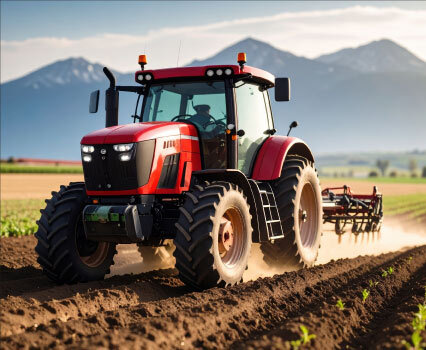
The European agricultural landscape is experiencing a quiet yet significant shift. The latest data from the "Europe Agricultural Tractors Market" report shows a shift away from traditional diesel-powered tractors toward advanced, automated, and hybrid machines, driven by changes in farm demographics, labor shortages, and rising demand for efficiency.
Current Market Snapshot
In 2024, Europe recorded sales of agricultural tractor units at approximately 144,447. This forecast is optimistic. By 2030, annual sales are expected to reach about 189,147 units, reflecting a compound annual growth rate (CAGR) of 7.2%. A deeper trend underlies these numbers: many European farms, both small and medium-sized, are currently facing labor shortages. Over the last decade, the working-age population in the farm workforce has decreased sharply, mainly due to rural depopulation, an aging farmer population, and migration to urban and non-agricultural jobs. As a result of this shift, mechanization and automation are no longer optional upgrades; they are nearly essential. Tractors today increasingly feature GPS-guided auto-steering, precision planting technologies, variable-rate applications, telematics, and remote monitoring. These features are vital in helping farms perform crucial tasks like plowing, planting, spraying, and harvesting with fewer human resources and greater precision, which boosts output while also controlling costs.
What Powers the Market: Segmentation by Engine Power
The European market is mainly divided by engine power, reflecting the diverse farm sizes and operations throughout the continent. According to the report:
• Tractors under 40 HP still exist and are mainly used for gardening, vineyards, small orchards, or landscaping. Although they make up a small part of the overall market (about 5-10%), they remain essential for niche and small-holding farms.
• The 40-99 HP segment is the largest, representing about 46% of total units. This mid-power range balances affordability, fuel efficiency, and versatility, making it suitable for mixed-crop farms, moderate-sized properties, and areas with more fragmented landholdings.
• The 100-150 HP segment targets larger farms that need heavier tillage, seeding, or transportation, which make up about 35% of the market. The share of these tractors is increasing, especially as trends favor bigger, more efficient farms.
• Higher-horsepower tractors, ranging from 151-200 HP to above 200 HP, are mainly used by large-scale commercial farms. These segments account for about 15% and 20%, respectively. In these cases, technological upgrades like automation, hybrid/electric engines, and precision farming are shaping buyer choices.
This segment emphasizes a key point: Europe’s agricultural machinery market is not just a “one-size-fits-all”; it must serve both small orchard owners and large commercial cereal farms, each with very different needs.
Driving Forces and the Push for Modernization
Several interconnected factors are driving the change in Europe’s tractor market, and some of the main factors include:
• Labor shortage and demographic pressure: As the agricultural workforce declines significantly (by up to 26% between 2010 and 2023), many farms depend more than ever on mechanization.
• Precision mechanization: Farms are now adopting precision agriculture techniques such as GPS-guided planting, variable-rate fertilizer application, and optimized spraying to maximize yields while reducing input use. Especially in Western Europe, farms are investing in tractors equipped with advanced features.
• Regulatory and environmental pressures: stricter emission norms and sustainability goals across the European Union are pushing manufacturers and farmers towards more electric, hybrid, or more efficient diesel tractors.
• Economic and cost considerations: While advanced tractors provide increased productivity and long-term benefits, they also have higher upfront and maintenance costs and often require skilled personnel or support services for proper upkeep.
Thus, what we are seeing is not just a demand spike but a structural reorientation of the market in which precision, automation, and future readiness matter as much as horsepower or mineral resources.
Challenges ahead
Despite the optimism, many obstacles remain. The higher acquisition and maintenance costs of advanced tractors can discourage small to mid-sized farmers. Fuel expenses, industry-wide inflation of raw materials, and supply chain issues also add to the challenges. Furthermore, while electric and hybrid tractors show potential, their adoption relies heavily on infrastructure, charging stations, stable electricity, and access to parts. For farms in remote or underdeveloped rural areas, this approach may not always be practical. Additionally, replacing a felt is often easier said than done. With tight budgets and uncertain returns, many farms continue to prefer incremental upgrades over complete replacements, retrofitting existing tractors.
What It Means for Stakeholders
For manufacturers and equipment suppliers, this changing landscape offers new opportunities. The demand for premium, high-tech tractors is growing, and buyers are increasingly valuing long-term productivity over short-term costs. By making tractors more modular, easier to maintain, and compatible with precision farming, they can attract loyalty from medium-sized farms.
For farmers and agricultural businesses, this provides an opportunity to upgrade operations for long-term sustainability. By investing in mid-power tractors now or retrofitting older machines with GPS and automation, they can increase yields, reduce labor dependence, and meet stricter environmental standards. Policymakers and agricultural planners, especially in Europe, need to ensure that incentives, subsidies, and infrastructure such as rural electrification support this shift, particularly for small and medium farms that might otherwise be left behind.
Conclusion
The European agricultural tractor market tells a story of adaptation and modernization. As traditional farming practices face demographic decline and rising costs, tractors, once simple mechanical tools, are evolving into intelligent, precision-oriented machines. For farmers, manufacturers, and broader agri-ecosystems, this shift opens new opportunities but also demands careful balancing of costs, technology, and long-term returns.