Global Wearable Technology Market to Reach USD 164.2 Billion by 2033 as AI-Powered Health Monitoring and Connected Ecosystems Accelerate Device Adoption
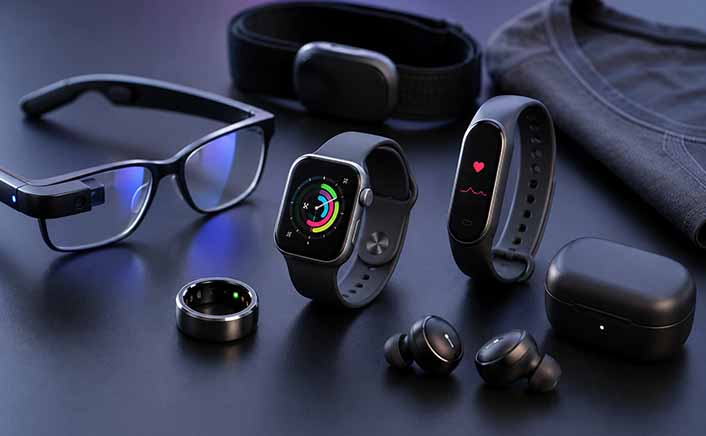
Global wearable technology market projected to expand at a CAGR of 8.0% through 2033, supported by AI-enabled health monitoring, rapid digital health adoption, and continuous innovation in smart wearable devices.
The Global Wearable Technology Market is expected to grow from USD 89.1 billion in 2025 to USD 164.2 billion by 2033, registering a CAGR of 8.0% during the forecast period. Global wearable device shipments are projected to increase from 612 million devices in 2025 to 813 million devices by 2033, reflecting sustained demand for connected consumer electronics and digital health solutions. The market continues to benefit from increasing consumer awareness of preventive healthcare, growing adoption of AI-powered health monitoring, and expanding integration of wearable devices within smartphones, cloud platforms, and connected digital ecosystems.
A key driver of market growth is the rapid advancement of wearable health technologies that enable continuous monitoring of heart rate, blood oxygen (SpO?), sleep quality, physical activity, and other biometric parameters. Artificial intelligence is further enhancing device capabilities by delivering personalized health insights, predictive wellness recommendations, and real-time biometric analysis. As healthcare providers increasingly incorporate wearable-generated data into remote patient monitoring and chronic disease management programs, wearable devices are evolving from fitness accessories into essential digital health tools.
Hearables continue to account for the largest share of global wearable shipments due to their affordability, short replacement cycles, and seamless integration with smartphones and voice-enabled ecosystems. Smartwatches remain the leading revenue-generating category, supported by premium pricing and continuous innovation in health monitoring, while smart glasses are emerging as the fastest-growing product segment as manufacturers introduce AI-powered devices capable of hands-free communication, contextual computing, and augmented reality experiences. Smart rings are also gaining traction among health-conscious consumers seeking discreet and continuous wellness monitoring.
North America remains the largest revenue-generating regional market, supported by high consumer spending, advanced healthcare infrastructure, and strong adoption of premium wearable devices. Asia-Pacific continues to lead global device shipments due to its large consumer base, expanding middle-class population, and strong manufacturing ecosystem. Countries such as China, India, Japan, and South Korea continue to drive production, innovation, and consumer adoption, while Latin America and the Middle East are emerging as attractive growth markets with rising smartphone penetration and increasing awareness of digital health technologies.
Technology innovation continues to reshape competitive dynamics across the industry. Manufacturers are investing in advanced biosensors, edge AI processing, low-power semiconductor platforms, flexible displays, and longer battery life to improve device functionality and user experience. Increasing demand for electrocardiogram (ECG) monitoring, skin temperature sensing, sleep analytics, stress tracking, and future non-invasive glucose monitoring is expanding wearable applications across healthcare, sports performance, and enterprise environments. Subscription-based digital health services and AI-powered wellness platforms are also creating recurring revenue opportunities beyond hardware sales.
Despite favorable market fundamentals, several challenges remain. Data privacy concerns, cybersecurity risks, longer replacement cycles for premium devices, and evolving medical device regulations continue to influence product development and purchasing decisions. Manufacturers must also balance sensor accuracy, miniaturization, battery efficiency, and affordability while ensuring interoperability across multiple operating systems and healthcare platforms.
Competition within the global wearable technology market remains highly dynamic, with leading companies focusing on ecosystem expansion, AI integration, software capabilities, and advanced health monitoring features. Apple continues to maintain a strong premium position through its integrated hardware and software ecosystem. In contrast, Samsung, Xiaomi, Huawei, Garmin, Google, and other manufacturers continue to strengthen their portfolios across multiple product categories and price segments. Emerging companies specializing in smart rings and AI-enabled wearables are further intensifying competition through innovation in digital health and personalized wellness solutions.
With continuous advances in artificial intelligence, biosensing technologies, connected healthcare, and edge computing, the Global Wearable Technology Market is expected to maintain strong long-term growth. Increasing investment in preventive healthcare, digital wellness platforms, enterprise wearables, and next-generation AI-powered devices is expected to reinforce wearable technology's role as one of the fastest-evolving segments within the global consumer electronics industry.