From Heating to High-Value Fuel: Expanding Sustainable Aviation Fuel and Bioenergy Applications in the U.S. Wood Pellets Market
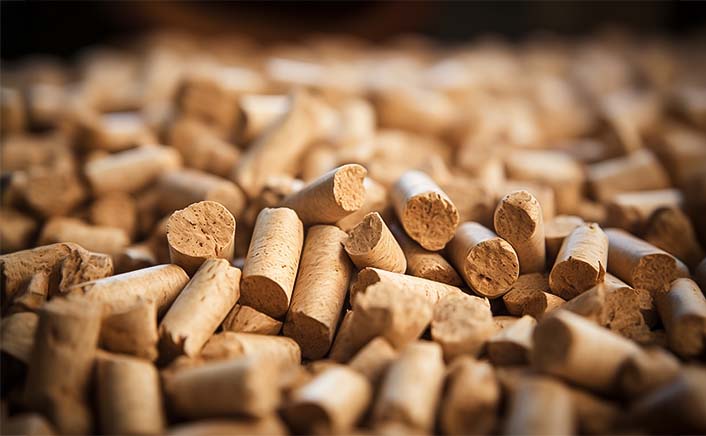
The U.S. Wood Pellets Market recorded a consumption of 2.09 million metric tons in 2024 and is estimated to reach a volume of 4.41 million metric tons by 2033 with a CAGR of 9.4% during the forecast period.
The U.S. wood pellets market is undergoing a significant transformation, extending beyond traditional uses such as power generation and residential heating. There are emerging opportunities within sustainable aviation fuel (SAF) and a broader range of bioenergy applications. As the global aviation and energy sectors strive for carbon neutrality, the demand for low-carbon, renewable feedstocks is rising, positioning wood pellets as a vital component of these sustainable energy strategies. SAF, derived from renewable biomass sources, has the potential to substantially lower lifecycle carbon emissions in comparison to conventional jet fuel. Wood pellets serve as a reliable and scalable feedstock for SAF production through methods like gasification and pyrolysis.
Due to its abundant forestry resources and established pellet production infrastructure, the U.S. is particularly well-equipped to support both domestic SAF initiatives and export-oriented bioenergy markets. By incorporating wood pellets into bio-refineries, producers can not only meet escalating energy demands but also aid in achieving national decarbonization goals, reinforcing the U.S. commitment to renewable energy and reducing greenhouse gas emissions.
Several factors are driving the expansion of SAF applications within the U.S. wood pellets market. Federal policy incentives, such as the Renewable Fuel Standard (RFS) and the Sustainable Aviation Fuel Grand Challenge, are encouraging investment in biomass-to-fuel pathways, offering financial and regulatory backing to producers exploring SAF integration. Furthermore, airlines and energy companies are increasingly committing to carbon-neutral flight operations, creating a steady demand for renewable aviation fuels and promoting long-term offtake agreements with biomass suppliers.
Within this context, the U.S. wood pellets market can provide a stable and scalable feedstock supply, taking advantage of existing logistics, production capacity, and regional clusters in Southeastern states like Georgia, Alabama, and Louisiana, which host a significant portion of the country's pellet manufacturing facilities. These regions benefit from plentiful softwood and hardwood residues as well as well-developed port infrastructure, facilitating cost-effective transportation to both domestic bio-refineries and export markets targeting Europe and Asia.
Beyond SAF, wood pellets are gaining traction in broader bioenergy applications, strengthening the U.S. wood pellets market even further. While industrial power generation remains prevalent, new bioenergy pathways, including combined heat and power (CHP) systems, co-firing in coal plants, and renewable hydrogen production, increasingly utilize wood pellets as a dependable biomass feedstock. These applications capitalize on the high energy density, uniform size, and ease of handling of pellets, making them a preferred choice for large-scale bioenergy systems.
The adoption of wood pellets in CHP plants and industrial bioenergy projects enhances efficiency, lowers carbon intensity, and creates a stable domestic demand segment, complementing export-oriented power generation. Meanwhile, investments in advanced bio-refining technologies and modular conversion units are enabling small- and medium-scale pellet producers to engage in high-value energy applications, fostering diversification within the U.S. wood pellets market.
Economic and environmental factors further reinforce the integration of SAF and bioenergy applications in the U.S. wood pellets market. Expanding into aviation fuels and industrial bioenergy helps stabilize market prices by diversifying demand and reducing reliance on traditional heating or power generation sectors. Sustainability certifications, such as the Sustainable Biomass Program (SBP) and ENplus, offer credibility and traceability for wood pellet feedstock used in high-value renewable energy applications, boosting market confidence and facilitating participation in global renewable energy initiatives. Export-oriented producers, in particular, can leverage these certifications to secure premium contracts for SAF and industrial bioenergy projects, enhancing the strategic significance of the U.S. wood pellets market on the global stage.
Looking ahead, the integration of SAF and bioenergy applications is anticipated to reshape the competitive landscape of the U.S. wood pellets market. Established producers like Enviva Inc., Drax Biomass, and Fram Renewable Fuels, which currently dominate industrial-scale production, are well-positioned to expand into these high-value segments thanks to their scale, logistics capabilities, and technological expertise. Smaller and regional producers can also seize niche opportunities, especially in supplying bio-refineries or modular bioenergy plants. The synergy of policy support, technological innovation, and rising industrial and aviation demand is expected to propel robust growth, increasing the overall potential of the U.S. wood pellets market.