The Future of Long-Haul Freight: Integrating ACC, V2V, and ADAS for Smarter U.S. Truck Platoons
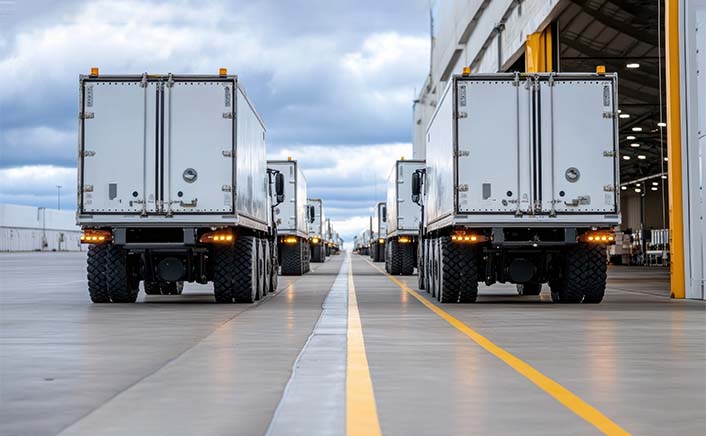
The U.S. Truck Platooning Market is significantly impacted by technological advancements that facilitate the safe, efficient, and commercially viable operation of multiple trucks operating in a coordinated convoy. At the heart of this platooning technology is Adaptive Cruise Control (ACC), which lays the groundwork for automated speed management in platoon operations.
ACC enables each truck to maintain a consistent speed while dynamically adapting to traffic conditions, movements of the lead truck, and road gradients. In the realm of long-haul trucking, ACC serves to reduce driver fatigue and enhance fuel efficiency by ensuring smooth acceleration and deceleration cycles. For platooning specifically, ACC is coupled with vehicle-to-vehicle communication systems, which share real-time data between the lead and following trucks to maintain accurate inter-vehicle spacing. This integration maximizes aerodynamic benefits, resulting in fuel savings of 8–10% for following trucks and 4–5% for lead trucks, making it a key driver for adoption in the U.S. truck platooning market.
In addition to ACC, Vehicle-to-Vehicle (V2V) Communication Systems are essential for enabling trucks within a platoon to exchange crucial operational information such as speed, braking, and lane positioning almost instantly. The implementation of V2V communication minimizes latency in response times, allowing follower trucks to react promptly to any changes made by the lead vehicle. This capability is particularly vital in highway scenarios where trucks operate at high speeds with minimal gaps, typically between 0.5 and 1.0 second. V2V systems enhance safety by reducing collision risks and also optimize fuel efficiency through precise convoy coordination. Furthermore, they provide a platform for incorporating additional data, such as traffic conditions and road hazards, which can further refine platoon behavior and route planning. Consequently, V2V technology stands as a foundational element in the U.S. truck platooning market, promoting reliable, scalable, and multi-truck platoons that adhere to regulatory and operational standards.
Lane Keeping Assist (LKA) and Lane Departure Warning (LDW) systems contribute another vital layer to platooning technology. Utilizing cameras, radar, and sensors to monitor lane markings and road edges, these systems ensure trucks maintain appropriate lane positioning within the platoon. LKA actively steers the truck to correct deviations, while LDW alerts drivers of unintended lane departures, adding a layer of safety for semi-autonomous operations. This integration is particularly essential on U.S. highways, where lane widths, road quality, and traffic patterns can vary significantly, helping to maintain platoon integrity and reduce human error. The deployment of these systems has led to a decrease in lane drift incidents, promoting smoother convoy operations and greater acceptance among both drivers and fleet operators.
Automatic Emergency Braking (AEB) systems further bolster safety by applying brakes autonomously when a collision risk is identified, based on sensor inputs or V2V alerts. Within a platoon, AEB's capability to act simultaneously across trucks helps prevent chain-reaction collisions that could arise due to the close spacing necessary for aerodynamic efficiency. AEB also permits fleets to operate safely with narrower gaps between trucks, thereby maximizing fuel efficiency benefits. Its incorporation into U.S. truck platooning systems has become both a regulatory and commercial necessity for pilot programs and deployments, particularly for multi-truck convoys engaged in long-haul routes.
Lastly, Platooning Control Software and Fleet Management Systems function as the central hub for truck platoons. These platforms consolidate the functionalities of ACC, V2V, LKA, LDW, and AEB while providing fleet operators with tools for real-time monitoring, diagnostics, route optimization, and scheduling.
Control software ensures trucks remain synchronized even under varying traffic conditions, allowing operators to manage multiple platoons effectively. Advanced analytics from these systems offer insights into fuel savings, maintenance requirements, driver performance, and overall convoy efficiency, empowering fleet managers to make informed investment and operational choices. Moreover, modern platooning platforms enable over-the-air (OTA) software updates, facilitating continuous enhancements in safety algorithms and operational performance.
In summary, the technological ecosystem encompassing Adaptive Cruise Control, V2V communication, Lane Keeping Assist, Automatic Emergency Braking, and Platooning Control Software collectively shapes the U.S. truck platooning market. These innovations not only improve safety and operational efficiency but also promote economic advantages by reducing fuel consumption and optimizing fleet utilization. Their integration has revolutionized long-haul trucking, positioning platooning as a commercially viable solution that meets regulatory standards, sustainability goals, and the growing demand for efficient freight transport across the United States. As technology continues to advance, the U.S. truck platooning market is poised for further transformation.