Application-Level Analysis of the U.S. Thermal Interface Materials Market Across Computing, EVs, and Telecommunications
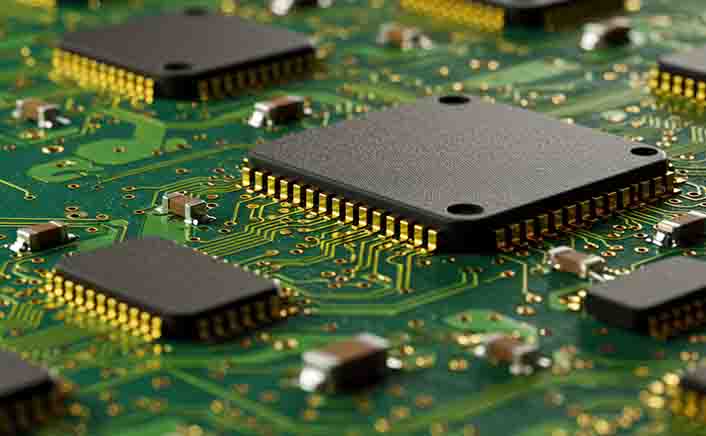
Processors, which include CPUs, GPUs, and AI accelerators, are projected to hold the largest share of the U.S. thermal Interface Materials Market , estimated at approximately 24.8% by 2025. This reflects the significant increase in heat generation associated with modern computing architectures. The swift implementation of artificial intelligence infrastructure has fundamentally transformed thermal management needs across the semiconductor sector. Advanced AI accelerators and high-performance GPUs, utilized for model training and inference, often exceed thermal design power (TDP) levels of 500 watts per processor, with next-generation AI systems pushing these thermal loads even higher. Such elevated power densities create considerable heat dissipation challenges that traditional cooling solutions alone cannot address.
Thermal interface materials play a crucial role in reducing thermal resistance between processors and cooling hardware, thereby facilitating more efficient heat transfer. The U.S. market has seen substantial investments in hyperscale data centers, cloud computing facilities, and AI infrastructure, resulting in a rising demand for premium thermal greases, phase change materials, and advanced gap fillers. Additionally, advanced packaging technologies, including chiplets, 2.5D packaging, and high-bandwidth memory integration, generate localized hotspots that necessitate increasingly sophisticated thermal management strategies. As semiconductor manufacturers strive for higher computational performance and greater transistor densities, the importance of thermal interface materials becomes indispensable for ensuring reliability, maximizing processor efficiency, and extending hardware lifespan.
Battery packs and battery management systems constitute the second-largest application segment, accounting for about 20.6% of the market share. The rapid growth of electric vehicle manufacturing in the United States has led to a significant rise in demand for thermal interface materials within battery systems. Modern electric vehicle battery packs consist of hundreds or even thousands of individual cells, each producing heat during charging and discharge cycles. It is essential to maintain a uniform temperature distribution across these cells to preserve battery performance, maximize cycle life, and reduce safety risks. Thermal gap fillers, thermal pads, and phase change materials are commonly used between cells, modules, cooling plates, and structural components to facilitate heat transfer and accommodate mechanical tolerances. As automakers introduce vehicles with larger battery capacities and faster charging capabilities, the thermal management requirements become increasingly stringent. Additionally, the growing deployment of stationary energy storage systems further fuels this segment's expansion, as large-scale battery installations necessitate reliable thermal management to ensure operational safety and long-term performance.
Power electronics and power modules account for roughly 16.1% of market demand and represent one of the fastest-evolving application areas. The adoption of silicon carbide (SiC) and gallium nitride (GaN) semiconductors in electric vehicles, industrial drives, renewable energy systems, and power conversion equipment has significantly increased the emphasis on thermal management. These advanced semiconductor materials enable higher switching frequencies, enhanced efficiency, and improved power density compared to traditional silicon-based devices. However, the concentration of electrical power within smaller device footprints amplifies thermal stress, necessitating more effective heat dissipation solutions. Thermal interface materials are extensively utilized between power modules, heat sinks, cooling plates, and electronic assemblies to ensure reliable operation. The renewable energy sector, which includes solar inverters and energy storage systems, further drives demand as power electronics become increasingly vital to grid modernization initiatives. Industrial automation systems, motor drives, and electrified transportation platforms also contribute to the rising consumption of thermal interface materials within this segment.
Telecommunications equipment represents approximately 10.4% of the market and continues to benefit from ongoing investments in network infrastructure. The rollout of 5G networks, edge computing facilities, and high-capacity communication systems has heightened thermal management demands across base stations, routers, optical transport equipment, and network processing hardware. Telecommunications equipment frequently operates continuously under demanding environmental conditions, making thermal reliability a critical performance factor. As data traffic volumes continue to grow, driven by cloud services, streaming platforms, artificial intelligence applications, and connected devices, the need for effective thermal management solutions will only increase.