Medium-Speed Sortation Systems Dominate U.S. Warehouses as Automation Adoption Expands Across Fulfillment Networks
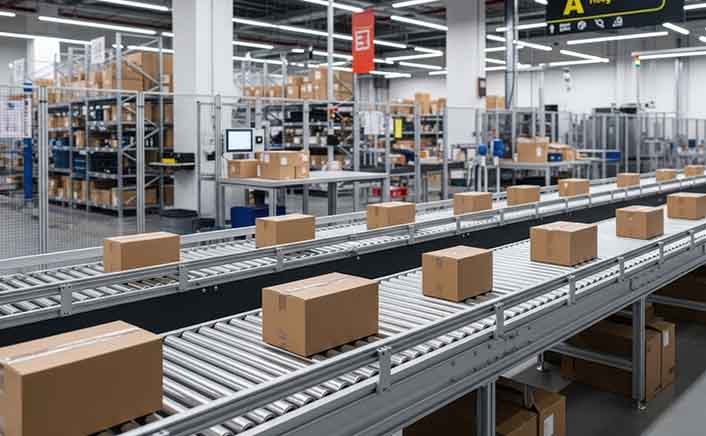
The medium-speed Sortation System segment, with a capacity of 5,000–15,000 items per hour, is projected to hold the largest market share of around 35% in 2024. This market dominance is attributed to its versatility across various distribution environments, including e-commerce fulfillment centers, retail warehouses, and third-party logistics (3PL) facilities. The medium-speed range strikes an optimal balance between investment costs, operational flexibility, and throughput performance, making it a preferred choice for companies looking to upgrade their existing warehouses. Many mid-sized fulfillment operations do not require ultra-high-speed systems but still seek automation that can manage increasing parcel volumes, SKU complexity, and tighter delivery timelines. These medium-speed sorters are increasingly being integrated with warehouse management systems (WMS) and warehouse execution systems (WES) to enhance routing accuracy, minimize manual handling, and support multi-channel fulfillment operations.
On the other hand, the high-speed sortation segment, which handles 15,001–30,000 items per hour, accounts for approximately 31% of the U.S. market. This growth is fueled by the expansion of large-scale fulfillment centers and parcel distribution hubs. Major retailers, logistics providers, and parcel carriers, which process substantial daily package volumes, primarily adopt high-speed systems. The rise of e-commerce has significantly elevated the demand for faster package movement, especially with consumer expectations for same-day and next-day delivery. High-speed solutions, including cross-belt sorters, sliding shoe sorters, and advanced conveyor systems, are commonly utilized in large facilities where any downtime and processing delays can adversely affect supply chain efficiency. These systems automate routing based on destination, carrier, order priority, and shipping requirements, thereby reducing reliance on manual sorting labor.
The low-speed segment, consisting of systems that handle below 5,000 items per hour, represents nearly 18% of market demand and remains relevant for smaller warehouses, specialized distribution centers, and facilities with moderate throughput needs. Although these systems have a lower capacity, they are often embraced for their comparatively lower capital expenditures and simpler integration processes. Small and medium-sized enterprises are increasingly implementing compact sortation solutions for automating specific warehouse tasks such as order consolidation, returns management, and inventory movement. The expansion of smaller fulfillment networks located closer to urban areas has further fueled demand for flexible low-capacity systems.
The ultra-high-speed segment, designed for systems exceeding 30,000 items per hour, currently captures around 16% of the market. This segment is anticipated to witness robust growth driven by increasing automation investments from large logistics operators. These systems cater to national distribution hubs, parcel sortation centers, and mega fulfillment facilities, all of which need to handle exceptionally high shipment volumes. Ultra-high-speed sortation technologies are often integrated with advanced scanning systems, AI-driven routing software, robotic handling solutions, and automated storage options. Despite higher installation costs, large operators justify these investments through enhanced throughput, reduced labor needs, and increased facility productivity.
Capacity selection in the U.S. sortation market is significantly influenced by facility type, business model, and shipment profile. E-commerce fulfillment centers typically require higher-capacity systems to accommodate large order volumes and seasonal fluctuations, whereas retail distribution centers often emphasize the flexibility of medium-speed solutions. Parcel carriers and logistics companies generally prefer high-speed and ultra-high-speed systems, as sorting efficiency directly impacts delivery performance.
Additionally, rising warehouse expansion costs are influencing capacity demand. As industrial real estate expenses soar in key logistics regions, companies are prioritizing improved throughput within existing facilities over building additional sites. Higher-capacity sortation systems enable operators to process more packages per square foot, effectively enhancing warehouse utilization.
The integration of robotics and artificial intelligence is also redefining capacity requirements. Traditional capacity planning relied heavily on conveyor speed and item flow; however, contemporary systems utilize predictive analytics and intelligent routing to dynamically optimize throughput. AI-enabled sortation solutions can effectively balance workloads across multiple sorting lanes, reduce congestion, and enhance equipment utilization.
Moreover, reverse logistics is emerging as an important area influencing capacity requirements. With the growth of online shopping, product returns pose significant operational challenges. Large retailers and 3PL providers are now deploying dedicated sorting capacity for returned products to categorize items for resale, refurbishment, recycling, or disposal. This shift is driving demand for flexible systems capable of handling irregular return volumes.