High-Efficiency 76–100 W Solar Shingles Gain Momentum as Homeowners Seek Greater Energy Generation from Limited Roof Space
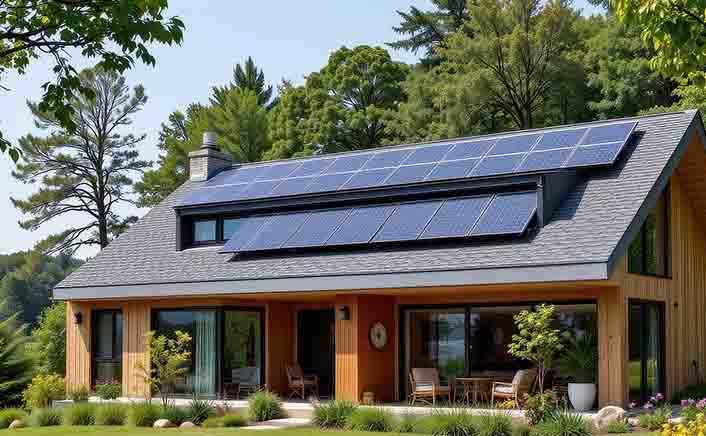
The 50–75 W per shingle segment, which constitutes about 38.7% of the U.S. Solar Shingle Market , represents the most commercially established category. This is largely due to its alignment with the technical and economic needs of mainstream residential roofing projects. Homeowners looking at solar shingles typically prioritize a balance among roof aesthetics, installation costs, structural compatibility, and energy output, rather than focusing solely on maximum power generation. Products within this power range are ideal for average U.S. single-family homes, typically with roof areas between 1,500 and 3,000 square feet, as they allow homeowners to generate meaningful electricity without the extra engineering requirements that come with higher-capacity systems. Roofing contractors and solar installers prefer this category due to its easier integration with standard roofing materials and existing residential electrical frameworks. The segment benefits from strong demand in states like California, Texas, Florida, Arizona, and North Carolina, where rising solar adoption is driven by high energy consumption and favorable solar irradiation. Many builders involved in net-zero housing developments are also utilizing 50–75 W solar shingles, meeting energy-efficiency standards while maintaining architectural integrity. The segment's dominance is further supported by a growing market of homeowners replacing aging asphalt roofs, who are increasingly considering integrated solar roofing solutions over traditional rack-mounted solar panels.
The 76–100 W per shingle segment, which accounts for approximately 34.6% of market share, is witnessing the fastest technological advancements and is rapidly closing the gap with the leading category. Improvements in photovoltaic cell efficiency, especially through the use of advanced monocrystalline technologies, heterojunction cells, and improved power management systems, are driving this segment. Homeowners seeking premium solutions and energy efficiency increasingly gravitate toward higher-output shingles, which maximize electricity production within limited roof spacea critical consideration in suburban and urban settings. This segment has seen a notable demand from luxury residential developments, where homebuyers desire energy independence without sacrificing aesthetics. Builders pursuing Leadership in Energy and Environmental Design (LEED) certifications and net-zero energy goals often choose higher-capacity solar shingles to fulfill stringent sustainability objectives. Federal investment tax credits and state-level renewable energy incentives are enhancing the economic feasibility of these products, making the price premium for higher-wattage shingles more palatable. As module efficiencies continue to improve and manufacturing costs decline, the 76–100 W category is poised for further market penetration, particularly in new construction, where integrated solar roofing can be incorporated during the design phase rather than retrofitted later.
The Above 100 W per shingle segment, representing around 14.3% of the market, remains relatively small but is strategically significant as it indicates the future trajectory of solar roofing technology. Manufacturers are investing heavily in high-performance photovoltaic materials that can generate significantly greater output from the same roof area. This category primarily appeals to luxury residences, large custom-built homes, and energy-intensive households seeking maximum onsite power generation. Additionally, it attracts consumers interested in integrating solar shingles with residential battery storage systems, electric vehicle charging setups, and smart home energy management platforms. Despite its technological advantages, adoption is limited due to higher product costs, specialized installation needs, and restricted commercial availability. With production volumes falling short of mainstream categories, manufacturers are yet to achieve economies of scale. Moreover, additional training and certification are required for roofing contractors to install these advanced systems effectively, posing another challenge to widespread adoption. However, as photovoltaic conversion efficiencies continue to rise and manufacturing processes mature, the cost gap between standard and ultra-high-output shingles is expected to decrease. This shift could significantly boost demand, particularly among affluent homeowners and environmentally conscious consumers seeking complete energy self-sufficiency. Rising utility rates and increasing concerns about grid reliability further bolster the long-term growth prospects of this segment.