Brand Warfare in the Bathroom: A Data-Driven Analysis of Recall, Share, and Strategy in the U.S. Smart Toilets Market
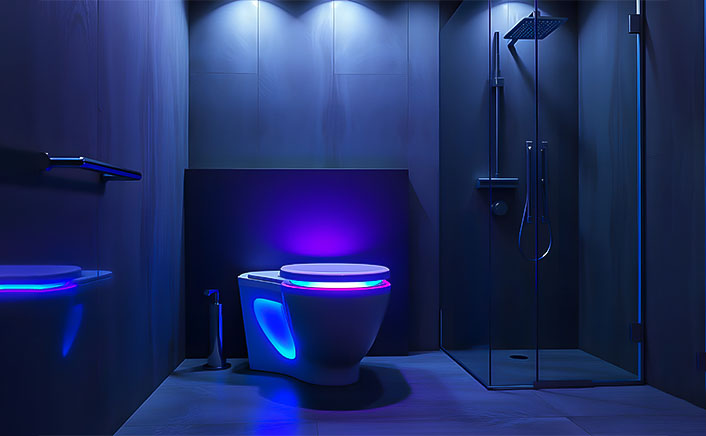
The stark contrast between unit share and revenue share across product types in the U.S. Smart Toilets Market illustrates a sophisticated dual-engine economy, wherein high-volume accessibility and high-value premiumization work together to drive overall category growth. Data indicates that Smart Toilet Seats/Lids account for 75% of all units sold while generating 50% of total market revenue. This dichotomy represents the foundational dynamic of the U.S. smart toilets market, demonstrating that the primary pathway to widespread consumer adoption lies in the low-commitment, retrofit solution offered by smart seats.
Retailing between $200 and $1,200, these seats eliminate the need for complex plumbing alterations and serve as a manageable entry point for curious or budget-conscious consumers, effectively promoting democratization and rapid household penetration within the U.S. smart toilets market. This segment's impressive unit volume is largely driven by direct-to-consumer (DTC) brands, aggressive online marketing, and a strong retail presence, making smart functionality a feasible upgrade for tens of millions of existing standard toilets. Consequently, the U.S. smart toilets market relies on this segment not only for sales volume but as a critical educational and habit-forming tool, introducing users to bidet functions, heated seats, and basic connectivity, thus laying the groundwork for future upgrades to more advanced systems.
In contrast, the revenue structure of the U.S. smart toilets market reveals the concentration of true premium value and brand equity. One-Piece Smart Toilets make up only 18% of units sold but capture a substantial 30% of market revenue, while Two-Piece Smart Toilets represent 7% of units and account for 20% of revenue. This inverse relationship underscores the significant impact of Average Selling Price (ASP). A single high-end, fully-integrated one-piece toilet from brands such as TOTO Neorest or Kohler Numi can be priced between $5,000 and $10,000, generating revenue comparable to dozens of mid-range smart seats.
Consequently, the high-value core of the U.S. smart toilets market is characterized not by sheer volume but by technological sophistication, luxurious design, and integrated user experience. This premium segment becomes a key battleground for established plumbing brands, where competition centers around cutting-edge features like automated lids, customizable ambient lighting, advanced health diagnostics, and proprietary hygiene technologies. The revenue dominance of full toilets underscores the dual nature of the U.S. smart toilets market, functioning as both a mass-market play and a luxury goods sector, with the latter providing profit margins and innovation pathways that enhance brand prestige and technological advancement.
The strategic interplay between these segments defines the competitive landscape and future trajectory of the U.S. smart toilets market. Smart seats serve as a powerful feeder system into the full-toilet ecosystem. A consumer who experiences a Brondell or Tushy seat during a bathroom remodel is statistically more likely to specify a fully-integrated Kohler or American Standard smart toilet in their next, more comprehensive home renovation. This creates a critical upgrade funnel within the U.S. smart toilets market.
Furthermore, the two-piece smart toilet occupies a vital strategic niche, appealing to practical consumers and builders who desire the integrated functionality of a smart toilet while preferring the