Manufacturing, Construction, and Agriculture Continue to Dominate U.S. Piston Pump Demand as High-Pressure Industrial Applications Expand
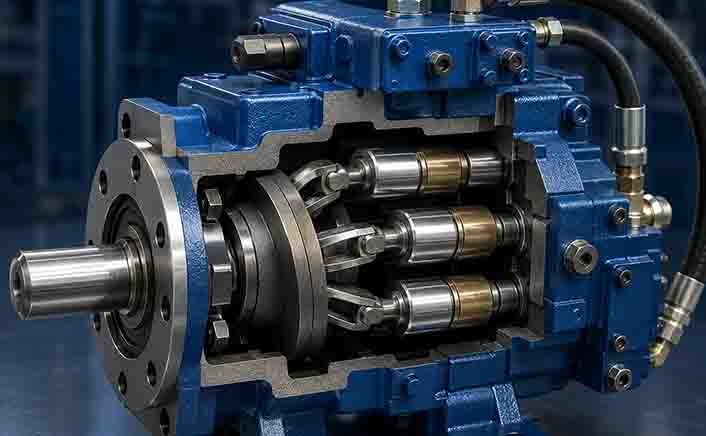
The Manufacturing & Industrial Machinery segment, which accounts for approximately 24.8% of the U.S. Piston Pumps Market, represents the largest end-use industry. This is largely due to the extensive utilization of hydraulic systems in various applications, including metal forming equipment, injection molding machines, machine tools, forging presses, industrial automation systems, and material handling equipment. The United States boasts one of the world's most significant manufacturing bases, where industrial production facilities rely on dependable high-pressure hydraulic power for seamless operations. Piston pumps are particularly favored in these environments for their ability to provide precise flow control, high efficiency, and consistent pressure, even under demanding conditions. The push for factory modernization, reshoring initiatives, the establishment of advanced manufacturing facilities, and the development of battery and semiconductor plants has further fueled the demand for hydraulic equipment that can support high-output production processes. Additionally, ongoing replacement demand from aging hydraulic installations generates substantial recurring revenue as manufacturing facilities upgrade their legacy systems to more energy-efficient variable-displacement piston pumps.
The Construction Equipment sector, which represents about 21.5% of market demand, stands as the second-largest application area. Various types of equipment, including hydraulic excavators, bulldozers, wheel loaders, backhoes, cranes, road-building machines, and compact construction machinery, rely heavily on piston pump technology. Federal investments in infrastructure, transportation modernization programs, utility expansion projects, and residential construction efforts have bolstered equipment utilization rates nationwide. Modern construction machinery is increasingly leveraging electronically controlled hydraulic systems that necessitate advanced piston pumps capable of variable flow and pressure, tailored to specific operating conditions. These developments have reinforced the demand for high-quality hydraulic solutions that enhance fuel efficiency and machine productivity.
The Agriculture Machinery segment, making up approximately 12.4% of market share, continues to be a significant consumer of piston pumps due to the rising adoption of precision agriculture technologies. High-horsepower tractors, combines, sprayers, balers, and harvesting equipment depend on hydraulic systems to execute multiple functions simultaneously. The modernization of agricultural equipment often involves the integration of load-sensing hydraulic systems and electronically controlled actuators, which improve operational efficiency while minimizing fuel consumption. The ongoing modernization of farming operations and the drive to maximize productivity across extensive agricultural holdings sustain the demand for piston pumps.
In the Oil & Gas industry, which holds about 10.8% of market share, piston pumps are essential for drilling support equipment, hydraulic power units, pipeline construction machinery, maintenance operations, and high-pressure fluid handling systems. Despite fluctuations in energy prices, the United States remains a leading producer of oil and natural gas, ensuring a steady demand for heavy-duty hydraulic equipment. Piston pumps are especially valued in the energy sector due to their durability and capability to perform under harsh environmental conditions while maintaining high-pressure output.
The Mining sector, representing around 7.2% of market demand, utilizes piston pumps extensively in applications such as hydraulic excavators, drilling rigs, haul trucks, crushers, conveyors, and material handling systems. Mining operations often involve continuous machinery operation under extreme loads and abrasive environments, making high-pressure piston pumps with superior reliability essential components of mining fleets. Growth in domestic mineral extraction, critical mineral development initiatives, and increasing infrastructure-related raw material demand continue to support this segment's expansion.
The Automotive industry, accounting for approximately 5.9% of the market share, primarily uses piston pumps in manufacturing equipment rather than in vehicle installations. Hydraulic presses, stamping systems, robotic production lines, metal forming machinery, and plastic injection molding equipment all depend on high-performance hydraulic systems. As automotive manufacturers invest in facilities for electric vehicle production and advanced manufacturing technologies, the demand for precision hydraulic equipment has been on the rise. The establishment of new EV battery manufacturing plants and component production facilities has further intensified the requirements for industrial hydraulic equipment.
Finally, the Chemicals & Petrochemicals segment, which holds around 4.8% of market share, employs piston pumps in processing plants, fluid handling systems, specialty chemical manufacturing operations, and high-pressure industrial applications. These facilities typically require equipment that maintains precise pressure and flow characteristics while operating continuously.