The Complete Breakdown of U.S. Kitchen Appliances Market Share by Offline and Online Channels
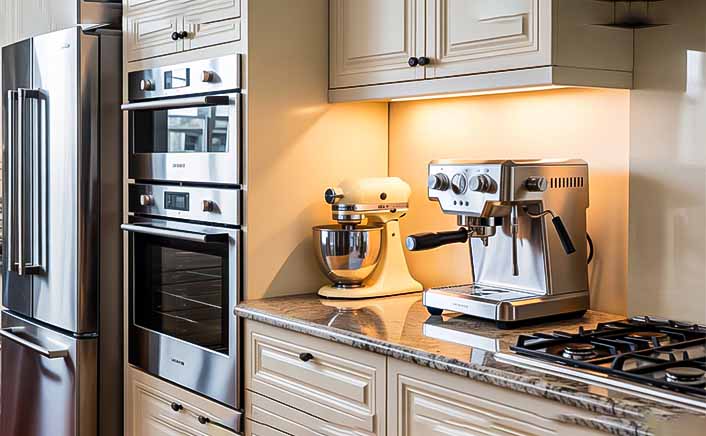
The distribution landscape of the U.S. kitchen appliances market showcases a dynamic interaction between traditional offline channels and rapidly expanding online platforms, reflecting the changing preferences and purchasing behaviors of consumers alongside retail innovations. Big-box retailers remain the cornerstone of appliance sales, controlling approximately 30% of the market.
Chains such as Home Depot, Lowe's, Best Buy, and Walmart utilize their extensive physical presence, diverse product offerings, and competitive pricing strategies to maintain market dominance. These retailers provide tangible benefits, including the ability for consumers to see, touch, and test appliances prior to purchase, which enhances the overall shopping experience. Demonstrations, bundled promotions, and financing options make these stores particularly appealing for mid-to-high-end appliances such as refrigerators, ovens, and dishwashers. Additionally, their strong logistics and supply chain efficiencies ensure wide product availability and dependable delivery services, crucial factors for household decision-making in the U.S.
| Companies | Market Share (%) |
| Big-Box Retailers | 30% |
| Specialty Stores | 20% |
| Supermarkets / Department Stores | 10% |
| Local / Independent Retailers | 5% |
| Online Retail | 35% |
Specialty stores account for about 20% of the market, catering to a niche segment of consumers who seek premium appliances, advanced technology, and personalized service. These stores focus on high-end, professional-grade kitchen appliances and customized solutions, often appealing to affluent households and culinary enthusiasts.
The strength of specialty retailers lies in their ability to provide expert guidance, tailored recommendations, and unique in-store experiences that emphasize quality, innovation, and brand prestige. By offering exclusive models and advanced features not typically found in mass-market outlets, specialty retailers foster strong emotional connections with consumers, influencing both purchasing decisions and long-term brand loyalty.
Supermarkets and department stores contribute roughly 10% to the U.S. kitchen appliances market, with a focus on small appliances, countertop units, and entry-level products rather than larger kitchen equipment.
Retailers such as Target, Costco, and various regional chains capitalize on high foot traffic and impulse purchase opportunities, often bundling small appliances with promotional discounts or loyalty program incentives. While their share of high-value appliances is limited, these channels effectively reach value-conscious consumers and introduce first-time buyers to reputable appliance brands.
Local and independent retailers represent about 5% of the market and play a specialized role by addressing regional demands, providing personalized service, and offering quick delivery or installation options.
Despite their smaller market presence, independent stores are valued for their customer-centric approach, flexibility, and responsiveness, particularly in servicing replacement parts, maintenance, or emergency appliance needs. These retailers leverage strong community ties and localized marketing strategies to remain relevant, especially in suburban and rural areas where national chains have limited penetration.
Online retail has emerged as a transformative channel, capturing an estimated 35% of the market, with growth rates outpacing many traditional outlets. E-commerce platforms, including Amazon, Best Buy online, and dedicated brand websites, offer convenience, extensive product variety, and competitive pricing that attract tech-savvy and time-constrained consumers.
Online channels enable detailed product comparisons, access to reviews, and transparent pricing, all of which bolster consumer confidence and decision-making. The rising popularity of smart appliances, energy-efficient models, and integrated kitchen solutions has further boosted online sales, as consumers seek detailed specifications, installation guidance, and efficient delivery options. Retailers have also adopted omnichannel strategies, allowing consumers to research online and purchase either online or in-store, effectively bridging the gap between digital convenience and the tactile benefits of physical retail.
Overall, the distribution mix within the U.S. kitchen appliances market underscores the complementary strengths of each channel. Big-box retailers excel through scale and experiential offerings, specialty stores target premium consumer segments, supermarkets and department stores enhance accessibility for small appliances, local retailers emphasize personalized service, and online retail drives growth through convenience and information availability.
Consumer behavior trends, including increased interest in smart, energy-efficient, and customizable appliances, continue to impact channel dynamics, prompting brands and retailers to adjust their strategies to strike a balance between reach, convenience, and experiential engagement. The interplay among these channels fosters a diverse and competitive landscape, enabling manufacturers and retailers to effectively target varied demographics.