U.S. Industrial AI Market to Reach USD 35.50 Billion by 2033, Driven by Smart Manufacturing Investments, Predictive Maintenance Adoption, and Industrial Generative AI Integration
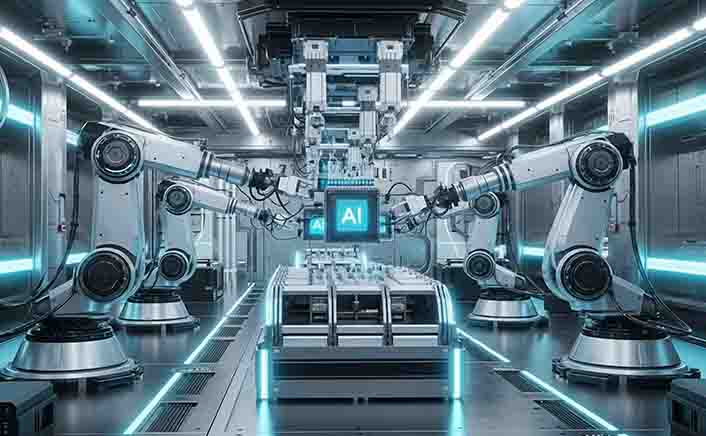
The U.S. Industrial AI Market is projected to grow from USD 8.90 billion in 2025 to USD 35.53 billion by 2033, registering a CAGR of 18.7% during the forecast period. Market expansion is being driven by increasing investments in smart manufacturing, rising adoption of predictive maintenance solutions, growing deployment of industrial computer vision systems, and the integration of generative AI technologies across production and operational environments.
Industrial AI has become a strategic component of modern industrial operations as organizations seek to improve productivity, reduce operational costs, enhance asset reliability, and address persistent labor shortages. By combining artificial intelligence with industrial IoT, cloud computing, digital twins, robotics, and automation platforms, industrial enterprises are transforming traditional production environments into data-driven operational ecosystems capable of real-time decision-making and continuous optimization.
The United States remains one of the world's most advanced industrial technology markets, supported by a strong manufacturing base, extensive digital infrastructure, and significant investments in Industry 4.0 initiatives. Federal programs aimed at strengthening domestic manufacturing capacity, improving supply chain resilience, and expanding advanced production capabilities are creating favorable conditions for industrial AI adoption. Sectors including automotive, aerospace, electronics, chemicals, food processing, and energy are increasingly incorporating AI-driven solutions to improve competitiveness and operational efficiency.
Predictive maintenance continues to represent the largest application segment within the market. Industrial organizations are leveraging AI algorithms to analyze equipment performance data, identify anomalies, and predict potential failures before costly downtime occurs. The ability to reduce maintenance expenses while extending equipment lifespan has established predictive maintenance as one of the most commercially proven use cases for industrial AI. Asset-intensive industries such as manufacturing, utilities, oil and gas, and transportation are among the most active adopters.
The market is also experiencing significant momentum in industrial computer vision applications. Manufacturers are deploying AI-powered visual inspection systems to improve product quality, automate defect detection, and enhance production consistency. These technologies are increasingly replacing manual inspection processes, enabling faster throughput while reducing error rates and quality-related costs. As production environments become more automated, computer vision is expected to become a critical capability across a broad range of industrial sectors.
Generative AI is emerging as a major catalyst for future market growth. Industrial organizations are deploying AI-powered assistants to support operators, engineers, maintenance teams, and production managers by providing real-time access to operational knowledge, troubleshooting guidance, and process recommendations. These applications help preserve institutional expertise, improve workforce productivity, and accelerate decision-making, particularly as experienced industrial workers retire and labor shortages continue to affect the sector.
In volume terms, the U.S. Industrial AI Market recorded approximately 17,400 active deployments in 2025 and is projected to reach 62,500 deployments by 2033. Deployment growth is expected to be driven by both greenfield facilities implementing AI from the outset and brownfield facilities upgrading legacy systems with AI-enabled monitoring, analytics, and automation capabilities. Mid-sized manufacturers are expected to represent a particularly important source of future deployment growth as implementation costs decline and software platforms become more scalable.
Technological innovation continues to reshape the competitive landscape. Industrial AI providers are increasingly integrating AI capabilities with digital twin platforms, industrial IoT systems, edge computing infrastructure, and autonomous control technologies. The emergence of industrial foundation models and domain-specific generative AI solutions is expected to reduce implementation complexity while improving scalability across multiple operational environments. These developments are enabling organizations to transition from isolated analytics projects toward enterprise-wide intelligence platforms.
Despite favorable market conditions, several challenges remain. Industrial AI deployments often require integration with legacy operational systems that were not originally designed for advanced analytics applications. Data quality issues, cybersecurity concerns, workforce skill shortages, and implementation complexity can extend deployment timelines and increase project costs. Additionally, many organizations continue to face challenges when scaling successful pilot projects across multiple facilities and business units.
However, long-term market fundamentals remain highly favorable. Growing pressure to improve productivity, strengthen operational resilience, reduce energy consumption, and enhance manufacturing competitiveness is expected to sustain investment activity throughout the forecast period. Industrial organizations increasingly view AI not as a standalone technology initiative but as a foundational capability supporting broader digital transformation strategies.
Leading companies operating in the U.S. Industrial AI Market include Microsoft, NVIDIA, IBM, Siemens, Rockwell Automation, and Honeywell. Industry participants are focusing on AI platform development, industrial cloud integration, strategic partnerships, digital twin capabilities, and generative AI innovation to strengthen their market positions. Competitive differentiation is increasingly determined by domain expertise, ecosystem integration capabilities, and the ability to deliver measurable operational outcomes for industrial customers.
The U.S. Industrial AI Market is expected to maintain strong momentum through 2033 as industrial enterprises continue to accelerate digital transformation initiatives and expand adoption of intelligent automation technologies. Growing investments in advanced manufacturing, industrial software platforms, predictive analytics, and autonomous operations are expected to reinforce the market's long-term growth trajectory while positioning artificial intelligence as a central pillar of future industrial competitiveness.