Medium- and High-Pressure Systems Dominate the U.S. Hydraulic Equipment Market as Industrial Productivity and Equipment Performance Requirements Continue to Increase
The U.S. Hydraulic Equipment Market is undergoing a significant shift towards medium-pressure (100–300 bar) and high-pressure (301–600 bar) systems, which together represent nearly 69% of the total market demand. This trend highlights the increasing reliance on hydraulic technologies that deliver greater force output, enhanced energy efficiency, and improved operational precision across various industries, including construction, manufacturing, agriculture, mining, and material handling. Although low-pressure systems still play a crucial role in certain industrial processes, the main focus of market value creation is transitioning towards higher pressure classes that facilitate advanced machinery and productivity-driven investments.
The medium-pressure segment, which accounts for approximately 37.6% of the market, is the largest category due to its extensive use in mobile and industrial hydraulic equipment. Many agricultural tractors, skid-steer loaders, forklifts, telehandlers, utility vehicles, municipal equipment, and general industrial machinery operate within this pressure range. Medium-pressure systems strike an attractive balance between cost, durability, and hydraulic performance. For instance, modern agricultural tractors typically use hydraulic systems operating between 180 and 280 bar to power various functions, including steering, implements, lifting mechanisms, and precision farming attachments. The ongoing adoption of automated material handling equipment and the expansion of warehouse infrastructure have further increased the demand for medium-pressure hydraulic systems, as distribution centers, logistics facilities, and manufacturing plants rely heavily on this technology for efficient operations.
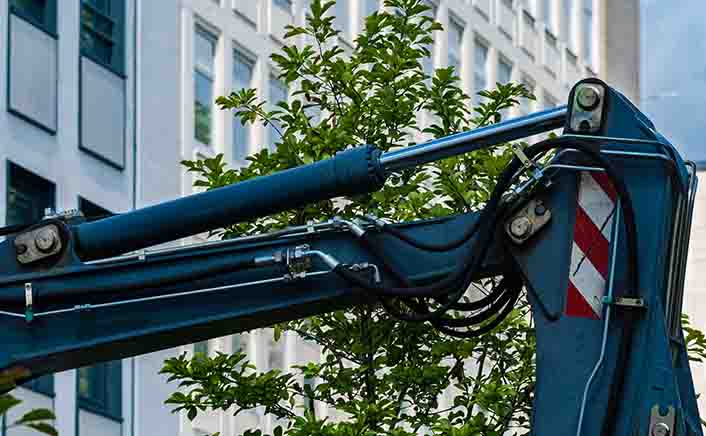
The high-pressure segment, constituting around 31.4% of market demand, generates a disproportionately larger share of market revenue due to the premium pricing of its components. High-pressure hydraulic systems are extensively utilized in excavators, mining equipment, industrial presses, injection molding machines, forestry equipment, drilling rigs, and large construction machinery. Modern hydraulic excavators often operate at pressures exceeding 350 bar to maximize digging force while maintaining fuel efficiency. Similarly, high-pressure hydraulic systems are essential for industrial metal-forming presses and forging equipment, allowing them to generate the necessary force for shaping high-strength alloys and engineered materials. As manufacturers invest in automation and productivity enhancements, the demand for high-pressure pumps, valves, cylinders, and power units has swiftly escalated. These systems also benefit from ongoing infrastructure investments, as heavy construction equipment increasingly relies on advanced hydraulic architectures to meet productivity and emissions targets.
The low-pressure segment, which holds approximately 18.2% of the market share, remains relevant despite experiencing slower growth compared to higher-pressure categories. Low-pressure hydraulic equipment is typically used in lubrication systems, fluid circulation networks, auxiliary machine functions, cooling systems, and basic industrial applications where extreme force generation is not required. Although shipment volumes are substantial, the average selling prices of low-pressure systems are significantly lower than those of medium- and high-pressure systems, leading to a smaller contribution to total market revenue than their installed base might imply. Factors such as competitive pricing, product standardization, and long replacement cycles further restrict revenue growth within this category.
The ultra-high-pressure segment, representing around 12.8% of the market, is the smallest by volume but one of the most lucrative in terms of value per unit. Equipment operating at pressures above 600 bar is utilized in specialized applications such as water jet cutting, aerospace component manufacturing, oilfield pressure testing, advanced metal processing, hydrostatic testing, and heavy industrial press operations. Water jet cutting systems often operate at pressures exceeding 4,000 bar, necessitating highly engineered pumps, seals, accumulators, and control systems. These specialized applications demand exceptional reliability and precision, which results in significantly higher equipment prices and service requirements. As sectors like aerospace manufacturing, advanced materials processing, and precision industrial production continue to grow in the United States, the demand for ultra-high-pressure hydraulic technologies is expected to increase at a rate faster than the overall market growth.
Additionally, an emerging trend influencing demand in different pressure classes is the rising adoption of electro-hydraulic systems. Manufacturers are increasingly integrating sensors, electronic controls, load-sensing pumps, and digital monitoring capabilities into medium- and high-pressure equipment, aiming to enhance energy efficiency and operational visibility. These advancements are particularly beneficial in construction, agriculture, and industrial manufacturing settings, where managing fuel consumption and improving overall operational performance are critical.