Rising Hybrid Fitness Adoption, Replacement-Driven Demand, and Long-Term Lifestyle Integration Are Reinforcing Home Fitness Equipment as Core Assets in the U.S. Consumer Wellness Market
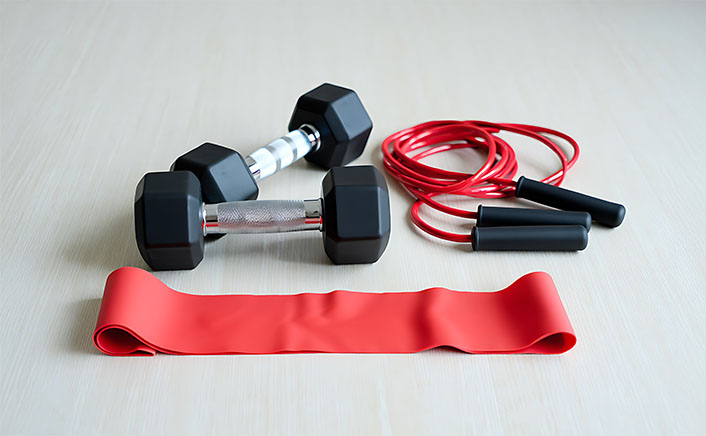
Demand for home fitness equipment in the United States remains structurally strong, supported by the normalization of hybrid fitness routines that combine at-home workouts with gym usage.
Consumers increasingly view home equipment as a permanent component of their fitness lifestyle rather than a temporary alternative. This shift is reinforced by predictable replacement cycles, higher health awareness, and a growing preference for convenience-driven exercise solutions. As a result, home fitness equipment is now considered an essential household investment tied to long-term wellness, time efficiency, and cost optimization, rather than a discretionary purchase. Demand closely follows household formation trends, suburban housing patterns, and consumer engagement with structured fitness routines, providing stability even during periods of broader economic uncertainty.
The U.S. Home Fitness Equipment Market has evolved into a mature, behavior-anchored segment of the fitness industry. Beyond basic workout functionality, equipment is increasingly valued for durability, ergonomics, and integration with guided training ecosystems. Cardiovascular equipment, such as treadmills, exercise bikes, and rowers, forms the backbone of the market due to consistent usage and higher price realization.
At the same time, strength and conditioning products remain widely adopted across demographics. Connected and smart equipment further reinforces demand by supporting performance tracking, personalization, and long-term user engagement. These characteristics link equipment purchases to lifestyle commitment rather than short-term fitness trends, resulting in steady, predictable revenue streams.
Market expansion is characterized by disciplined, value-oriented growth rather than rapid volume increases. Replacement-driven purchases and technology upgrades account for a significant share of annual demand, as households seek improved performance, quieter operation, and enhanced digital features. Premium and mid-range segments capture a larger share of market value due to higher average selling prices and shorter upgrade cycles. Residential consumers remain the primary buyers, while demand from small offices and residential institutional settings, such as apartment communities, adds incremental volume. The market benefits from consistent spending among engaged users, even as first-time buyer growth moderates.
Procurement behavior in the U.S. home fitness equipment market emphasizes product reliability, warranty coverage, and brand credibility. Consumers increasingly research lifecycle costs, after-sales support, and service availability before purchasing.
Direct-to-consumer channels and brand-owned websites play a growing role in influencing buying decisions, particularly for connected and premium equipment. At the same time, sporting goods retailers and online marketplaces remain important for mass-market products. Financing options and bundled service offerings further support purchase decisions and help stabilize demand. This procurement structure reduces short-term price volatility and encourages longer-term relationships between consumers and equipment manufacturers.
Product innovation and design optimization continue to support steady value growth across the market. Manufacturers focus on space-efficient designs, quieter motors, improved durability, and simplified assembly to address common consumer pain points.
Advances in connected features and content integration enhance user retention without fundamentally altering purchase economics, ensuring that innovation supports replacement and upgrade demand rather than creating volatility. As connected features become more standardized, adoption barriers decline, expanding their presence beyond premium segments and reinforcing the market’s long-term growth profile.
Geographic distribution of demand further strengthens market resilience. The Western and Northeastern regions account for a substantial share of market value due to higher disposable incomes, strong health awareness, and early adoption of connected fitness solutions. The Southern and Midwestern regions are contributing to steady growth, supported by population inflows, suburban housing expansion, and greater space availability for home gyms. This balanced regional demand structure enables manufacturers and distributors to plan capacity and distribution strategies with greater confidence.
Competitive Landscape
The U.S. home fitness equipment market shows moderate consolidation, with competition focused on product durability, ecosystem integration, and brand trust rather than on aggressive price discounting. Peloton Interactive Inc. and iFIT Health & Fitness Inc. hold strong positions in connected cardiovascular equipment by combining hardware sales with subscription-based content models. Johnson Health Tech Co., Life Fitness, and Precor leverage manufacturing scale and engineering reliability to serve premium and light-commercial residential segments. BowFlex Inc. maintains a focused presence in strength and compact home gym solutions, while Technogym targets high-income consumers with premium, design-driven connected systems. Rogue
Fitness dominates the strength and conditioning niche through brand loyalty and U.S. manufacturing, while TRUE Fitness Technology and SOLE Fitness compete effectively in the durable, value-oriented cardio segment. Established distribution networks, strong brand recognition, and high consumer expectations create meaningful entry barriers, supporting long-term stability in the U.S. home fitness equipment market.