How 100–250 MW Projects Are Dominating Capacity Expansion in the U.S. Grid-Scale Battery Storage Market
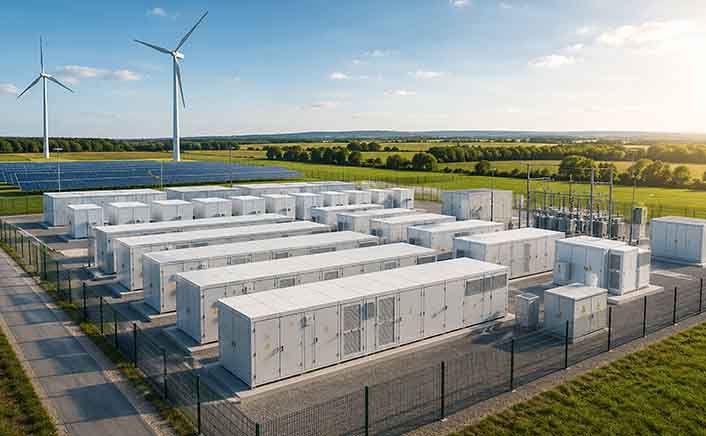
The 100–250 MW segment dominates the U.S. Grid-Scale Battery Storage Market, holding around 34% of the total installed capacity projected for 2025. This size has become the preferred choice for projects because it aligns effectively with utility-scale solar farms that typically range from 300 MW to 800 MW. Developers find that this capacity facilitates optimal renewable energy shifting, peak demand management, and ancillary grid services. Investor-owned utilities commonly specify storage systems within this range in their competitive procurements due to their favorable capital efficiency, demonstrated operational performance, and relatively shorter development timelines. Additionally, projects within the 100–250 MW range enjoy streamlined interconnection processes compared to larger installations, while still being substantial enough to engage in capacity markets and wholesale energy arbitrage.
Meanwhile, the 251–500 MW segment accounts for nearly 29% of the market and is gaining traction as transmission operators seek higher-capacity storage solutions capable of replacing traditional peaking generation. Large battery installations in this category are increasingly deployed in regions with abundant renewable resources, where solar generation often exceeds daytime electricity demand. Multi-hour battery systems in this power range are being utilized to shift hundreds of megawatt-hours of electricity to evening peak times, enhancing grid flexibility and reducing renewable curtailment. Independent power producers also prefer this segment due to the diversified revenue streams it offers, including revenue from frequency regulation, capacity payments, congestion management, and energy trading in wholesale markets.
Projects below 100 MW represent approximately 19% of the market share and are vital for localized grid reinforcement, distribution network upgrades, municipal utilities, and community-scale renewable integration. These smaller systems typically address issues like transmission constraints, voltage regulation, and resilience needs without necessitating major expansions to transmission infrastructure. Utilities are increasingly deploying sub-100 MW batteries to delay costly substation upgrades and enhance reliability in fast-growing load centers.
The segment above 500 MW makes up about 18% of the U.S. Grid-Scale Battery Storage Market and is recognized as the fastest-growing segment, despite having a lower project count. Investments in ultra-large battery storage facilities are being driven by gigawatt-scale renewable energy zones in states like California, Texas, Arizona, and Nevada, as they aim to stabilize regional grids facing high solar penetration. Recently announced projects in this category exceed 600 MW and are designed to deliver over 2 GWh of storage capacity, catering to evening peak demand, emergency reserves, and transmission congestion relief. Although these projects require significantly higher capital investment and longer permitting periods, the economies of scale achieved help to reduce unit installation costs and enhance long-term revenue generation.
Looking forward, the market is anticipated to gradually shift towards larger power ratings, driven by increasing electricity demand from AI data centers, industrial electrification, and accelerated renewable deployment. Federal incentives under the Inflation Reduction Act, along with state energy storage procurement targets, are motivating developers to build increasingly larger battery assets that can provide multiple grid services simultaneously. As a result, the 100–250 MW and 251–500 MW categories are expected to remain the backbone of new deployments throughout the forecast period, while projects exceeding 500 MW will capture an expanding share of the total installed capacity as utilities prioritize system reliability, capacity adequacy, and long-duration energy balancing across the U.S. Grid-Scale Battery Storage Market.