Transportation and Mobility Applications Drive Rapid Expansion of Fuel Cell Deployments Across the United States
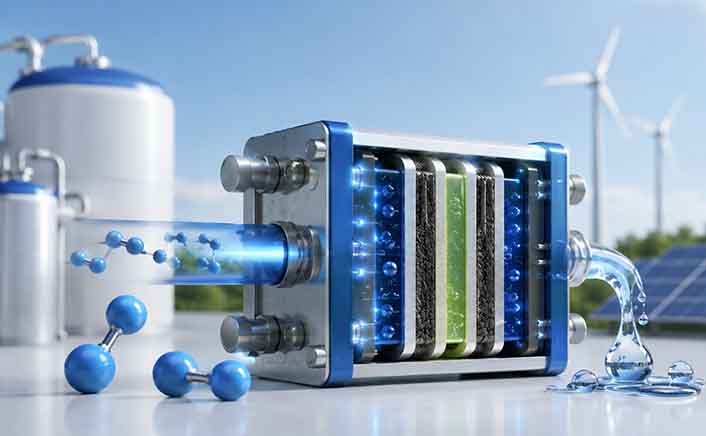
The U.S. fuel Cell Market exhibits a clear end-use structure, with Utilities & Power Generation commanding the largest share at around 24.0%. This reflects the increasing role of fuel cells as distributed energy resources within the transforming U.S. electricity landscape. Utilities are progressively implementing fuel cell systems to enhance grid reliability, decrease transmission losses, and bolster localized power generation close to demand centers. Unlike traditional centralized generation assets, fuel cells provide continuous baseload power with high availability rates, making them appealing to utilities in areas facing transmission bottlenecks, escalating electricity demand, or challenges in integrating renewable energy. Notably, solid oxide fuel cells and molten carbonate fuel cells are significant in this sector due to their capability to deliver multi-megawatt-scale power generation with relatively high electrical efficiencies. As grid modernization efforts advance and utilities seek flexible, low-emission generation options, fuel cells are increasingly recognized as complementary technologies that can help develop resilient and decentralized energy systems.
Transportation & Mobility accounts for roughly 22.0% of the total market demand, representing one of the most dynamic growth sectors for fuel cell deployment. This segment is heavily driven by hydrogen-powered material handling equipment, where fuel cells have seen substantial commercial acceptance. Large distribution centers and logistics facilities are adopting fuel-cell-powered forklifts, taking advantage of their quick refueling times, which minimize downtime compared to battery charging. Beyond warehouse applications, significant investments are being funneled into fuel-cell-powered buses, heavy-duty trucks, drayage vehicles, and specialized commercial transport fleets. Long-haul freight has become an especially promising application, as fuel cells offer advantages in range and refueling efficiency compared to battery-electric alternatives. Fleet operators involved in freight transport, port operations, and regional logistics are increasingly considering hydrogen-powered vehicles as part of their overarching decarbonization strategies, a trend likely to strengthen as hydrogen production capacity grows and refueling infrastructure becomes more accessible.
Data Centers represent approximately 14.0% of market demand and have quickly become one of the most critical end-use segments for fuel cell providers. The rapid growth in artificial intelligence, cloud computing, machine learning, and high-performance computing has placed considerable demand on U.S. power infrastructure. New hyperscale data centers often need tens or even hundreds of megawatts of continuous electricity, while utility interconnection timelines have significantly lengthened in some regions due to grid constraints. Fuel cells offer a compelling alternative by enabling on-site power generation with high reliability and reduced reliance on utility upgrades. Data center operators are exploring fuel cells for both backup power purposes and as primary or supplemental generation assets to ensure continuous operations. The financial impacts of power outages in large-scale data centers can be immense, sometimes reaching hundreds of thousands or even millions of dollars, elevating power reliability to a strategic priority. Consequently, fuel cell systems are gaining traction among operators seeking resilient, scalable, and lower-emission alternatives to conventional diesel-based energy solutions.
Industrial Manufacturing contributes around 11.0% to market demand, reflecting a growing interest in fuel cells to enhance energy resilience while advancing sustainability goals. Manufacturing facilities typically require uninterrupted power to maintain production and avoid costly shutdowns. Fuel cells provide the opportunity for on-site electricity generation, reducing vulnerability to grid disruptions and fluctuating energy prices. Industries such as chemicals, food processing, pharmaceuticals, electronics manufacturing, and advanced materials are exploring fuel cell installations as part of comprehensive energy management strategies. Some facilities are integrating fuel cells into combined heat and power configurations, enabling simultaneous electricity and useful thermal energy production, thereby improving overall system efficiency. This segment is expected to grow with the rising trend of industrial electrification and the increasing focus on reducing operational carbon emissions without sacrificing reliability.
Commercial Buildings account for about 10.0% of the market, representing one of the most established applications for stationary fuel cell technology. Universities, hotels, office complexes, government facilities, airports, and mixed-use developments are increasingly deploying fuel cells to enhance energy efficiency and reduce dependence on traditional energy sources.