U.S. Excavators Market Insights: From Compact Machines to Heavy-Duty Giants
The U.S. Excavators Market features a diverse range of products, with each type of excavator catering to specific industry needs and operational contexts. This diversity reflects the varying demands in the construction, mining, infrastructure, and specialized sectors. Among these, mini or compact excavators have become essential tools in urban construction, residential projects, and landscaping. Their compact size, maneuverability, and lower operating costs make them ideal for sites that face spatial constraints or complex layouts. Beyond traditional construction roles, compact excavators are increasingly being used for utility installation, small-scale demolition, and agricultural tasks, showcasing their versatility across multiple market segments. The rising focus on small-scale infrastructure projects, municipal development, and landscaping in urban areas further drives the adoption of these machines, positioning them as a key segment for manufacturers who prioritize high-efficiency and low-emission models.Technological innovations, including electric compact excavators and telematics-enabled machines, enhance their appeal, enabling operators to boost productivity while reducing environmental impacts.
| Product Type | Market Share (%) |
| Mini / Compact Excavators | 35% |
| Crawler Excavators | 40% |
| Wheeled Excavators | 15% |
| Long-Reach Excavators | 10% |
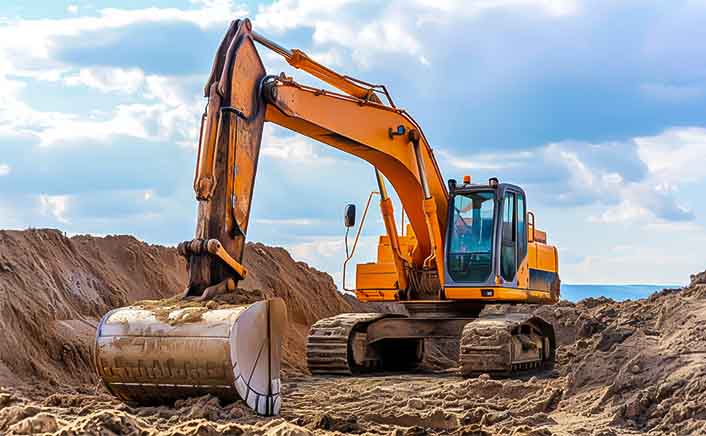
On the other hand, crawler excavators hold a significant place in the market due to their strength and adaptability for heavy-duty applications. These machines play a crucial role in large-scale construction projects, mining endeavors, and major infrastructure developments where stability, traction, and lifting capacity are paramount. Their tracked undercarriage allows them to operate effectively on uneven, soft, or muddy terrain, making them suitable for the varied geographical conditions found across the United States. Crawler excavators are often preferred for continuous digging, material handling, and earthmoving tasks, given their design, which supports high durability and operational efficiency. The demand for these machines is bolstered by federal and state investments in highways, bridges, and large urban redevelopment projects, necessitating excavators capable of managing substantial workloads. Manufacturers are increasingly integrating advanced hydraulics, operator-assist features, and fuel-efficient engines into crawler models, enhancing performance and minimizing operational costs, thereby reinforcing this segment as a cornerstone of the U.S. excavators market.
Wheeled excavators, while representing a smaller segment compared to crawler models, occupy an important niche where mobility and speed are essential. These machines are particularly well-suited for road construction, maintenance tasks, and utility work that necessitate frequent relocation between job sites. Unlike tracked models, wheeled excavators can operate efficiently on paved surfaces without causing damage, facilitating quicker transitions and reducing setup times. Their versatility is further enhanced by specialized attachments for lifting, trenching, and material handling, making them sought-after by contractors and municipal authorities in need of flexible solutions. The segment is also influenced by technological advancements, including hybrid models and precision controls, which improve fuel efficiency and operator comfort, aligning with the growing regulatory and environmental standards in urban settings.
The long-reach excavator segment, although smaller than other categories, caters to highly specialized applications, such as demolition, dredging, and infrastructure projects requiring extended reach capabilities. These machines enable operators to access hard-to-reach areas safely and effectively, whether during the dismantling of multi-story structures, excavation of deep foundations, or debris removal from water channels and ports. Their distinct design supports precise operations at greater distances, decreasing the necessity for manual labor and enhancing site safety. The niche nature of these applications, combined with their substantial capital costs, accounts for their relatively limited market share; however, demand remains steady among contractors tackling complex projects where conventional excavators may not suffice. Manufacturers continue to innovate in this area by offering modular designs, lightweight booms, and improved hydraulic efficiency, ensuring that these machines stay competitive and effective in their specialized roles.
Throughout all product types, the market is influenced by broader macroeconomic trends and industry-specific factors. Increasing investments in construction, urban development, and infrastructure improvements serve as significant growth drivers. At the same time, sustainability initiatives and emission reduction standards play a crucial role in shaping product design and technological advancements. The increasing trend of equipment leasing and rental also deserves attention, as it allows contractors to access a wide range of excavator types without substantial upfront capital investments, particularly benefitting smaller construction firms and municipal projects. Additionally, advancements in automation, connectivity, and remote operation continue to transform the landscape of the excavators market.