U.S. Electric Trucks Market Growth Fueled by AI Powered Fleet Management and Heavy Duty Electrification
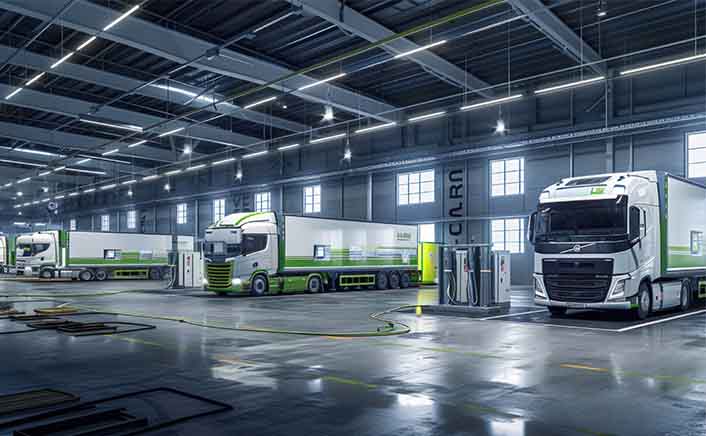
Logistics and freight transportation hold a dominant position in the United States Electric Trucks Market , projected to capture around 32% of the market share by 2025. This trend is largely driven by the increasing demands on large fleet operators to lower fuel costs, comply with emission regulations, and achieve corporate sustainability objectives. Freight transportation companies often utilize vehicles with exceptionally high annual mileage, frequently surpassing 60,000 to 120,000 miles per truck each year, which makes fuel efficiency and maintenance economics critically important. As a result, electric trucks are becoming more appealing for regional freight operations, given that electricity costs per mile can be significantly lower than diesel fuel expenses in various operating conditions. Additionally, large logistics providers are investing heavily in artificial intelligence-based route optimization and centralized depot charging systems to enhance fleet utilization.
Last mile delivery makes up approximately 24% of the market share and represents one of the fastest-growing segments, fueled by the explosive expansion of e-commerce fulfillment networks. Urban delivery fleets often operate on highly repetitive routes with lower daily mileage, making them particularly well-suited for electrification. Major retail and parcel delivery companies are increasingly integrating electric delivery vans and medium-duty trucks to support their zero-emission urban delivery initiatives. Last mile fleets also benefit from improved energy utilization thanks to regenerative braking efficiency in stop-and-go traffic conditions, compared to long-haul applications. Furthermore, urban municipalities are tightening emission standards and establishing low-emission delivery zones, which accelerates the transition of commercial fleets to electric platforms. Noise reduction is another significant advantage of electric trucks, allowing for overnight and early morning deliveries in densely populated urban areas without violating noise restrictions.
In the construction and mining sectors, which account for nearly 11% of market demand, electrification is gaining traction, despite these applications often being among the most technically challenging environments. Operations in these fields require high torque, substantial payload capacity, and reliable performance under harsh conditions. As diesel fuel consumption among heavy vocational vehicles remains exceptionally high, the potential for significant operating cost savings over long asset lifecycles makes electrification increasingly appealing. Battery electric dump trucks and mining haul trucks are also benefiting from regenerative braking systems that can recover considerable energy during downhill operations. Nonetheless, this segment continues to encounter challenges related to battery weight, the deployment of charging infrastructure, and the need for minimal operational downtime.
Municipal services represent about 9% of the market and are emerging as key adopters of electric garbage trucks, utility vehicles, and maintenance fleets. Waste collection operations are particularly well-suited for electrification due to their predictable routes, frequent stops, and the ability of fleets to return to centralized depots for charging on a daily basis. Electric garbage trucks can significantly lessen fuel and maintenance costs over extended operating periods while also reducing urban noise pollution. Several municipalities across the U.S. are leveraging state and federal clean transportation funding programs to expedite the replacement of aging diesel fleet vehicles with electric alternatives.
Port and yard operations account for nearly 8% of the market and are among the most commercially advanced applications for heavy-duty electric trucks. Terminal tractors and drayage trucks typically work within confined geographic areas near centralized charging infrastructures, which alleviates range anxiety concerns. Ports in states like California are actively promoting fleet electrification to enhance air quality and decrease diesel particulate emissions around freight corridors and residential neighborhoods. Electric yard trucks are particularly cost-effective due to their high idle times and repetitive movement patterns, allowing electric drivetrains to deliver strong efficiency benefits.
Refrigerated transportation makes up nearly 7% of the market share and presents unique challenges related to thermal management because the energy demands of refrigeration units add to vehicle propulsion requirements. Fleet operators are increasingly investigating electric refrigerated trucks, as traditional diesel-powered refrigeration systems significantly contribute to transportation emissions. Progress in battery thermal management and energy-efficient refrigeration technologies is gradually enhancing the operational viability of electric trucks in cold chain logistics. Utility services comprise approximately 6% of the market.