U.S. Drone Communication Market Growth Fueled by 5G Enabled Logistics and Smart Surveillance Networks
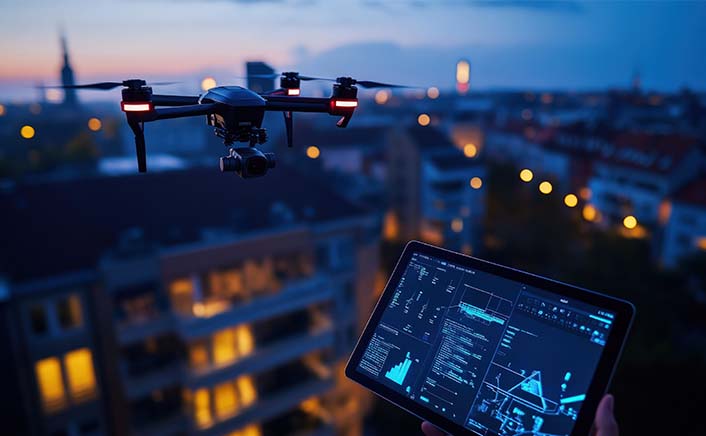
The United States Drone Communication Market is predominantly influenced by military and defense applications, expected to account for approximately 31% of the market by 2025. This growth reflects the country’s heightened investment in autonomous warfare systems, tactical surveillance platforms, and secure aerial networking technologies. The U.S. Department of Defense is actively expanding its procurement of unmanned aerial systems that can function effectively in electronically contested environments, where secure low-latency communication is crucial for mission success. Modern military drones now demand advanced features such as encrypted mesh networking, anti-jamming communication modules, satellite connectivity, and AI-enabled swarm coordination systems to facilitate intelligence gathering, battlefield monitoring, and autonomous strike operations. Initiatives like the Pentagon’s Replicator and increasing defense budgets for autonomous drone fleets are significantly driving the need for robust drone communication infrastructure. As drone swarms evolve from being isolated surveillance tools to interconnected tactical assets, their communication requirements are becoming more sophisticated, enabling collaborative mission execution.
In the commercial sector, surveillance applications represent around 14% of the market and are among the fastest growing non-defense uses. Large enterprises, security contractors, and infrastructure operators are increasingly utilizing connected drones for functions such as perimeter monitoring, industrial security, traffic observation, and urban surveillance. These commercial drones, equipped with high-bandwidth communication systems, can now transmit real-time 4K video streams, thermal imagery, and AI-processed analytics directly to centralized command centers. This segment's growth is closely tied to the rising adoption of Beyond Visual Line of Sight (BVLOS) drone operations, especially in industrial facilities, logistics hubs, and transportation infrastructure. Consequently, communication latency has emerged as a crucial performance indicator, as delayed data transmission can hinder efficacy in threat detection and rapid incident response scenarios.
Infrastructure inspection is also a significant contributor to market demand, accounting for nearly 11%. The adoption of drones within utilities, telecom, railways, oil & gas pipelines, and construction projects is rising, as connected drones begin to replace manual inspection processes that are often labor-intensive, time-consuming, and operationally risky. Utility operators are now deploying drones equipped with LTE, RF, and satellite communication systems to carry out real-time inspections of high voltage transmission lines, substations, bridges, and remote industrial assets. The U.S. power infrastructure sector, which encompasses over 600,000 miles of transmission lines, generates considerable long-term demand for connected aerial inspection systems. Advanced communication technologies facilitate the transmission of live operational data, thermal diagnostics, and defect analysis directly into AI-powered predictive maintenance platforms.
In agriculture, monitoring activities constitute nearly 9% of the market and are seeing ongoing expansion through the integration of drones into precision farming ecosystems. Large-scale agricultural operations are utilizing connected drones for tasks such as crop health analysis, irrigation optimization, pesticide spraying, and soil monitoring. These agricultural drone communication systems heavily rely on LTE and 5G networks for the real-time transmission of multispectral imaging data and AI-based field analytics. Precision agriculture adoption is notably strong in states like California, Texas, and Iowa, where extensive commercial farming operations require scalable monitoring solutions. The capacity to transmit substantial amounts of crop intelligence data in real time is enhancing operational efficiency and minimizing resource wastage in modern farming environments.
Logistics and delivery applications currently make up approximately 8% of the market, yet they are projected to experience some of the highest growth rates in the long term. Major retailers, healthcare providers, and e-commerce operators are actively experimenting with autonomous drone delivery systems, which necessitate ultra-reliable low-latency communication architectures. These drone delivery operations rely on uninterrupted connectivity for navigation, collision avoidance, route optimization, fleet coordination, and integration with air traffic management systems. The rollout of 5G infrastructure is becoming vital for enabling scalable urban drone delivery networks, as traditional RF systems often struggle with signal congestion and interference in densely populated areas. Several U.S. pilot projects are currently testing autonomous drones capable of delivering medical supplies, pharmaceuticals, and retail products within minutes, utilizing cloud-connected communication systems integrated with AI-based route management.
Public safety and law enforcement applications occupy approximately 7% of the market share and are increasingly important for emergency response, crowd monitoring, search and rescue missions, and disaster assessment activities. Police departments and emergency agencies are exploring the use of drones to enhance their operational capabilities and improve response times in critical situations.