How Medium-Output Dispensing Pumps Continue to Dominate the U.S. Dispensing Pump Market
Analyst View
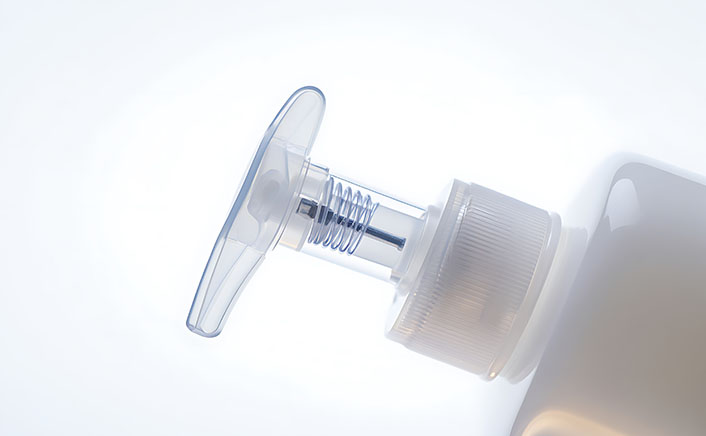
The medium-output dispensing pump segment (1–3 ml/stroke) is predicted to maintain its dominance in the U.S. Dispensing Pump Market, capturing approximately 44.7% of total demand. This trend reflects the extensive use of standardized dispensing volumes in personal care, household hygiene, and cosmetic products. Medium-output pumps strike a balance between dosage accuracy, consumer convenience, and product economics, distinguishing them from low-output pumps, which focus on precision dosing, and high-output pumps, tailored for bulk liquid dispensing. Many liquid hand soaps, shampoos, conditioners, body lotions, facial cleansers, and moisturizing creams are designed to dispense between one and three milliliters per actuation, making this output range the preferred choice for consumer packaged goods manufacturers.
Simultaneously, the low-output segment (less than 1 ml/stroke) is gaining traction, particularly in premium skincare and pharmaceutical packaging. In contrast, high-output pumps (more than 3 ml/stroke) serve niche applications, catering to industrial chemicals, institutional cleaning products, and food-service dispensing systems. As competition evolves, it is expected to focus more on engineering improvements aimed at optimizing dispensing efficiency within each output category rather than just pump volume.
Medium-output pumps have emerged as the benchmark in U.S. consumer product manufacturing, allowing for consistent product dispensing that minimizes waste while ensuring a pleasant user experience. Leading personal care companies are increasingly standardizing dispensing volumes across product lines, enhancing packaging compatibility, and simplifying manufacturing processes. For instance, a single pump platform can be adapted for diverse applications, such as hand wash, shampoo, conditioner, body lotion, and facial cleanser, by merely adjusting the dip tube length or closure dimensions. This strategy significantly lowers tooling costs and inventory requirements, prompting packaging suppliers to heavily invest in modular pump designs focused on the 1–3 ml dispensing range.
The low-output category, accounting for approximately 41.8% of market demand, continues to grow as pharmaceutical companies and premium beauty brands prioritize dosage precision. High-value formulations, including anti-aging serums, vitamin concentrates, prescription topical medications, ophthalmic products, and dermatological creams, necessitate accurate dispensing to ensure therapeutic effectiveness and minimize overconsumption. Airless dispensing systems and metered-dose pumps are prevalent in this category, as they help reduce contamination while guaranteeing consistent dosage. The expansion of premium skincare further drives the adoption of pumps capable of delivering fractions of a milliliter, leaving minimal residual product in the package and enhancing consumer satisfaction and product utilization.
Though comprising only 13.5% of the market, the high-output dispensing pump segment caters to applications where dispensing speed is prioritized over dosage precision. Trigger spray pumps, commonly used for household cleaners, disinfectants, automotive maintenance products, and industrial chemicals, typically exceed three milliliters per stroke to minimize the number of pump actuations required during cleaning tasks. Likewise, syrup dispensing systems in foodservice environments focus on rapid and consistent dispensing of sauces, flavorings, and beverage concentrates. In these scenarios, high-viscosity or chemically aggressive formulations lead manufacturers to prioritize improvements in valve durability, chemical resistance, and long-cycle reliability rather than reducing dispensing volume.
Technological advancements are shaping each output category distinctively. Low-output pumps increasingly feature airless mechanisms, spring-free designs, and advanced sealing technologies, enhancing formulation protection and supporting recyclable mono-material construction. Medium-output pumps benefit from lightweight component designs, integration of post-consumer recycled (PCR) resins, and optimized actuator ergonomics that reduce resin consumption while maintaining performance. High-output pumps, on the other hand, are seeing engineering enhancements focused on increasing flow efficiency, minimizing leakage during transportation, and improving compatibility with concentrated cleaning chemicals and industrial fluids.
Sustainability efforts are also influencing output-volume preferences. Brands aiming to reduce packaging waste are redesigning products around optimized dispensing volumes to prevent product overuse. Medium-output pumps are particularly advantageous, as they deliver sufficient product while minimizing unnecessary consumption, thus supporting refillable packaging systems and extending product life cycles. At the same time, pharmaceutical manufacturers are investing in precise low-output dispensing technologies that curtail formulation waste, especially concerning high-cost active ingredients. As U.S. packaging continues to evolve, addressing these trends in dispensing technology remains crucial.