The Expanding Role of Custom Applicators in Shaping Equipment Investments Across the U.S. Crop Sprayers Industry
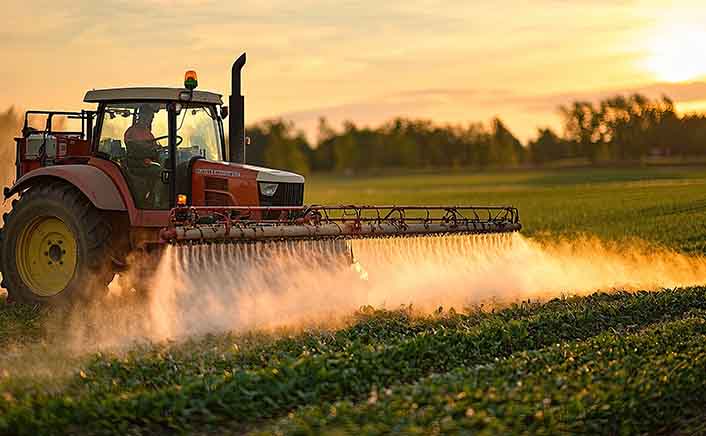
The Commercial Farms segment holds a significant position in the U.S. Crop Sprayers Market , accounting for approximately 78.5% of total unit demand. This dominance reflects the highly mechanized nature of contemporary American agriculture and the increasing scale of crop production. This segment includes independent growers, family-owned businesses, corporate farming operations, and large agricultural enterprises involved in cultivating crops such as corn, soybeans, wheat, cotton, sorghum, rice, fruits, vegetables, and specialty crops.
Data from the USDA indicates that a relatively small percentage of large farms is responsible for the majority of agricultural output in the United States, leading to strong demand for advanced spraying equipment that can efficiently cover extensive acreage within narrow agronomic windows. In major crop-producing states such as Iowa, Illinois, Nebraska, Minnesota, Indiana, Kansas, and North Dakota, growers often manage thousands of acres and depend on high-capacity self-propelled sprayers that feature wide booms, automated section control systems, and precision application technologies.
The application of herbicides is particularly crucial for row crop producers due to the emergence of herbicide-resistant weeds like Palmer amaranth and waterhemp, which can severely diminish yields if not controlled effectively. Consequently, commercial farms are continuously investing in equipment designed to maximize spraying accuracy while minimizing chemical waste. The integration of precision agriculture technologies has further enhanced this demand, with many operators incorporating sprayers into comprehensive digital farming ecosystems that leverage satellite imagery, prescription maps, field sensors, and farm management software. These technologies enable growers to optimize application rates, enhance input efficiency, and improve overall farm profitability.
The Agricultural Service Providers and Custom Applicators segment accounts for about 17.2% of total unit sales but contributes a considerably larger share of market revenue, primarily because operators in this category tend to purchase premium equipment with greater spraying capacities and advanced technological capabilities. Custom applicators provide spraying services for multiple growers, thereby emphasizing productivity, reliability, and operational efficiency. A single custom application business can service tens of thousands of acres annually, resulting in significantly higher equipment utilization rates compared to individual farms.
As a result, these organizations often invest in large self-propelled sprayers with tank capacities exceeding 1,200 gallons, boom widths over 100 feet, pulse width modulation systems, RTK guidance, and variable rate application technology. The economic rationale behind these investments is clear: every decrease in refill frequency, overlap, or downtime directly translates to an increased number of acres treated during critical application periods. Additionally, weather variability has heightened the importance of custom applicators, as many growers now increasingly rely on outsourced spraying services to ensure timely applications of herbicides, fungicides, and nutrients when faced with labor or equipment shortages. This segment's demand is also bolstered by rising regulatory scrutiny around spray drift and environmental stewardship, as professional applicators are often better equipped to adopt advanced technologies that comply with evolving application standards.
Furthermore, the growing adoption of biological crop protection products and precision nutrient management programs presents new opportunities for service providers to broaden their offerings beyond traditional pesticide applications.
The Research and Government Institutions segment represents around 4.3% of market volume and is the smallest end-user category within the U.S. crop sprayers market. Despite its small share, this segment plays a vital role in progressing spraying technologies, application methods, and crop protection practices.
Universities, agricultural experiment stations, extension services, federal research agencies, and state departments of agriculture frequently acquire specialized spraying equipment for field trials, crop studies, technology validation, and environmental research. The equipment utilized by these organizations often differs from mainstream market offerings, as research applications necessitate precise control over droplet size, application rates, spray patterns, and treatment variables. Research institutions are steadily evaluating advanced technologies such as machine vision-guided spraying, autonomous navigation systems, selective weed treatment platforms, and drone-based application methods.
The findings generated from these programs frequently inform future equipment design and influence purchasing decisions across the broader agricultural sector. Moreover, government agencies also utilize crop sprayers for pest management initiatives, invasive species control programs, and public agricultural demonstrations.