U.S. Butterfly Valves Market by End User: How Water Infrastructure and Industrial Investments Are Shaping Demand
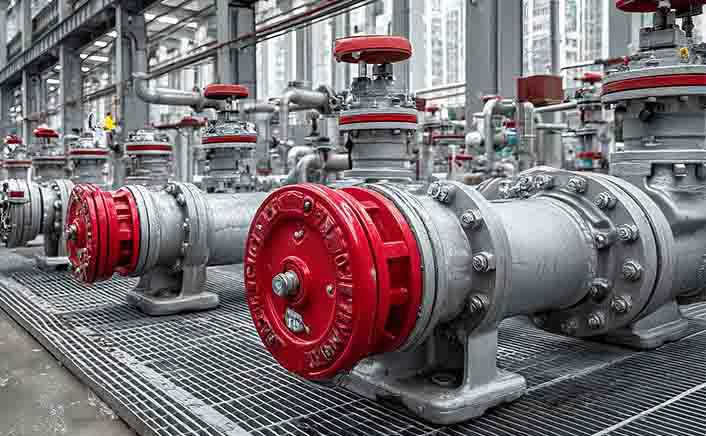
The water and wastewater sector, which constitutes about 24.8% of the U.S. Butterfly Valves Market , is the largest end-user segment. This is primarily due to the extensive application of butterfly valves in water transmission pipelines, treatment facilities, distribution networks, pumping stations, and wastewater collection systems. These valves are particularly preferred in municipal infrastructure because they offer cost-effective shutoff and flow control capabilities in large-diameter pipelines, where gate valves would be significantly more expensive and challenging to maintain. In many parts of the United States, water systems operate with infrastructure that is several decades old, resulting in substantial replacement demand for valves linked to transmission mains, filtration systems, clarifiers, and treatment processes. Municipal utilities are increasingly specifying resilient-seated and electrically actuated butterfly valves to enhance operational reliability and enable remote monitoring. Moreover, large-scale drinking water and wastewater treatment upgrades, alongside investments in water reuse facilities and advanced treatment technologies, continue to generate considerable procurement activity.
The oil and gas sector, accounting for approximately 18.2% of market demand, is driven by applications in upstream gathering systems, midstream pipelines, LNG facilities, storage terminals, and downstream refining operations. Butterfly valves find widespread use in cooling water systems, utility services, tank farms, fire protection systems, and specific process applications, where quarter-turn operation and compact design offer significant advantages. The expansion of the U.S. LNG export industry has spurred additional demand for high-performance, triple-offset butterfly valves that can handle rigorous operating conditions. Midstream operators are consistently investing in compressor stations, gas processing facilities, and storage infrastructure, all of which necessitate substantial quantities of automated valve systems. Although specialized valve types are often used for severe-service applications, butterfly valves retain a strong presence in auxiliary and flow-isolation roles throughout the hydrocarbon value chain.
The chemical and petrochemical sectors, representing roughly 11.4% of the market, heavily rely on corrosion-resistant butterfly valves made from stainless steel, alloy materials, and lined configurations. The Gulf Coast chemical complexes are among the largest consumers, fueled by ongoing investments in specialty chemicals, polymers, industrial gases, and petrochemical production. Butterfly valves are commonly employed in cooling water systems, chemical transfer lines, utility networks, and process control applications where corrosion resistance and low maintenance are essential. As manufacturers increase their capacity for advanced materials, battery chemicals, and specialty compounds, valve procurement needs are expected to rise.
The power generation sector, which holds approximately 10.6% market share, utilizes butterfly valves extensively in cooling water circulation, condenser systems, auxiliary piping, flue gas treatment units, and water treatment infrastructure. Combined-cycle natural gas plants, nuclear facilities, renewable energy support infrastructure, and industrial cogeneration systems all require a significant number of flow-control devices. Modernization projects aimed at enhancing plant efficiency and reliability often involve replacing aging valve assets with automated butterfly valve systems that can integrate into digital control architectures. This segment also benefits from growing investments in grid reliability and upgrades to power infrastructure.
The HVAC sector, accounting for about 7.9% of market revenue, has gained importance due to rapid growth in commercial construction, healthcare facilities, educational campuses, district energy systems, and hyperscale data centers. Large chilled-water and condenser-water networks extensively utilize butterfly valves due to their compact design and ability to efficiently control high-volume fluid movement. The construction of data centers has emerged as a significant source of demand, as each hyperscale campus requires extensive cooling infrastructure containing hundreds or even thousands of valves. The rising adoption of liquid cooling technologies for AI workloads is further driving valve requirements within advanced thermal management systems.
Lastly, the mining and metals industry, which represents around 6.7% of market demand, employs butterfly valves in mineral processing plants, slurry transport systems, smelting operations, metal refining facilities, and industrial water management applications. Mining operators increasingly seek abrasion-resistant and corrosion-resistant valve designs to withstand challenging operating conditions. The surge in domestic investment in critical minerals, battery materials, and metal recycling operations supports steady demand growth within this sector.