Rising Adoption of Brushless DC Motors in U.S. Consumer Electronics Due to Silent Operation and Compact Design Advantages
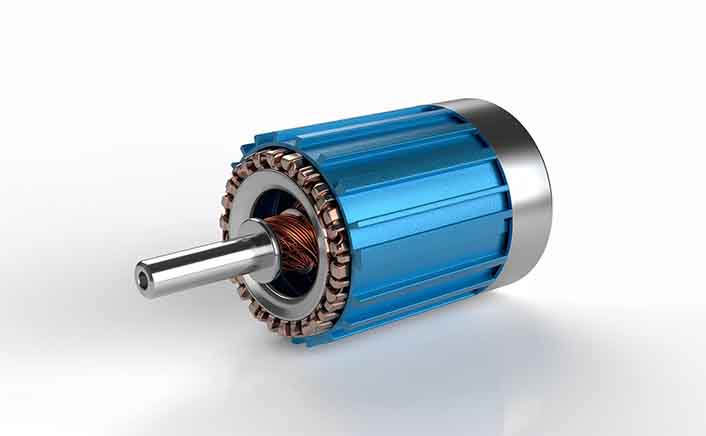
The automotive segment leads the U.S. Brushless DC Motors Market with a 28.0% share, reflecting the swift evolution of vehicle architectures towards electrification and intelligent motion systems. Unlike traditional automotive motors that mainly serve limited mechanical functions, brushless DC (BLDC) motors are now integrated into various vehicle subsystems, such as electric power steering, cooling fans, fuel pumps, HVAC blowers, battery thermal management systems, seat actuation, and advanced driver assistance systems. The strongest demand growth is emerging from electric vehicle production, where manufacturers favor compact, high-torque motors that offer superior efficiency and low maintenance cycles. Companies like Tesla, Rivian, Ford, and General Motors are adopting higher volumes of BLDC-driven auxiliary systems to minimize energy losses and enhance overall vehicle range. The shift towards 48V electrical systems in premium and commercial vehicles further boosts BLDC motor usage, as these motors provide better controllability and thermal stability compared to brushed alternatives. Additionally, automotive OEMs are seeking quieter motors with minimal electromagnetic interference, making BLDC technology increasingly attractive for next-generation mobility platforms.
In the consumer electronics sector, which accounts for 18.0% of the market, the demand for BLDC motors is strong due to ongoing replacement cycles and trends towards miniaturization. These motors are widely employed in laptops, gaming systems, smartphones, drones, wearable devices, cooling systems, vacuum cleaners, and smart home appliances. This segment benefits from rising consumer expectations for silent operation, compact designs, and energy efficiency. Many U.S. households are opting for premium appliances featuring inverter-based technologies, where BLDC motors facilitate variable speed control and reduced electricity consumption. High-performance cooling fans for gaming PCs, data processing hardware, and AI-enabled consumer devices also significantly contribute to market demand. Unlike industrial applications where durability is paramount, the consumer electronics industry emphasizes lightweight construction, reduced vibration, and acoustic optimization, prompting manufacturers to develop highly compact BLDC configurations using advanced magnetic materials and sensorless control technologies.
The industrial manufacturing segment, which constitutes 16.5% of the market, is heavily influenced by investments in factory automation across the United States. Modern production facilities increasingly rely on BLDC motors for applications such as conveyor systems, automated guided vehicles, robotic arms, packaging equipment, precision machine tools, and semiconductor manufacturing systems. Industrial users prefer BLDC motors due to their high operational efficiency, rapid acceleration response, and reduced maintenance downtimes compared to brushed motors. Labor shortages in U.S. manufacturing are driving increased automation spending, particularly in automotive assembly, electronics manufacturing, and food processing industries. Factories are under pressure to cut electricity costs and carbon emissions, which is enhancing the demand for variable speed motor systems that optimize energy consumption. The industrial segment is also benefiting from the integration of predictive maintenance systems, where BLDC motors equipped with smart sensors provide real-time diagnostics and operational analytics.
In HVAC systems, which contribute 9.5% of market demand, the transition towards energy-efficient solutions and smart climate control systems is driving the adoption of BLDC motors. These motors are increasingly replacing traditional AC induction motors in residential and commercial HVAC equipment, thanks to their ability to deliver variable speed operation and superior efficiency under partial load conditions. In larger commercial buildings, data centers, hospitals, and smart residential projects, energy-optimized airflow systems are gaining importance. BLDC motors enhance temperature consistency while reducing electricity consumption, aligning with green building initiatives and sustainability goals. The rising installation of heat pumps across the United States further propels the need for efficient motor solutions for compressors and fans. Manufacturers are also focusing on quieter HVAC systems tailored for premium residential environments, which strengthens the case for BLDC motor adoption.
The aerospace and defense sector, holding a 6.0% market share, is propelled by the demand for lightweight, highly reliable, and precisely controlled motor systems. Aircraft manufacturers and defense contractors are increasingly incorporating BLDC motors in unmanned aerial vehicles, flight control systems, radar systems, actuators, and cabin automation systems. Achieving weight reduction remains a primary goal in aerospace engineering, and BLDC motors facilitate higher power density while requiring less maintenance. In military applications, reliability under extreme environmental conditions is crucial, making BLDC motors a favored choice for these demanding settings.