Rising Urban Digitization and Apartment-Centric Living Are Accelerating Smart Lock Adoption in South Korea
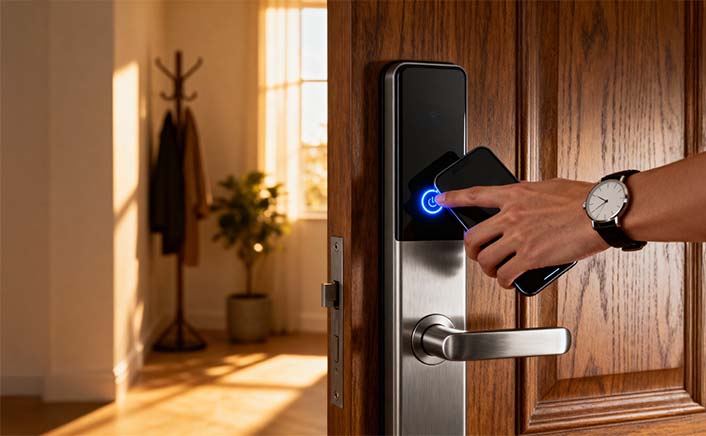
Demand for smart locks in South Korea remains solid, driven by dense high-rise residential buildings, widespread broadband, and familiarity with electronic access. Digital door locks are deeply embedded in the country’s apartment culture, with the market shifting from simple keypad models to Wi-Fi, biometric, and app-connected solutions. Smart locks are now viewed as essential components of home security and smart home systems, rather than standalone devices. Rising consumer demand for remote access, real-time monitoring, and easy integration with home automation is driving this shift. Consequently, adoption is driven more by upgrade cycles and system integration than by short-term promotions, resulting in steady, predictable growth.
The Smart Locks Market in South Korea has become a replacement-focused, value-oriented sector within the larger smart home and access control industry. Most installations are in residential apartments, supported by standard door formats and centralized property management systems. Mortise and rim-type smart locks are predominant because they fit Korean apartment doors, while biometric authentication and hybrid multi-factor systems are gaining popularity. Commercial offices, retail stores, and institutional facilities also drive demand by emphasizing access logging, centralized control, and employee credential management. Unlike traditional mechanical locks, smart locks improve operational efficiency and security oversight, positioning them as a key infrastructure component rather than merely a consumer gadget.
Market expansion in South Korea is marked by disciplined technology upgrades and steady feature enhancements rather than aggressive unit proliferation. A large installed base of early-generation keypad locks is entering its replacement window, driving demand for higher-specification Wi-Fi and fingerprint-enabled products. Revenue growth is supported by higher average selling prices for connected and biometric models, while mid-tier devices maintain healthy volume. System integration complexity, cybersecurity requirements, and brand reputation weigh more heavily on purchasing decisions than short-term pricing incentives. Consequently, value creation is concentrated in feature-rich segments and ecosystem-compatible platforms.
Procurement habits in the residential and commercial sectors focus on reliability, brand trust, and after-sales service. Property developers and construction companies often procure smart locks through OEM supply agreements and install them in new housing developments during construction. Institutional purchasers emphasize centralized management, audit trails, and secure firmware design. Retail and online channels are vital in the replacement segment, where consumers evaluate features, warranty terms, and compatibility with smart home hubs. Building long-term supplier partnerships and establishing localized service networks are crucial for maintaining customer loyalty and encouraging repeat business.
Product development strategies focus on incremental performance improvements and alignment with ecosystem standards. Manufacturers are investing in more accurate fingerprint recognition, faster unlock times, and improved battery life. Updates through software, mobile app improvements, and cloud connectivity are becoming key to staying competitive. Innovation tends to be evolutionary rather than disruptive, focusing on enhancing reliability, cybersecurity, and compatibility with home automation systems. As smart home ecosystem standards become more consistent, barriers to adoption decrease, and upgrade cycles become more predictable.
The distribution of demand across South Korea indicates market stability. The Seoul Metropolitan Area leads in income levels, high-density apartment populations, and high technology adoption. Gyeonggi Province benefits from suburban growth and continued housing projects. Busan and other metro areas provide steady replacement demand, fueled by urban redevelopment and modernization efforts. This regional diversity reduces reliance on a single urban center and promotes stable market activity.
Competitive Landscape
The South Korean smart lock market is characterized by a competitive landscape driven more by technological expertise, distribution capabilities, and ecosystem integration than by aggressive pricing. Samsung SDS Co., Ltd. utilizes its extensive IoT infrastructure and brand strength to incorporate smart locks into integrated building platforms. ASSA ABLOY AB, through the Yale and Gateman brands, maintains a strong presence in the residential market and nurtures relationships with developers. Allegion plc targets premium segments via distribution alliances, while Dormakaba Holding AG concentrates on commercial and institutional access control systems. Domestic players such as Milre Systek Co., Ltd., Solity Co., Ltd., Hyundai Telecom Co., Ltd., and Epic Systems Co., Ltd. operate robust local manufacturing and distribution networks, supporting cost efficiency and quick service. Kaadas Group is expanding its biometric offerings within Korea. High qualification standards, cybersecurity standards, and established developer relationships create significant entry barriers, fostering long-term stability and structured growth in South Korea’s smart lock market.