Rising Infrastructure Execution and Industrial Diversification Are Strengthening Structural Steel Demand in Saudi Arabia
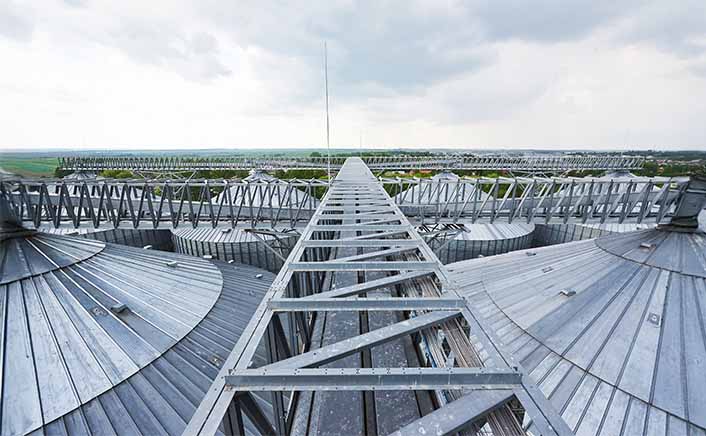
The Saudi Arabia Structural Steel Market is experiencing sustained expansion, driven by large-scale infrastructure execution, industrial capacity additions, and the acceleration of multi-phase urban development projects under Vision 2030. Structural steel has become a foundational construction input across transport corridors, logistics hubs, industrial complexes, and tourism infrastructure, supported by predictable capital expenditure flows.
The Saudi Arabia Structural Steel Market was valued at USD 3.35 billion in 2024 and reached USD 3.60 billion in 2025. The market is projected to reach USD 6.10 billion by 2033, registering a 6.8% CAGR during 2027–2033. Growth is driven by infrastructure intensity, industrial fabrication expansion, and rising adoption of prefabricated and high-strength structural assemblies. Demand realization is closely aligned with project execution phases, ensuring disciplined year-wise expansion rather than speculative surges.
Infrastructure-led construction is anchoring structural steel consumption across the Kingdom.
Major transportation corridors, airport expansions, rail systems, ports, and stadium developments are structurally steel-intensive due to span requirements, load-bearing standards, and construction speed advantages. Infrastructure projects account for the largest share of structural steel demand, supported by long procurement cycles and phased execution. Steel sections and fabricated assemblies are deployed extensively in bridges, flyovers, transit systems, and public utilities. As capital spending continues across multiple regions, infrastructure-driven demand remains the primary stabilizing force within the market.
Industrial and energy projects are increasing the intensity of heavy structural steel use.
Industrial diversification initiatives are expanding manufacturing zones, petrochemical complexes, and logistics parks, particularly in the Eastern and Central regions. These projects require heavy beams, columns, pipe racks, and modular steel structures capable of supporting high-load operations. Energy and utilities infrastructure, including power plants and transmission networks, further contributes to demand for fabricated structural components and utility towers. Compared with residential construction, industrial and energy projects exhibit higher steel intensity per square meter, reinforcing revenue growth even when overall construction activity moderates.
Prefabrication and value-added fabrication are enhancing the competitive position of structural steel.
EPC contractors increasingly prioritize pre-engineered buildings and fabricated structural assemblies to accelerate project timelines and reduce on-site labor complexity. Prefabricated steel systems offer improved precision, faster erection cycles, and better lifecycle performance. This shift toward modularization is increasing the proportion of value-added fabrication within total structural steel demand. Rather than supplying solely commodity-grade sections, domestic manufacturers are expanding their fabrication capabilities to capture higher-margin segments. This structural upgrade within the value chain supports sustainable market expansion beyond raw material supply dynamics.
Project pipeline conversion governs the timing of demand realization.
Structural steel demand is closely linked to project execution milestones, particularly procurement and structural erection phases. Announced projects do not immediately translate into steel consumption; instead, material off-take accelerates once engineering design is finalized and funding is released. The staged conversion model accounts for the steady growth trajectory observed during the forecast period. Demand typically peaks during mid-cycle construction phases, ensuring controlled revenue growth tied to actual execution progress rather than headline project announcements.
Regional demand concentration reflects project clustering.
The Central and Western regions account for the largest share of structural steel consumption due to government buildings, transport infrastructure, tourism corridors, and commercial developments. The Eastern region remains a strong contributor, supported by oil and gas facilities and industrial zones. Regional demand distribution mirrors infrastructure and industrial investment concentration rather than population distribution, reinforcing the project-led nature of the market.
Competitive Landscape
The Saudi Arabian structural steel market is moderately consolidated, with leading players competing across upstream production and downstream fabrication. Key companies include Zamil Steel, Saudi Iron & Steel Company (Hadeed), Al Ittefaq Steel Products Company (ISPC), Al Yamamah Steel Industries Company, Saudi Steel Pipe Company (TenarisSSP), Al-Babtain Power & Telecommunication Company, Alfanar Steel Structures, Arabian Metal Products Organization (AMPO), Isam Khairi Kabbani Group (IKK Group), and METSCCO Heavy Steel Industries. Competition centers on execution capability, fabrication capacity, delivery reliability, and long-term EPC relationships rather than price-led differentiation. Established supplier networks, integrated production facilities, and localized manufacturing strengthen competitive positioning across large-scale infrastructure and industrial contracts.