Food & Beverage Retail Dominates the Europe Refrigeration Coolers Market as Cold Chain Investments Accelerate Across Europe
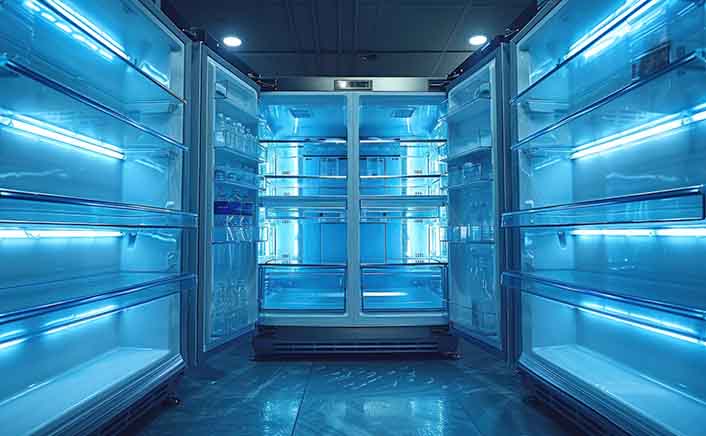
The Food & Beverage Retail segment holds a significant share of the Europe Refrigeration Coolers Market, accounting for 35.6% of total demand. This dominance is largely attributed to the extensive network of supermarkets, hypermarkets, discount grocery chains, convenience stores, and specialty food retailers in the region. Retailers have begun to view refrigeration coolers as strategic investments rather than just storage solutions, increasingly relying on advanced display refrigeration systems that enhance product visibility, extend shelf life, reduce food waste, and decrease electricity costs. There is a notable demand for replacements, as retailers opt to replace older HFC-based cabinets with energy-efficient units that utilize natural refrigerants like CO? (R744) and propane (R290). This shift not only helps businesses comply with evolving European environmental regulations but also lowers operating expenses.
The Foodservice & Hospitality segment constitutes 19.2% of the market. This growth is driven by ongoing investments in hotels, restaurants, cafés, catering facilities, quick-service restaurants, and institutional kitchens. Commercial kitchens require refrigeration systems that can maintain stable temperatures despite frequent door openings and heavy use, leading to increased demand for reach-in coolers, undercounter refrigeration units, beverage coolers, and blast chillers. These systems are often equipped with inverter compressors, digital temperature controls, and intelligent monitoring capabilities designed to minimize energy consumption while ensuring food safety standards are met.
The Food Processing industry contributes 14.1% to market demand, as processors look to expand chilled storage capacity for a variety of products, including dairy, meat, seafood, bakery items, ready meals, and frozen goods. Food manufacturers are deploying large-capacity refrigeration coolers to support continuous production while adhering to strict hygiene and temperature control.
In the Logistics & Cold Chain segment, which accounts for 10.3% of the market, there is a clear trend toward the expansion of temperature-controlled warehouses, distribution centers, and urban fulfillment hubs. This growth supports both food retail and pharmaceutical distribution. The rise of e-commerce grocery delivery and cross-border distribution of perishable items has intensified the need for modular refrigeration systems that maintain an unbroken cold chain throughout storage and handling. Operators are prioritizing refrigeration coolers that offer remote diagnostics, predictive maintenance software, and energy optimization controls to reduce equipment downtime and enhance asset utilization.
Pharmaceuticals & Healthcare make up 8.2% of the market, with growing storage needs for vaccines, biologics, blood products, specialty medicines, laboratory reagents, and temperature-sensitive diagnostic materials. In this sector, the emphasis is on temperature uniformity, continuous monitoring, alarm systems, and regulatory compliance, prompting healthcare providers to invest in precision refrigeration equipment that features validated performance and digital documentation capabilities.
The Chemicals industry contributes 4.3% to the market, with refrigeration coolers being essential for storing temperature-sensitive chemicals, specialty formulations, laboratory compounds, catalysts, and industrial intermediates that require controlled environments. Chemical manufacturers are increasingly adopting corrosion-resistant refrigeration systems that can perform reliably under challenging industrial conditions while minimizing maintenance needs.
The Floral & Agriculture segment captures 3.1% of the market, driven by commercial flower distributors, horticultural producers, seed storage facilities, and fresh produce exporters that depend on refrigeration to maintain product quality during transportation and distribution. This demand is particularly evident in countries with robust agricultural export industries, where temperature control has a direct impact on product freshness and market value.
Laboratories & Research account for 2.4% of the market, relying on specialized refrigeration coolers to preserve research samples, biological specimens, reagents, and testing materials used in universities, biotechnology firms, contract research organizations, and industrial R&D facilities. Although shipment volumes in this sector are relatively modest, laboratory-grade refrigeration equipment typically commands premium prices due to its enhanced precision, reliability, and monitoring capabilities.
Lastly, the Others category, contributing 2.8% to the market, encompasses educational institutions, government facilities, beverage manufacturing support operations, and specialized industrial applications requiring commercial refrigeration for specific operational needs. Overall, the Europe Refrigeration Coolers Market is shaped by a diverse range of segments and continuous innovations tailored to meet industry-specific requirements.