North America Temporary Power Market to Reach USD 9.18 Billion by 2033 as Infrastructure Investments and Grid Modernization Accelerate Demand
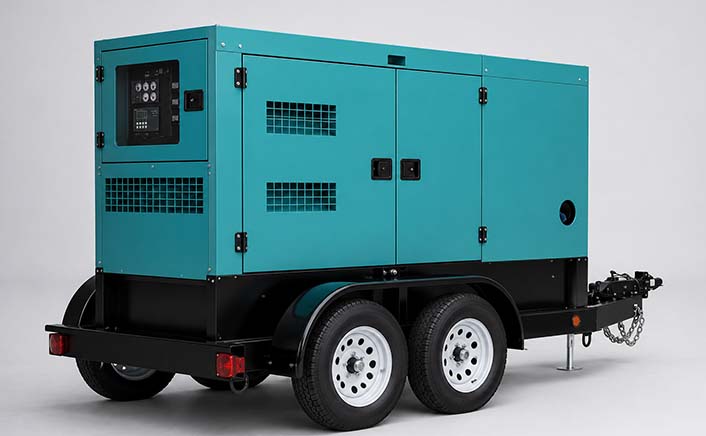
Growing infrastructure development, expanding data center construction, utility maintenance projects, and increasing adoption of rental power solutions are driving sustained growth across the North America Temporary Power Market.
The North America Temporary Power Market was valued at USD 5.60 billion in 2025 and is projected to reach USD 9.18 billion by 2033, expanding at a CAGR of 6.4% during the forecast period. Rising investments in transportation infrastructure, commercial construction, utility grid upgrades, and industrial maintenance are increasing the need for reliable temporary power systems. The market is also benefiting from growing demand for flexible rental solutions that reduce capital expenditure while ensuring uninterrupted power supply across short-term and emergency applications.
Temporary power solutions have become essential across industries where continuous electricity is critical during planned shutdowns, equipment maintenance, construction activities, and disaster recovery operations. Utilities are increasingly deploying temporary generators during transmission and distribution upgrades, while industrial facilities rely on rental power to minimize production downtime during maintenance. The rapid expansion of hyperscale data centers across the United States and Canada is further strengthening market demand as operators require temporary power during commissioning, testing, and facility expansion.
Infrastructure Expansion and Utility Investments Continue to Support Market Growth
Large-scale public infrastructure programs remain one of the strongest growth drivers for the temporary power industry. Ongoing investments in highways, bridges, airports, rail networks, and commercial developments are creating sustained demand for mobile power equipment throughout project lifecycles. At the same time, utilities are investing heavily in grid modernization, substation upgrades, and renewable energy integration, requiring temporary power systems to maintain uninterrupted electricity supply during maintenance and replacement activities.
The increasing frequency of extreme weather events across North America has also elevated the importance of temporary power in emergency response and disaster recovery. Rental providers are expanding regional fleets to improve deployment capabilities during hurricanes, wildfires, floods, and severe winter storms, enabling utilities, government agencies, and businesses to restore critical operations more quickly.
Rental Power Solutions Gain Preference Across Industrial Applications
The rental model continues to gain traction as organizations seek greater operational flexibility and lower ownership costs. Instead of purchasing equipment for temporary requirements, end users increasingly rely on rental providers that offer complete power solutions, including generators, transformers, distribution panels, load banks, cables, installation, fuel management, and remote monitoring services.
Construction and infrastructure projects remain the largest end-user segment, while utilities and manufacturing continue to generate substantial demand for high-capacity temporary power systems. Data centers represent one of the fastest-growing application areas, supported by accelerating investments in cloud computing, artificial intelligence infrastructure, and digital services across North America.
Fleet Modernization and Hybrid Power Technologies Shape Competitive Strategies
Market participants are investing significantly in fleet modernization to improve operational efficiency and meet evolving environmental regulations. Replacing older diesel-powered equipment with Tier 4 Final-compliant generators, hybrid generator-battery systems, and digitally connected assets is enhancing fuel efficiency while reducing emissions and operating costs.
Advanced telematics, remote diagnostics, predictive maintenance, and fleet management platforms are becoming standard offerings among major rental providers. These technologies improve equipment utilization, reduce downtime, and enable customers to optimize temporary power deployments across multiple project locations.
Leading Companies Focus on Service Expansion and Integrated Solutions
Competition in the North America Temporary Power Market is driven by fleet scale, geographic coverage, engineering expertise, and integrated service capabilities rather than pricing alone. Companies continue expanding rental fleets, strengthening regional service networks, and introducing turnkey temporary power solutions tailored to infrastructure, utilities, industrial facilities, mining operations, telecommunications, and data centers.
Key companies operating in the market include: United Rentals, Sunbelt Rentals (Ashtead Group), Aggreko, Herc Rentals, Caterpillar Inc., Cummins Inc., Generac Power Systems, Atlas Copco AB, Wacker Neuson Group, Multiquip Inc., Lex Products, and Thompson Power Systems.
Strong Outlook Supported by Infrastructure Spending and Energy Transition
The North America Temporary Power Market is expected to maintain steady growth through 2033 as governments and private organizations continue investing in infrastructure modernization, utility resilience, industrial expansion, and digital infrastructure. Increasing adoption of hybrid temporary power systems, battery energy storage integration, and smart fleet management technologies is expected to enhance operational efficiency further while supporting sustainability objectives. With demand expanding across both planned and emergency applications, temporary power solutions are expected to remain an integral component of North America's evolving energy and infrastructure landscape.