Pocket Plate Batteries Lead the U.S. Nickel Cadmium (Ni-Cd) Battery Market with Strong Demand from Utilities and Industrial Backup Power
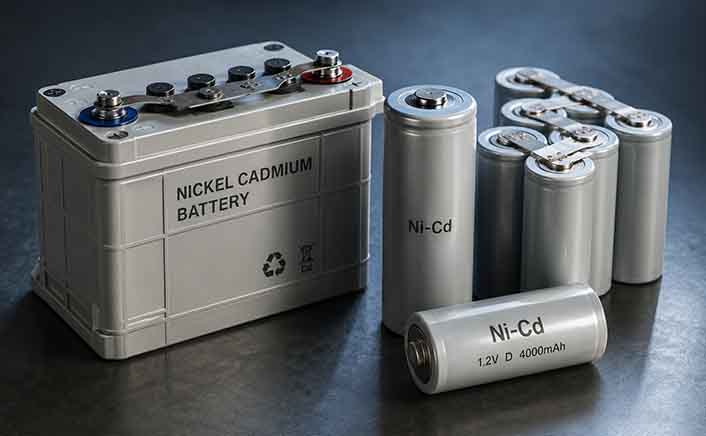
The product landscape of the U.S. Nickel Cadmium (Ni-Cd) Battery Market is predominantly influenced by application-specific performance needs rather than sheer consumer demand. In contrast to lithium-ion batteries, which are prevalent in portable electronics and electric vehicles, nickel cadmium batteries remain essential in industries where operational reliability, extended service life, and durability under harsh environmental conditions are prioritized over factors like energy density. As a result, market leadership is primarily held by battery technologies designed for industrial backup power, aviation safety systems, utility infrastructure, and defense applications.
Pocket plate batteries hold the largest market share, becoming the preferred choice for critical infrastructure that requires reliable standby power over long operating lifecycles. These batteries are extensively used in electric transmission substations, distribution networks, power generation facilities, oil refineries, petrochemical plants, railway signaling systems, telecommunications exchanges, industrial manufacturing facilities, and emergency power setups. Their popularity is attributed to their exceptional mechanical strength, vibration resistance, deep-discharge capability, and consistent performance under extreme temperature conditions. Industrial operators often focus on lifecycle cost rather than initial purchase price, making pocket plate technology appealing, as these batteries typically provide service lives that exceed two decades with predictable performance. A large installed base across utilities and transportation infrastructure also contributes to a significant replacement market that sup
ports long-term sales.
The modernization of aging electrical infrastructure across the United States further strengthens the dominance of pocket plate batteries. Utilities that are upgrading substations and grid automation systems continue to specify nickel cadmium batteries for switchgear operation, relay protection, SCADA equipment, and emergency control circuits, as these systems demand uninterrupted reliability even during prolonged power outages. The expansion of hyperscale data centers also indirectly boosts demand, as control systems, generator starting equipment, and electrical protection panels often rely on industrial battery technologies with established operational success. These application characteristics reinforce the strong position of pocket plate batteries in the U.S. Nickel Cadmium (Ni-Cd) Battery Market.
Sintered plate batteries represent the second-largest category and occupy a distinct niche focused on aerospace and defense applications. The manufacturing process of these batteries allows for higher power density and superior high-rate discharge capabilities compared to pocket plate designs, making them especially suitable for aircraft engine starting, emergency electrical systems, auxiliary power units, helicopters, and military platforms. The demand from commercial aviation remains stable, as maintenance regulations mandate scheduled inspections and replacements of battery systems to ensure airworthiness. Additionally, military modernization initiatives further drive demand for highly reliable rechargeable batteries that can withstand vibration, shock, rapid discharge, and extreme temperature variations. These performance benefits enable sintered plate technology to maintain a robust market presence, even though it has a smaller share than industrial pocket plate batteries.
Fiber plate batteries, while representing a smaller segment of the market, occupy a strategically important position. These batteries are typically chosen for specialized industrial equipment, selected medical systems, laboratory instruments, emergency monitoring devices, and niche electronics that require compact battery configurations with reliable cycling capabilities. Manufacturers are continuously improving fiber electrode structures to enhance charge acceptance, electrical conductivity, and operational stability, making these batteries increasingly suitable for applications that demand consistent performance under repeated charging cycles. Although overall shipment volumes are modest, demand is growing within specialized industrial sectors where equipment reliability is more important than maximum energy density.
Plastic-bonded electrode batteries currently constitute the smallest segment of the product landscape. Their use is concentrated in customized battery packs, portable industrial equipment, instrumentation systems, communication devices, and certain defense applications where lightweight battery assemblies are essential. Rather than competing directly with mainstream industrial battery technologies, these batteries cater to specialized customer needs that involve unique physical dimensions, customized electrical characteristics, or integration into proprietary equipment. Consequently, growth in this category is closely tied to advancements in industrial automation.