Rising Demand for Faster Construction Timelines and Sustainable Building Practices Drive Global Modular Construction Market Growth
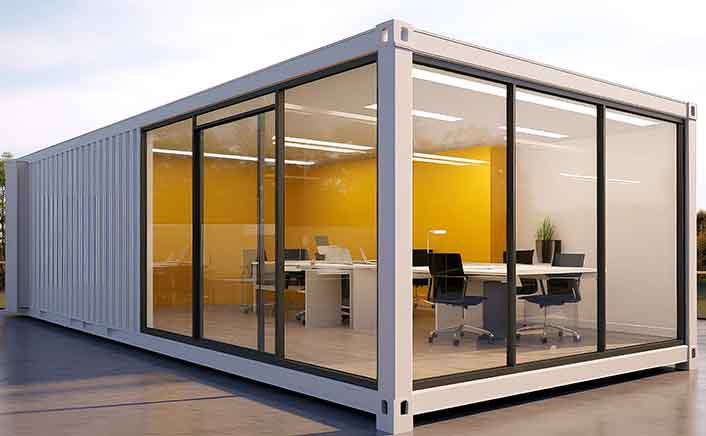
The Global Modular Construction Market is set to experience robust growth as the rising demand for faster project completion timelines, increasing labor shortages in the traditional construction sector, and growing adoption of sustainable and offsite building practices drive demand across residential, commercial, and industrial construction settings worldwide. According to the latest market analysis, the market is projected to grow from USD 129.66 Billion in 2025 to USD 259.94 Billion by 2033, registering a compound annual growth rate (CAGR) of 9.07% during the forecast period.
As developers and contractors increasingly prioritize speed, cost efficiency, and quality control, modular construction has become a vital approach in delivering residential, healthcare, education, and hospitality projects, helping stakeholders reduce onsite labor requirements, minimize construction waste, and accelerate project delivery timelines. The growing integration of Building Information Modeling and digital design tools into routine construction workflows is further reinforcing the role of offsite manufacturing in modern building practices.
The market is witnessing momentum through innovation in robotics-assisted manufacturing and modular design software, expanding applications of modular buildings in affordable housing and disaster relief projects, and rising collaborations between construction companies and technology developers that accelerate research and adoption across developed and emerging markets. Increasing government support for green building certifications and offsite construction adoption is further strengthening the long-term outlook for the industry.
One of the primary factors driving market expansion is the increasing adoption of Permanent Modular Construction (PMC), the leading type segment with a major share of 81.60% in 2025, supported by widespread deployment across long-term residential, commercial, healthcare, and education facilities. Relocatable Modular Construction (RMC) follows with 18.40% share, driven by its essential role in temporary housing, construction site offices, and disaster relief shelters.
Despite its strong growth outlook, the industry faces challenges. The high upfront capital investment required for offsite manufacturing facilities, transportation and logistics complexities associated with large modules, and a shortage of skilled professionals limit adoption among cost-sensitive and smaller construction companies, particularly where advanced modular infrastructure remains underdeveloped. Stringent zoning regulations and building code requirements for modular structures add a further layer of complexity for smaller market participants navigating region-specific compliance standards.
North America continues to dominate the Global Modular Construction Market, accounting for 37.50% share in 2025, owing to strong construction infrastructure, rising labor cost pressures, and the presence of major modular construction companies. Europe holds 29.80% share, supported by robust government funding for sustainable construction initiatives, while Asia-Pacific holds 21.40%, benefiting from expanding construction infrastructure. Latin America and the Middle East & Africa are gradually strengthening their positions.
Competitive Landscape
Some of the major companies operating within the Global Modular Construction Market are Skanska AB, Laing O'Rourke, Bouygues Construction SA, ATCO Ltd., Balfour Beatty Plc., Taisei Corporation, Lendlease Corporation, and others.