Mobile EV Charging Station Market Outlook: Residential, Commercial, and Fleet Applications in Focus
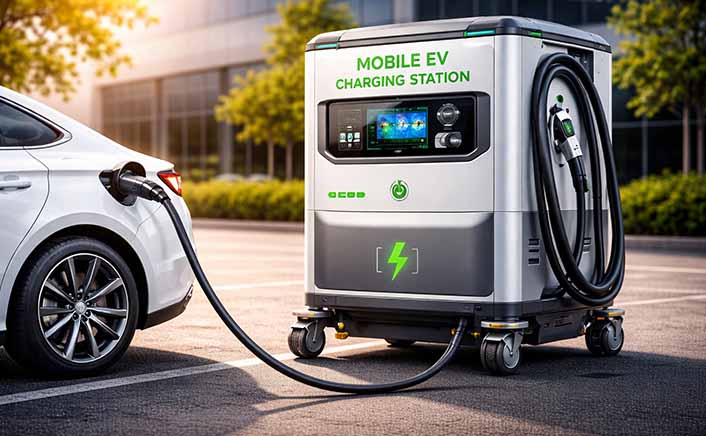
The Mobile EV Charging Station Market is experiencing significant growth across its key application segments, driven by the changing needs of electric vehicle (EV) owners, commercial operators, and fleet managers around the globe. Among these applications, public charging—which encompasses commercial spaces, parking lots, and event-based deployments—holds the largest market share, estimated at approximately 38–40%. This dominance is fueled by the rapid urbanization of EV adoption and the increasing demand for flexible charging solutions in densely populated areas. Many public spaces lack adequate fixed infrastructure to accommodate the surging demand, making mobile charging units a practical and efficient alternative. The deployment of mobile chargers in commercial hubs, shopping malls, and office complexes not only improves accessibility but also supports on-demand charging during high-traffic events, ensuring uninterrupted operations for both passenger and commercial EVs. In response, governments in Europe, the U.S., and China are actively promoting these deployments through subsidies and infrastructure grants, thereby enhancing adoption rates.
Private charging, primarily for residential or personal EV users, accounts for 30–32% of the market. Although the majority of private EV owners rely on home-installed charging stations, the growing interest in mobile EV chargers is providing added convenience, especially in multi-unit residences or areas with limited charging options. Vehicle-mounted or plug-and-play mobile units enable homeowners to navigate space and accessibility challenges while offering flexibility for long-distance travel or emergency charging needs. Regions with high EV penetration, such as North America and Europe, are seeing a rising uptake of these solutions, driven by consumer desires for convenience, easy installation, and rapid deployment.
The fleet charging segment, which represents 28–30% of the market, is emerging as one of the fastest-growing areas within the Mobile EV Charging Station Market. The electrification of commercial fleets including taxis, buses, last-mile delivery vehicles, and logistics trucks is a key driver, as fleet operators require scalable and flexible charging infrastructure to maintain operational efficiency. Mobile charging units allow fleets to charge vehicles on-site or as needed, reducing dependence on fixed infrastructure and minimizing downtime and operational disruptions. Governments and municipal authorities are increasingly integrating mobile charging solutions into public transit systems and corporate fleet programs to achieve sustainability targets and meet emission reduction mandates.
In summary, the distribution of mobile EV charging applications highlights the versatility and strategic significance of mobile charging solutions. Public charging remains a dominant force due to urban demand, private charging is gaining traction among residential EV owners seeking greater flexibility, and fleet charging is rapidly expanding as commercial operations shift towards electric mobility. This balanced adoption across various applications ensures that the Mobile EV Charging Station Market continues to be resilient, scalable, and prepared for sustained growth in tandem with rising global EV adoption and the demand for convenient, on-demand charging solutions.