Rising Prevalence of Neurological Disorders and Growing Adoption of Implantable Therapies Drive Global Neurostimulation Device Market Growth.
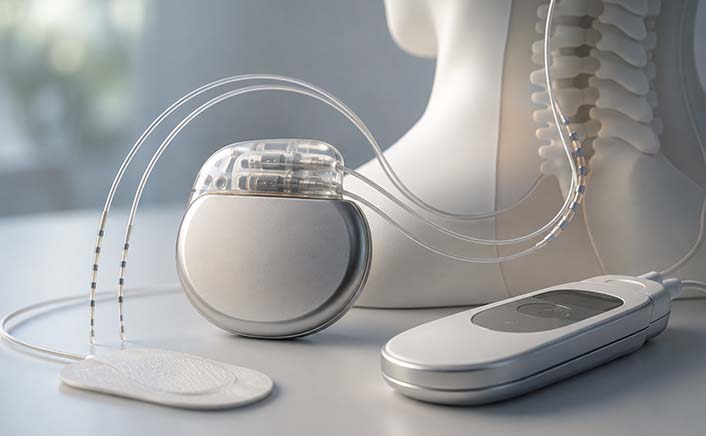
The Global Neurostimulation Device Market is set to experience robust growth as rising prevalence of chronic pain, neurological disorders, and hearing loss, increasing adoption of implantable and external stimulation devices, and growing investment in advanced medical device technologies drive demand across hospitals, ambulatory surgery centers, specialty clinics, and research settings worldwide. According to the latest market analysis, the market is projected to grow from USD 6.92 Billion in 2025 to USD 14.35 Billion by 2033, registering a compound annual growth rate (CAGR) of 9.42% during the forecast period.
As patients and healthcare providers increasingly prioritize minimally invasive and long-term management options for neurological and chronic pain conditions, neurostimulation has become a vital field encompassing spinal cord stimulators, deep brain stimulators, sacral nerve stimulators, vagus nerve stimulators, gastric electrical stimulators, and cochlear implants that deliver electrical or magnetic impulses to modulate nervous system activity. The growing integration of closed-loop and adaptive stimulation technologies into everyday clinical practice is further reinforcing the role of neurostimulation in modern, personalized patient care.
The market is witnessing momentum through innovation in wireless and rechargeable implantable systems, expanding use of MRI-compatible devices, and rising collaborations between device manufacturers, neurologists, and research institutions that accelerate product development and adoption across developed and emerging markets. Expanding clinical applications of neurostimulation therapies in treatment-resistant depression, epilepsy, and obesity management are also broadening the addressable patient population and encouraging continued investment in next-generation device platforms.
One of the primary factors driving market expansion is the increasing adoption of Spinal Cord Stimulators (SCS), the leading Product Type segment with a major share of 31.80% in 2025, supported by widespread use in chronic pain management and failed back surgery syndrome. Cochlear Implants follow with 21.40% share, driven by rising prevalence of hearing loss, while Deep Brain Stimulators (DBS) hold 20.60%, Sacral Nerve Stimulators (SNS) contribute 11.90%, Vagus Nerve Stimulators (VNS) account for 8.70%, and Gastric Electrical Stimulators (GES) hold 2.90%.
Despite its strong growth outlook, the industry faces challenges. High costs of neurostimulation devices and associated surgical procedures, risk of device-related complications and infections, and inconsistent reimbursement policies across regions limit adoption among cost-sensitive and early-stage market participants, particularly where advanced healthcare infrastructure remains underdeveloped. Stringent regulatory approval requirements for implantable devices add a further layer of complexity for smaller companies.
North America continues to dominate the Global Neurostimulation Device Market, accounting for 41.20% share in 2025, owing to high prevalence of chronic pain and neurological disorders, advanced healthcare infrastructure, and the presence of major neurostimulation device manufacturers. Europe holds 29.50% share, supported by strong adoption of implantable devices and growing geriatric population, while Asia-Pacific holds 21.50%, benefiting from rising healthcare investment and expanding access to advanced medical technologies. Latin America and the Middle East & Africa are gradually strengthening their positions.
Competitive Landscape
Some of the major companies operating within the Global Neurostimulation Device Market are Medtronic, Boston Scientific Corporation, LivaNova PLC (formerly Cyberonics), Nevro Corp., NeuroPace, Inc., BIOTRONIK SE & Co. KG, Axonics, Inc., Inspire Medical Systems, Cochlear Ltd., Integer Holdings Corp., Neuronetics, Inc., electroCore, Inc., and others.