Heavyweight Professional Drone Gimbals for EO/IR Inspections, Power Line Monitoring, and Defense Operations
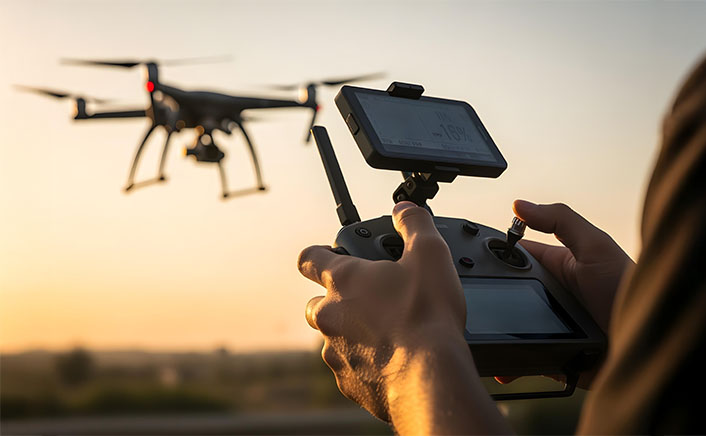
The U.S. Drone Gimbal Market is significantly influenced by the distribution of payload capacities, catering to the diverse needs of consumers, prosumers, and professional end-users. Currently, consumer or lightweight gimbals, which support payloads up to 1 kg, make up approximately 40% of the market, positioning them as the largest segment. This segment’s dominance is largely attributed to the growing popularity of drones among hobbyists, travel enthusiasts, and content creators, who prioritize portability, ease of use, and affordability. Drones designed for consumers often come equipped with lightweight gimbals that accommodate cameras ranging from action cams to compact 4K imaging devices. These gimbals offer adequate stabilization for personal videography, vlogging, social media content creation, and amateur aerial photography, providing smooth footage without the complexity or high costs associated with professional systems. The lightweight segment is also marked by rapid product turnover, with companies consistently introducing incremental advancements like foldable designs, automated tracking, and smartphone integration, thus enhancing adoption rates
| Payload Type | Estimated Market Share (%) |
| Consumer / Lightweight (up to 1 kg) | 40% |
| Prosumer / Mid-Weight (1–5 kg) | 35% |
| Professional / Heavyweight (>5 kg) | 25% |
The prosumer or mid-weight segment, supporting payloads between 1 and 5 kg, comprises about 35% of the U.S. drone gimbal market. This segment serves as a bridge between consumer-grade equipment and fully professional systems. Prosumer gimbals are tailored for enthusiasts and semi-professionals who seek greater stability, versatility, and payload capacity for carrying mirrorless or DSLR cameras, compact cinema cameras, or multi-sensor arrays. The growth in this segment reflects the increasing demand for high-quality content creation across various industries, including real estate, tourism, independent filmmaking, and commercial photography. Prosumer gimbals typically incorporate features such as three-axis stabilization, AI-assisted subject tracking, and modular payload mounting options, allowing users to adapt to various filming or survey requirements. Additionally, the mid-weight category benefits from applications in industrial settings, such as small-scale inspections and monitoring tasks, where the payload exceeds that of lightweight consumer cameras without requiring the full capabilities of heavyweight professional systems.
The professional or heavyweight segment, which accommodates payloads exceeding 5 kg, constitutes roughly 25% of the market and primarily addresses enterprise, industrial, and defense applications. Professional gimbals are designed to carry large cinema cameras, multi-sensor EO/IR payloads, and advanced instrumentation that is essential for precision mapping, pipeline inspection, power line monitoring, agricultural analytics, and aerial surveying. For instance, in industrial inspection, professional gimbals fitted with EO/IR cameras are crucial for real-time detection of structural defects, thermal anomalies, or environmental hazards. Similarly, the defense and security sectors rely on heavyweight gimbals for high-resolution surveillance, reconnaissance, and intelligence-gathering applications, where stable imaging is vital under dynamic flight conditions. These robust systems are often constructed from high-strength materials, feature redundant stabilization motors, and support sophisticated software for motion compensation, tracking, and autonomous operation, justifying their higher cost relative to lighter payloads.
Overall, the U.S. drone gimbal market is shaped by technological innovation, application-specific demand, and regulatory influences across all payload segments. Lightweight consumer gimbals are expanding accessibility and encouraging mass adoption, mid-weight prosumer systems are driving commercial and semi-professional growth, and heavyweight professional gimbals are facilitating industrial, defense, and critical infrastructure applications. The interaction among these segments ensures ongoing market growth, both in terms of units sold and overall revenue, as each category addresses distinct user needs while fostering innovation in stabilization technology, sensor integration, and software capabilities. Moreover, advancements such as AI-assisted tracking, multi-axis stabilization, and lightweight materials have enhanced the performance and efficiency of gimbals across all categories, promoting broader adoption within the U.S. market.
Looking ahead, the market is anticipated to sustain strong growth, with lightweight systems continuing to attract interest from hobbyists and social media content creators, mid-weight gimbals expanding their presence in commercial sectors such as real estate, media production, and small-scale industrial inspections, and heavyweight systems experiencing increased deployment in enterprise, defense, and critical infrastructure projects. The varied payload requirements will ensure that manufacturers persist in innovating across all segments, striking a balance between affordability, precision, and performance to meet the evolving demands of a wide array of applications. This multi-tiered market structure not only fortifies the resilience of the U.S. drone gimbal industry but also highlights its potential for sustainable growth.