Rising Investments in Space Exploration and Sustainable Food Production Drive Global Space Agriculture Market Growth.
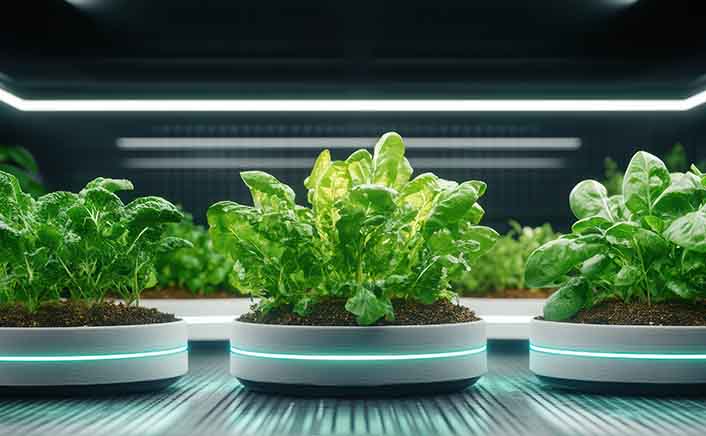
The Global Space Agriculture Market is set to experience robust growth as governments, commercial aerospace companies, and research institutions increasingly prioritize sustainable food production technologies for long-duration space missions. According to the latest market analysis, the market is projected to grow from USD 6.14 Billion in 2025 to approximately USD 15.08 Billion by 2033, registering a compound annual growth rate (CAGR) of 11.90% during the forecast period.
As human space exploration enters a new era of lunar missions, commercial space stations, and future Mars expeditions, the need for reliable and self-sustaining food production systems has become increasingly important. Space agriculture enables astronauts to cultivate fresh crops in controlled environments, reducing dependence on costly Earth-based resupply missions while improving nutritional security, crew well-being, and mission sustainability. These capabilities are expected to play a central role in supporting future deep-space exploration programs.
The market is witnessing significant momentum through continued investments in controlled-environment agriculture, hydroponics, aeroponics, bioregenerative life support systems (BLSS), and autonomous crop management technologies. Advanced environmental monitoring systems, artificial intelligence, robotics, LED lighting, and water recycling technologies are enabling efficient crop cultivation under microgravity and resource-constrained conditions. These innovations are helping researchers optimize plant growth while minimizing water consumption, nutrient loss, and energy requirements.
Government space agencies and commercial aerospace companies continue to strengthen research collaborations aimed at developing next-generation agricultural technologies. Programs focused on establishing permanent lunar habitats and supporting future Mars missions are accelerating innovation in crop cultivation, atmospheric regeneration, waste recycling, and closed-loop life support systems. As a result, space agriculture is evolving from experimental research into a strategic technology supporting the future of human spaceflight.
One of the primary factors driving market expansion is the increasing adoption of hydroponic systems, which currently represent the leading system type within the market. Hydroponic cultivation delivers high water-use efficiency, precise nutrient management, rapid crop growth, and reliable performance in controlled environments. These advantages make hydroponics particularly suitable for long-duration space missions where resource conservation and operational reliability are essential. Continuous technological improvements and successful space-based plant growth experiments continue to reinforce the dominance of hydroponic systems across both government and commercial programs.
Despite its strong growth outlook, the industry continues to face several challenges. Developing agricultural systems capable of operating reliably in microgravity requires extensive research, sophisticated engineering, and significant financial investment. Advanced environmental control systems, precision nutrient delivery, water recycling infrastructure, and long-term biological validation contribute to high development costs. In addition, technology qualification for space missions involves rigorous testing and lengthy certification processes, which can delay commercial deployment.
Nevertheless, long-term market opportunities remain highly attractive as governments and private space companies expand investments in commercial space stations, lunar infrastructure, and deep-space exploration initiatives. Growing interest in sustainable life support technologies, coupled with increasing commercialization of space-derived agricultural innovations, is expected to create new revenue opportunities across both aerospace and terrestrial controlled-environment farming industries.
North America continues to dominate the Global Space Agriculture Market owing to substantial investments in space exploration, advanced aerospace infrastructure, and the strong presence of leading organizations involved in space farming research and commercial development. Europe maintains a significant market position through extensive research programs focused on sustainable agriculture and life support technologies. Meanwhile, Asia-Pacific is expected to witness the fastest growth during the forecast period, supported by expanding national space programs, technological innovation, and increasing investment in advanced agricultural research. Latin America and the Middle East & Africa are gradually strengthening their capabilities through international collaborations, controlled-environment agriculture initiatives, and growing emphasis on food security technologies.
Competitive Landscape
Some of the major companies operating within the Global Space Agriculture are NASA, Space Tango, Sierra Space, Interstellar Lab, Orbital Farm, LettUs Grow, Blue Origin, Voyager Space, and other emerging technology developers.