Global Polymeric Sand Market Reaches US$133 Billion as Mechanized Hardscaping Accelerates Worldwide Demand
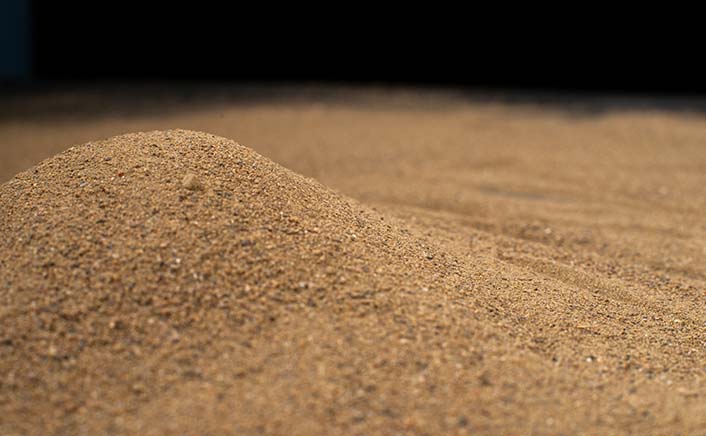
The Global Polymeric Sand Market is valued at approximately US$133 billion in 2025, supported by global consumption of nearly 61.6 million metric tons and an average selling price (ASP) of around US$2,150 per metric ton. The market is projected to grow from 61.6 million metric tons in 2025 to 75.3 million metric tons by 2033, registering a CAGR of 2.7% during the forecast period. Growth is being fueled by the rapid adoption of mechanized paver installation across residential developments, commercial hardscaping projects, and municipal infrastructure, where contractors increasingly require advanced jointing materials that enhance installation efficiency, pavement durability, and long-term maintenance performance. North America accounts for over 48% of global demand, led by the United States (38.5%) and Canada (10.2%), reflecting the region's mature hardscape industry and widespread use of interlocking concrete pavement systems.
The growing shift toward mechanized paving has become one of the most significant factors reshaping the polymeric sand industry. Modern paver-laying equipment can install between 600 and 1,200 square meters of paving per day, creating demand for jointing materials that provide consistent flow characteristics, rapid compaction, and uniform joint stabilization across large installations. Contractors are increasingly selecting premium polymeric sand formulations with engineered binders and optimized particle distribution that improve installation speed while reducing maintenance requirements. Labor shortages across North America and Europe are further accelerating investments in mechanized construction equipment, increasing the adoption of high-performance polymeric sand products compatible with mechanical sweeping and vibratory plate compaction. These trends are particularly evident in public plazas, logistics parks, commercial parking facilities, and large residential communities where project owners prioritize lifecycle performance over initial installation costs.
Among polymer technologies, acrylic-based formulations continue to dominate the global market due to their balance of bond strength, weather resistance, UV stability, and cost-effectiveness. Their broad adoption across residential patios, driveways, walkways, and pool decks has established acrylic polymers as the industry standard for mainstream hardscaping applications. At the same time, polyurethane-based polymeric sand is experiencing stronger demand in commercial landscapes and high-traffic environments, where superior flexibility and crack resistance under repeated loading and freeze-thaw conditions are critical. Premium installations increasingly utilize epoxy-modified formulations that provide exceptional adhesion, chemical resistance, and long-term durability despite their higher cost. Manufacturers are also expanding their proprietary synthetic polymer blends to improve dust suppression, water activation, haze resistance, and installation efficiency, allowing contractors to select products optimized for natural stone, permeable pavements, porcelain pavers, and wider-joint applications.
Regionally, the market remains highly concentrated in countries where interlocking concrete pavers have become a standard component of residential and commercial construction. The United States represents the largest market globally due to extensive use across patios, driveways, municipal walkways, and public infrastructure, supported by an established contractor network and widespread retail availability. Canada ranks second in consumption, driven by harsh freeze-thaw cycles that increase demand for durable joint-stabilization solutions that prevent erosion and pavement movement. Across Europe, Germany, France, the United Kingdom, Italy, and the Netherlands collectively contribute significantly to demand, as urban renewal programs, public squares, and commercial developments continue to specify polymeric sand for enhanced pavement longevity. Australia also demonstrates strong market potential through sustained investment in premium landscaping and outdoor living spaces, while China and Japan are gradually adopting modern hardscaping practices as they gain momentum. Emerging economies across Latin America, the Middle East, and Southeast Asia represent attractive long-term growth opportunities as governments invest in urban beautification projects, tourism infrastructure, and modern paving systems.
Competitive intensity continues to increase as manufacturers focus on differentiated formulations that improve installation productivity and long-term pavement performance rather than competing solely on price. Companies are investing in faster-curing technologies, heavy-duty formulations, low-dust products, and environmentally compatible polymer systems to address evolving contractor requirements. The market remains characterized by continuous product innovation and expanding application-specific solutions designed to improve durability while reducing maintenance costs across residential, commercial, and municipal paving projects. Leading participants operating in the Global Polymeric Sand Market include Alliance Designer Products, SRW Products, SEK-Surebond, QUIKRETE, Oldcastle APG, Pavestone, Mutual Materials, Unilock, TCC Materials, KPM Industries Ltd., EasyJoint (Azpects), Pavetuf (Talasey Ltd), Sika AG, CEMEX, and other regional manufacturers.