GCC Precast Concrete Market to Reach USD 7.4 Billion by 2033, Driven by Infrastructure Megaprojects and Industrialized Construction Expansion
The GCC Precast Concrete Market was valued at USD 4.6 billion in 2025 and is projected to reach USD 7.4 billion by 2033, growing at a CAGR of 6.1% during the forecast period. Market volume reached 14.0 million cubic meters in 2025 and is expected to exceed 21 million cubic meters by 2033 as governments across Saudi Arabia, the UAE, Qatar, Kuwait, Oman, and Bahrain accelerate infrastructure modernization and large-scale urban development activity.
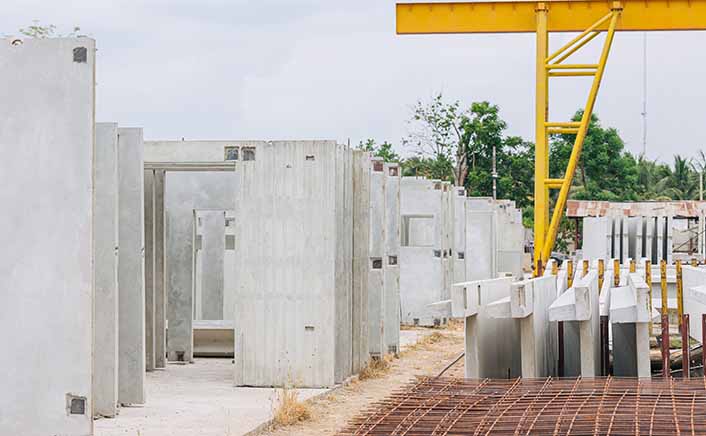
Precast concrete systems, including structural beams, wall panels, hollow-core slabs, bridge girders, tunnel segments, and modular concrete assemblies, are increasingly adopted across GCC construction projects due to faster execution, lower labor dependence, and improved construction efficiency. The region’s growing preference for industrialized and off-site construction methods is significantly reshaping procurement strategies across residential, commercial, industrial, and infrastructure projects.
Saudi Arabia continues to dominate regional demand, accounting for more than half of the GCC's total precast concrete consumption. Mega-projects such as NEOM, Qiddiya, Diriyah Gate, and Red Sea Global developments are creating sustained demand for modular structural systems and infrastructure-grade precast components. Large transportation and utility investments, including metro systems, airports, rail corridors, drainage infrastructure, and smart-city developments, are further strengthening market expansion across the Kingdom.
The UAE remains the second-largest regional market and demonstrates strong demand for architectural and engineered precast systems across hospitality, commercial, and mixed-use urban developments. Dubai and Abu Dhabi continue to witness rising adoption of façade panels, customized structural systems, and high-value precast solutions as developers prioritize rapid project delivery and lifecycle durability.
Infrastructure and public utility applications are emerging as the fastest-growing segment within the GCC precast concrete industry. Governments are increasingly using precast tunnel segments, bridge systems, retaining walls, and underground utility chambers to accelerate construction and minimize operational disruption during project execution. Industrial and logistics infrastructure is also becoming an important demand category due to expanding investments in warehousing, manufacturing, and e-commerce distribution across the region.
Pricing dynamics in the GCC market continue to be influenced by steel reinforcement costs, transportation logistics, project complexity, and engineering specifications. Tunnel segments and infrastructure-grade precast systems command significantly higher average selling prices than conventional structural products due to their higher reinforcement density and the technical customization requirements. Suppliers with manufacturing facilities located near major project clusters maintain stronger competitive positioning because transportation remains a critical operational cost factor for oversized structural concrete systems.
The competitive landscape remains moderately fragmented, with regional manufacturers focusing on capacity expansion, automated production systems, and integrated installation capabilities to secure large infrastructure contracts. Market participants are increasingly investing in BIM-enabled manufacturing planning and precision casting technologies to improve productivity and reduce wastage rates across high-volume projects.
Long-term market growth is expected to remain supported by GCC economic diversification strategies, rising infrastructure investment, growth in industrial construction, and increasing adoption of modular construction technologies. The market is also benefiting from government emphasis on construction efficiency, labor optimization, and durable infrastructure development capable of operating under demanding climatic conditions.