Europe Industrial Fasteners Market Share by Product Type with Bolts and Screws Leading Demand Across Key Industries
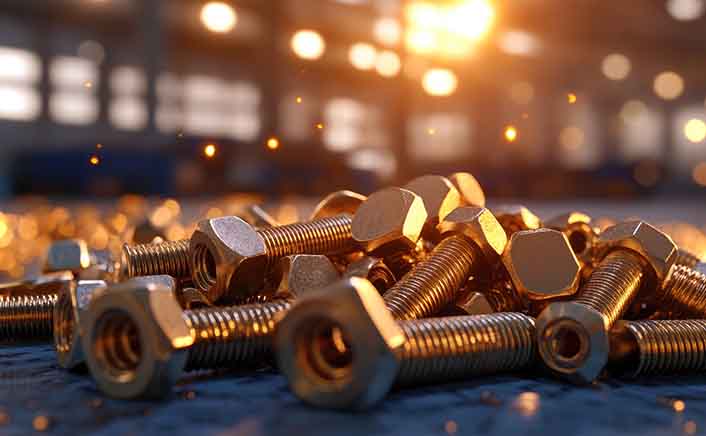
The product type segmentation of the European Industrial Fasteners Market showcases a well-balanced distribution across a diverse range of fastening solutions, with bolts holding the most significant share at 24 percent. Bolts are widely utilized in applications requiring robust, load-bearing connections, particularly within industries such as automotive, construction, heavy machinery, and energy infrastructure. Their extensive use stems from their ability to deliver high tensile strength and secure assembly in structural frameworks, making them essential for both large-scale industrial projects and precision engineering applications.
Screws follow closely behind, accounting for a 20 percent market share, thanks to their versatility and ease of installation across various materials, including metal, wood, and composites. They find application in automotive assembly, electronics, furniture, and consumer goods, where efficient fastening and disassembly are often necessary.
Nuts contribute 14 percent to the market and play a vital complementary role in fastening systems, pairing with bolts to establish secure joints. Their demand closely aligns with that of bolts, making them crucial for applications that require adjustable tension and repeated maintenance. Washers, holding a 10 percent share, are key components for load distribution, preventing loosening, and protecting surfaces from damage. These are predominantly used alongside bolts and nuts in automotive, construction, and machinery sectors, enhancing joint stability and durability.
Rivets comprise an 8 percent share, mainly utilized in permanent fastening applications where welding or threading is impractical. Their presence is notable in aerospace, automotive body structures, and sheet metal fabrication, where lightweight and strong joints are necessary. Studs represent a 7 percent share and are frequently employed in situations requiring repeated assembly and disassembly, such as in engine components, pipelines, and heavy machinery. Their design allows for secure fastening without damaging threads, making them suitable for high-stress environments.
Pins take up 6 percent of the market and are employed in alignment, positioning, and securing components within mechanical systems. They are particularly crucial in machinery, automotive assemblies, and precision equipment where precise alignment is essential. With a 5 percent share, anchors are fundamental in construction applications for securing structures to concrete or masonry surfaces. Their demand closely correlates with infrastructure development, commercial construction, and renovation projects across Europe.
Clips and specialty fasteners collectively make up 6 percent of the market, encompassing a variety of customized and application-specific fastening solutions. Their use is increasing in automotive interiors, electrical assemblies, and lightweight structural applications, particularly where traditional fastening methods may fall short. As industries advance toward the use of innovative materials, compact designs, and modular assemblies, the demand for specialty fasteners rises.
Overall, the product type segmentation indicates a mature and diversified market structure in Europe, where traditional fasteners remain dominant in volume consumption, while specialized and engineered fasteners are increasingly valuable in high-end applications. This balance between commodity and specialty products reflects the shifting needs of end-user industries, technological improvements in manufacturing processes, and the growing importance of efficiency, reliability, and sustainability in industrial operations throughout the region.