In Europe Increasing awareness of health and environmental concerns is driving demand for ventilation systems that ensure clean and safe indoor air.
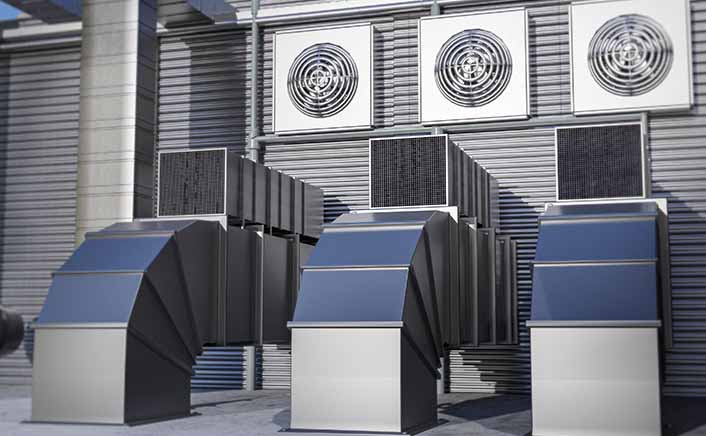
Europe is quickly becoming the fastest-growing region in the global ventilation system market. This is largely due to a growing awareness of the importance of indoor air quality and strict energy efficiency regulations. The European Union is actively working to cut carbon emissions and promote sustainable building practices, which is spurring demand for advanced ventilation technologies like heat recovery and systems that adjust based on needs.
The Europe Ventilation System market was valued at USD 6.32 Billion in 2025 and is projected to reach USD 11.61 Billion by 2033, with a compound annual growth rate (CAGR) of 18.40% from 2027 to 2033.
Renovating older residential and commercial buildings in countries like Germany, France, and the UK is also boosting the market. Plus, with more extreme weather conditions and an increase in smart homes and energy-efficient appliances, both consumers and businesses are more inclined to invest in high-performance ventilation systems.
The presence of major manufacturers and strong government support, including incentives and regulations like the Energy Performance of Buildings Directive (EPBD), further drives growth. As Europe places more emphasis on green building certifications and healthier indoor environments, the demand for innovative and efficient ventilation solutions is expected to rise significantly in the upcoming years.
1. European governments enforce strict energy efficiency standards, encouraging the adoption of advanced ventilation systems that reduce energy consumption.
European countries have established some of the world's most stringent energy efficiency regulations, significantly impacting the ventilation system market. The European Union’s Energy Performance of Buildings Directive (EPBD) requires that new buildings adhere to nearly zero-energy standards, prompting builders and developers to incorporate energy-efficient HVAC and ventilation technologies. These regulations emphasize minimizing energy loss, enhancing thermal comfort, and reducing carbon emissions. Consequently, there is an increasing demand for heat recovery ventilators (HRVs), demand-controlled ventilation systems, and other advanced technologies that comply with these guidelines.
Additionally, these regulations apply to retrofitting existing buildings, particularly in regions such as Scandinavia, Germany, and the Netherlands, where sustainability is a top priority. With energy efficiency being a central component of the EU’s Green Deal and Climate Law, manufacturers and contractors are making significant investments in compliant and innovative ventilation technologies. This regulatory landscape encourages innovation and propels rapid market growth in the region.
2. The need for ventilation systems that provide safe and clean indoor air is being driven by growing environmental and health consciousness.
In Europe, awareness of indoor air quality (IAQ) has significantly increased, especially following the COVID-19 pandemic. Concerns about airborne pollutants, allergens, and the transmission of infectious diseases have led to a heightened demand for ventilation systems that provide fresh, filtered air. Organizations, schools, hospitals, and residential buildings are now investing in mechanical ventilation systems equipped with high-efficiency filters and air purification technologies.
Additionally, urbanization and the insulation of buildings to conserve energy have decreased natural airflow, making mechanical ventilation essential for maintaining healthy indoor environments. Regulatory bodies, such as the European Environment Agency (EEA), continue to express concerns about air quality, further promoting the adoption of systems that meet stringent IAQ standards. As a result, manufacturers are innovating to provide solutions that ensure air purity while also integrating with smart home systems for real-time air quality monitoring. This increasing focus on health and wellness is a major driver of growth in the industry.
3. Many European countries are upgrading old residential and commercial buildings, creating a strong need for modern ventilation solutions.
Europe has a significant number of aging residential and commercial buildings, many of which were constructed before modern energy and ventilation standards were established. Retrofitting these buildings with updated ventilation systems has become a top priority for both governments and private owners. In countries like the UK, France, and Italy, major public and private investments are being directed toward renovation initiatives to comply with updated building codes and environmental targets.
These upgrades often include installing energy-efficient ventilation systems to enhance airflow and indoor comfort without compromising insulation or energy conservation. Programs like the EU’s Renovation Wave aim to double renovation rates and upgrade 35 million buildings by 2030. These policies are not only stimulating demand for advanced systems but are also creating opportunities for manufacturers and service providers that specialize in retrofit solutions. The need to modernize infrastructure while achieving energy and environmental goals is a critical driver for the region.
4. The rise in smart homes and sustainable building practices is boosting the integration of intelligent and eco-friendly ventilation systems.
Europe is leading the way in adopting smart building technologies and sustainable construction practices, which significantly benefits the ventilation system market. Smart ventilation systems, designed to work with building automation platforms, enable dynamic airflow control based on factors like occupancy, temperature, humidity, and indoor air quality metrics. These technologies not only optimize energy use but also enhance occupant comfort and health.
Moreover, green building certifications such as BREEAM (UK), DGNB (Germany), and HQE (France) promote the adoption of sustainable and efficient HVAC systems, including ventilation. These certifications are increasingly becoming valuable assets for real estate developers and corporate offices, creating a strong demand for modern, intelligent ventilation solutions.
Additionally, governments across Europe provide incentives for the development of smart and sustainable buildings, further accelerating their adoption. Consumers and businesses are increasingly seeking energy-efficient and technology-enabled systems that align with their environmental values and regulatory requirements, making this a significant growth opportunity for the market.
5. Government programs and subsidies promoting green construction and energy efficiency are accelerating the uptake of ventilation technologies across Europe.
Government policies and funding initiatives across Europe strongly support the adoption of modern ventilation systems. Several EU-funded programs, including the Green Deal and Horizon Europe, provide grants and subsidies for energy-efficient renovations and sustainable building technologies. In addition, national governments implement incentive schemes that subsidize the installation of ventilation systems in residential, commercial, and public buildings.
For example, Germany’s Federal Funding for Efficient Buildings (BEG) program offers financial assistance for improving energy efficiency, including upgrades to ventilation systems. Similarly, France’s MaPrimeRénov’ scheme promotes energy renovations by providing financial support, specifically targeting low-income households and public housing.
These incentives not only reduce upfront costs for consumers but also encourage quicker market adoption. Furthermore, government-backed awareness campaigns educate citizens about the importance of indoor air quality and energy conservation, which further stimulates demand. As the push for decarbonization and healthier indoor environments gains momentum, these initiatives will continue to drive growth in the European ventilation system market.
Competitive Landscape
Some of the major companies operating within the Ventilation System market are: Honeywell International Inc., LG Electronics, Midea Group, Johnson Controls, Carrier, Munters AB, Trane Technologies, Daikin Industries Ltd, Komfovent, Lennox International Inc and Others.