Europe Tire Pressure Monitoring System Market to Reach USD 4.77 Billion by 2033, Driven by Connected Vehicle Technologies and Regulatory Safety Standards
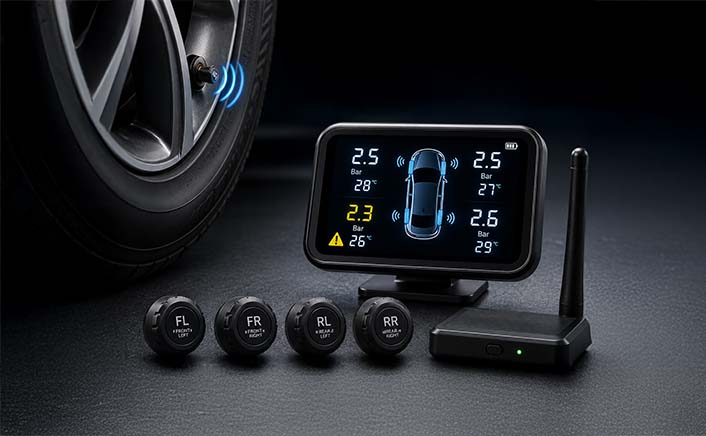
The European Tire Pressure Monitoring System (TPMS) Market is projected to grow from USD 2.58 billion in 2025 to USD 4.77 billion by 2033, registering a CAGR of 8.2% during the forecast period. Market expansion is being supported by mandatory vehicle safety regulations, rising electric vehicle production, and increasing deployment of intelligent fleet management systems across Europe.
TPMS technology has become an essential component within Europe’s automotive safety ecosystem. These systems continuously monitor tire pressure and provide real-time alerts to drivers, helping improve road safety, fuel efficiency, tire lifespan, and vehicle performance. The market is increasingly evolving from a compliance-focused segment into a connected automotive diagnostics category integrated with telematics and predictive maintenance platforms.
Europe remains one of the most mature TPMS markets globally because tire pressure monitoring systems have been mandatory across newly registered passenger vehicles under European vehicle safety regulations for more than a decade. This regulatory environment created a structurally stable demand base across both OEM and aftermarket channels. Germany continues to lead regional demand due to its large automotive manufacturing sector, concentration of premium vehicles, and strong integration of advanced automotive electronic systems.
The market is undergoing a significant transition toward direct TPMS systems, which use dedicated tire-mounted sensors that deliver real-time pressure readings. Direct systems are increasingly replacing indirect TPMS technologies due to superior accuracy, greater compatibility with electric vehicles, and greater integration potential with connected mobility platforms. Electric vehicle adoption is emerging as a major catalyst for advanced TPMS deployment because EVs require more precise tire pressure management to optimize battery efficiency, driving range, and vehicle stability.
Commercial fleet digitization is also contributing to long-term market growth. Logistics operators and transportation companies are increasingly deploying intelligent tire monitoring solutions to reduce operational costs associated with tire wear, fuel consumption, and vehicle downtime. Real-time tire diagnostics have become commercially valuable for fleet operators managing large transportation networks where maintenance efficiency directly affects profitability.
In volume terms, the Europe TPMS market accounted for nearly 152 million sensor units in 2025 and is forecast to exceed 259 million units by 2033. Replacement demand is expected to remain a major contributor to market expansion as millions of vehicles installed with TPMS during the last decade approach sensor battery replacement cycles. Independent workshops, automotive service providers, and tire retailers are benefiting from rising aftermarket demand for replacement sensors and diagnostic calibration services.
Technological evolution continues to reshape the competitive environment across the region. Automotive suppliers are increasingly focusing on battery-efficient sensors, cloud-connected tire analytics systems, and integrated vehicle telematics architectures. TPMS data is also becoming increasingly strategic in software-defined vehicle ecosystems, as tire pressure monitoring supports predictive maintenance and advanced driver assistance systems.
Despite favorable market conditions, pricing pressure persists due to sensor commoditization and competition from lower-cost component suppliers. However, increasing software integration and smart fleet analytics capabilities are expected to support long-term expansion of market value across the European automotive electronics sector.
The European TPMS market is expected to maintain stable long-term growth as regulators, automakers, and transportation operators continue to prioritize vehicle safety, fuel efficiency, emissions reduction, and intelligent mobility technologies.